
语态,主谓一致
- 格式:pptx
- 大小:5.78 MB
- 文档页数:32


高一英语主谓一致试题答案及解析1.Starring in the hit show “Daddy. Where Are We Going?”, Kimi, together with the other four kids, _______ popular with many teenagers these days.A.is B.are C.was D.were【答案】A【解析】考查主谓一致。
当with, together with, as well as, but, except等连接两个词作主语时,谓语遵循就远原则,即谓语动词与with等词前面的名词或代词保持一致,本题与Kimi一致,Kimi是第三人称,故谓语用is,故选A。
【考点】考查主谓一致2. The number of smokers in China ________increased in recent years, and a number of them _________ the youth.A.has; are B.have; are C.is; is D.are; are【答案】A【解析】句意:最近几年,中国的吸烟的人的数量增加了,他们中的许多人都是年轻人。
The number of…的数量,谓语动词用单数;a number of = many,许多的意思,谓语动词用复数,选A。
【考点】考查固定用法3. The number of people visiting the exhibition ______ 50, and a number of them ____ painters. A.was; was B.were; was C.was; were D.were; were【答案】C【解析】本题第一空的主语是the number of…“…的数量”,该短语作主语的时候,谓语动词使用单数形式was。
第二空前面的名词是代词them,这里的them指代people,a number of许多,大量;通常修饰可数名词复数形式,谓语动词使用复数形式were。
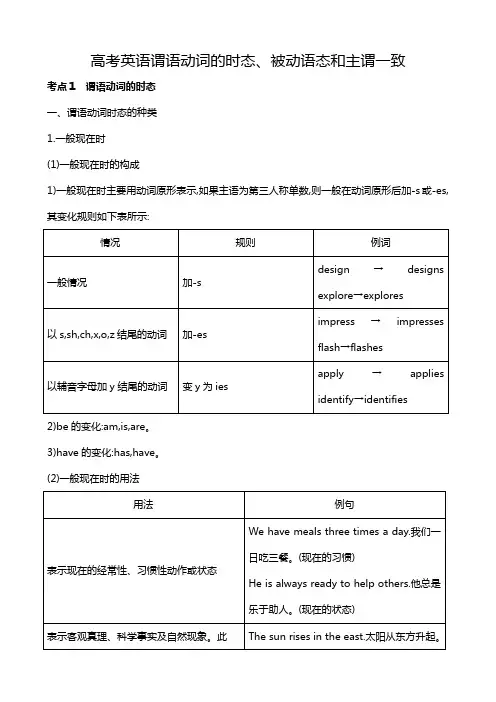
高考英语谓语动词的时态、被动语态和主谓一致考点1 谓语动词的时态一、谓语动词时态的种类1.一般现在时(1)一般现在时的构成1)一般现在时主要用动词原形表示,如果主语为第三人称单数,则一般在动词原形后加-s或-es,其变化规则如下表所示:2)be的变化:am,is,are。
3)have的变化:has,have。
(2)一般现在时的用法2.一般过去时(1)一般过去时的构成1)一般过去时用动词的过去式表示,其规则动词变化方法如下表所示:2)was用于第一、三人称单数,were用于其他情况。
3)注意以元音字母加y结尾的动词:规则变化是直接加-ed,如play→played;不规则变化是把y 改为id,如:pay→paid,say→said。
(2)一般过去时的用法3.一般将来时(1)一般将来时的构成(2)一般将来时的用法4.现在进行时(1)现在进行时的构成:is/am/are+现在分词(2)现在进行时的用法5.过去进行时(1)过去进行时的构成:was/were+现在分词(2)过去进行时的用法6.现在完成时(1)现在完成时的构成:has/have+过去分词(2)现在完成时的用法注意(1)瞬间动词若用于现在完成时且与表示一段时间的时间状语连用,需在谓语动词、时态或句型方面作相应变化。
如:他参军3年了。
(×)He has joined the army for 3 years.(√)He has been in the army for 3 years.(换动词)(√)He joined the army 3 years ago.(换时态)(√)It has been/is 3 years since he joined the army.(换句型)(2)部分瞬间动词(词组)与延续性动词(词组)对应表7.过去将来时(1)过去将来时的构成(2)过去将来时的用法8.将来进行时(1)将来进行时的构成:will/shall be doing(2)将来进行时的用法9.过去完成时(1)过去完成时的构成:had+过去分词(2)过去完成时的用法10.现在完成进行时(1)现在完成进行时的构成:have/has been doing(2)现在完成进行时的用法二、谓语动词时态的呼应1.主将从现2.含宾语从句的句子的时态一致问题(1)宾语从句中的动词时态常受主句谓语动词时态的制约,如果主句谓语动词为一般现在时或一般将来时,宾语从句中的谓语动词可以不受影响。
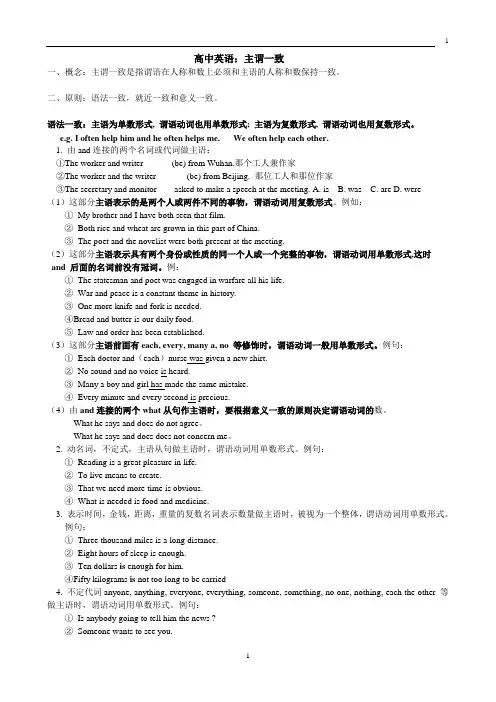
高中英语:主谓一致一、概念:主谓一致是指谓语在人称和数上必须和主语的人称和数保持一致。
二、原则:语法一致,就近一致和意义一致。
语法一致:主语为单数形式, 谓语动词也用单数形式; 主语为复数形式, 谓语动词也用复数形式。
e.g. I often help him and he often helps me. We often help each other.1. 由and连接的两个名词或代词做主语:①The worker and writer ______(be) from Wuhan.那个工人兼作家②The worker and the writer ______ (be) from Beijing. 那位工人和那位作家③The secretary and monitor ___ asked to make a speech at the meeting. A. is B. was C. are D. were(1)这部分主语表示的是两个人或两件不同的事物,谓语动词用复数形式。
例如:①My brother and I have both seen that film.②Both rice and wheat are grown in this part of China.③The poet and the novelist were both present at the meeting.(2)这部分主语表示具有两个身份或性质的同一个人或一个完整的事物,谓语动词用单数形式,这时and 后面的名词前没有冠词。
例:①The statesman and poet was engaged in warfare all his life.②War and peace is a constant theme in history.③One more knife and fork is needed.④Bread and butter is our daily food.⑤Law and order has been established.(3)这部分主语前面有each, every, many a, no 等修饰时,谓语动词一般用单数形式。
