初升高衔接——英语句子成分解析
- 格式:doc
- 大小:25.50 KB
- 文档页数:5
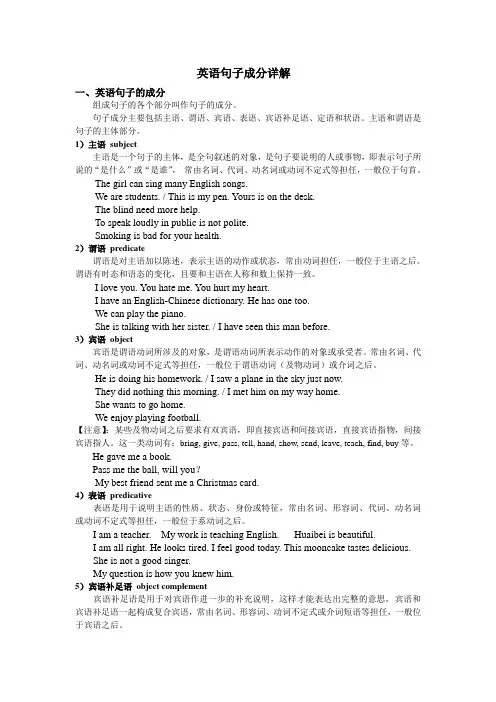
英语句子成分解析
1、主语(subject)
2、谓语(predicate)
3、宾语(object)
4、表语(predicative)
5、定语(attribute)
6、状语(adverbial)
7、补语(complement)
8、同位语(appositive)
1、主语(subject) 是一个句子的主题( theme),是句子所述说的主体,它的位置一般在一句之首,可用作主语的有单词、短语、从句乃至句子。
1. Our master is very kind.
2. He is a good boy.
3. Teaching them English is her job.
4. To work with them is very interesting
指出下列句中的主语
① The teacher with two of his students is walking into the classroom.
② There is an old man coming here.
③ The useful dictionary was given by my mother last year.
④ To do today's homework without the teacher's help is very difficult.
2、谓语 (predicate) 或谓语动词(predicate verb) 的位置一般在主语之后。谓语由简单动词或动词短语(助动词或情态动词+主要动词)构成。
1.由简单的动词构成。
(1). He worked hard all day today.
(2). The plane took off at ten o’clock.
2.由动词短语构成的谓语。
(1). I am reading.
(2). You can do it if you try hard. 3.英语常用某些动作名词代替表动态的谓语动词,表生动。这种动作名词之前常用没有多大意义的动词have,
get, take, give 等。如:
(1). I had a swim yesterday. (had a swim 代替了swam)
(2). Take a look at that! (take a look 代替了 look)
(3). He gave a sigh. (gave a sigh 代替了sighed)
挑出下列句中的谓语
① I don't like the picture on the wall.
② The days get longer and longer when summer comes.
③ Do you usually go to school by bus?
④ There will be a meeting at the library this afternoon.
⑤ Did the twins have porridge for their breakfast?
3、宾语(object)在句中主要充当动作的承受者,因此一般皆置于及物动词之后。可以用作宾语的有:名词、代词、数词、名词化的形容词、副词、不定式、动名词、名词化的分词、从句等。
1) I don’t know the man over there.
2) He wants to be an engineer.
3) Alice thinks it interesting to swim with her sister.
指出下列句中的宾语
① My brother hasn't done his homework.
② People all over the world speak English.
③ You must pay good attention to your pronunciation.
④ How many new words did you learn last class?
⑤ Some of the students in the school want to go swimming, how about you?
宾语扩展:
宾语中有些动词需要两个同等的宾语,即直接宾语(direct object)与间接宾语(indirect object)。
直接宾语一般指动作的承受者,间接宾语指动作所向的或所为的人和物(多指人)。
1. He passed me a bottle of salt.
2. He promised his teacher to help us.
3. She asked me a question just now.
划出句中的直接宾语和间接宾语 1. Please tell us a story.
2. My father bought a new bike for me last week.
3. Mr. Li is going to teach us history next term.
4. Here is a pen. Give it to Tom.
5. Did he leave any message for me?
4、表语 (predicative)的功能是表述主语的特征、状态、身份等。它也可以说是一种主语补语。它位于联系动词之后,与之构成所谓的系表结构。在系表结构钟,联系动词只是形式上的谓语,而真正起谓语作用的则是表语。可以作表语的词有:名词、代词、数词、形容词、副词、不定式、动名词、分词、介词短语、从句等。
1) He isn’t a teacher.
2) John is quite tall.
3) Are they in?
挑出下列句中的表语
① The old man was feeling very tired.
② Why is he worried about Jim?
③ The leaves have turned yellow.
④ Soon they all became interested in the subject.
⑤ She was the first to learn about it.
系动词有三类:A. be 动词:am、is、are、was、were
B. 表示感官类的动词:look、smell、sound、feel、taste、appear、seem
C. 表示变化类的词:go(变得…)、get、become、grow、turn、keep、stay
5、定语(attribute)是用来说明名词(代词)的品质与特征的词或一组词。可用作定语的有:形容词、名词、代词、数词、副词、不定式、动名词、分词、介词短语、从句和句子等。
定语可分为:前置定语和后置定语。
形容词、物主代词的所有格、(单个)动词ing形式、(单个)过去分词常作前置定语。
1) The tall boy is Tom’s elder brother.
2) The dancing hall is being repaired now.
3) The broken cup isn’t mine. 4) The sleeping girl is my younger sister.
挑出下列句中的定语
1. He must be the best violinist alive.
2. Everybody’s business is nobody’s business.
3. There’s only one way to do it.
4. Her promise to write was forgotten.
5. This is a map of China.
6、状语(adverbial)是修饰动词、形容词、副词以及全句的句子成分。(原因、时间、地点、方式、条件、结果、目的、比较、让步、程度、伴随)
1) The meeting will be held in the meeting room.
2) The meat went bad because of the hot weather.
3) He studies hard to learn English well.
4) He didn’t study hard so that he failed in the exam.
5) I like some of you very much.
6) If you study hard, you will pass the exam.
7) He goes to school by bike.
8) Though he is young, he can do it well.
9) He is as tall as me.
挑出下列句中的状语
1. Shall we do the shopping today or tomorrow?
2. Because he was ill, Tom lost his job.
3. She spoke so softly that I couldn’t hear what she said.
4. If he were to come, what should we say to him?
7、补语(complement)是一种补足主语和宾语的意义的句子成分。补足主语意义的句子成分叫做主语补语(subject complement),补足宾语意义的句子成分叫做宾语补语(object complement).
1) Jack was made monitor at the last class meeting.
2) I found our room dirty.
3) Let him in, please.