
新概念英语第二册lesson22
- 格式:pptx
- 大小:3.96 MB
- 文档页数:31
实用文档
1 Lesson 1 A private conversation 私人谈话
Last week I went to the theatre。 I had a very good seat. The play was very interesting。 I did
not enjoy it。 A young man and a young woman were sitting behind me. They were talking
loudly。 I got very angry。 I could not hear the actors。 I turned round。 I looked at the man
and the woman angrily。 They did not pay any attention. In the end, I could not bear it。 I turned
round again。 ’I can’t hear a word!' I said angrily。 ‘It's none of your business,’ the young man
said rudely. ’This is a private conversation!’。
上星期我去看戏。我的座位很好,戏很有意思,但我却无法欣赏。一青年男子与一青年女子坐在我的身后,大声地说着话。我非常生气,因为我听不见演员在说什么。我回过头去怒视着那一男一女,他们却毫不理会。最后,我忍不住了,又一次回过头去,生气地说:“我一个字也听不见了!” “不关你的事,”那男的毫不客气地说,“这是私人间的谈话!"
Lesson 2 Breakfast or lunch? 早餐还是午餐?
It was Sunday. I never get up early on Sundays。 I sometimes stay in bed until lunch time.
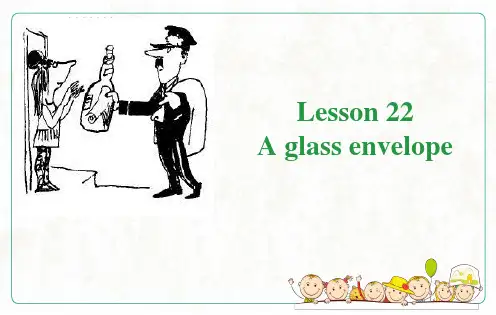
Lesson 22 A glass envelope
【New words and expressions】(4)
★dream v. 做梦, 梦想
① vt. 做梦,梦见dream that +从句
I dreamt/dreamed (that) I was in Scotland.
② vi. 做梦,梦见(与of,about连用)
dream on 继续做梦, 痴心妄想(做你的梦去吧!别痴心妄想了!)dream of/about sth. 梦想
dream of doing sth. 梦想
I dreamed of flying in the sky.
think of 想,考虑,想起
③ n. 梦;梦想,幻想have a dream = dream a dream 做了个梦Have a good/sweat dream祝你做个好梦!
Have you heard of the American Dream?
dream boat 梦中情人, 梦寐以求的(物, 人)
daydream 思想开小差,做白日梦
She is daydreaming.
★age n. 年龄teengager n. 十几岁的人adolenscent n.青春期(一般指成年以前由13至15的发育期)
★throw(threw,thrown) v. 扔, 抛
① vt. 投,扔,抛Don’t throw stones at the dog.
Throw the ball to Tom.
throw away 扔掉
② 把……对准目标,向……作出举动
George was very happy today. Julie had thrown a smile at him in the morning.
The boss threw him an angry look.
新概念英语第二册逐句精讲语言点第22课(1)
Lesson 22 A glass envelope
课文内容:
My daughter, Jane, never dreamed of receiving a letter from
a girl of her own age in Holland. Last year, we were
traveling across the Channel and Jane put a piece of paper
with her name and address on it into a bottle. She threw the
bottle into the sea. She never thought of it again, but ten
months later, she received a letter from a girl in Holland.
Both girls write to each other regularly now. However, they
have decided to use the post office. Letters will cost a
little more, but they will certainly travel faster.
语法归纳:
“动词+介词”的用法,其中在动词后加介词of, from,in, on的情况最多,以下分别加以说明:
1)“动词+ of”常用短语:
accuse of 指责 advise of 劝告 approve of 赞成 assure of 保证
break of 戒除 beware of 当心 boast of 夸大 complain of 抱怨
2)“动词+ from"常用短语:
borrow from 借入 defend from 防护 demand from 要求 differ
新概念英语第二册Lesson22单词学习
dream[dri:m]做梦,梦想
【单词搭配】dream of梦想
【单词例句】
A:Thank goodness I was dreaming.
A:感谢老天爷我是在做梦。
B: You were dreaming in class and you are happy about it?
B:你上课做梦还自鸣得意?
age [e?d?] 年龄
hannel 海峡
throw [θr] 扔,投掷
【单词扩充】throw扔
【单词搭配】throw away扔掉,抛弃
【单词例句】
A: It's said that you planned to give up smoking.
A:据说你打算戒烟。
B: Yes, I've thrown away my ashtrays and lighters.
B:是的,我已经把我的烟灰缸和打火机全扔掉了。
我提前完成了这个项目。
【单词扩充】finish完成
新概念英语第二册Lesson23单词学习
completely[k?m'pli?tl?] 完成
【派生词】 completely完全地
modern ['m?d(?)n] adj.颧式的,与以往不同的
【派生词】modemize使……现代化
【单词例句】Modem furniture design tends to be simple现代家具设计越来越简单。
【单词扩充】new-style新式的 strange adj.奇怪的
【派生词】stranger陌生人
【搭单词搭配】be strange at对……显得外行
【单词例句】
A: This dish tastes strange.
A:这道菜味道很怪。
B: Sorry. Would you like me to change it for you?