
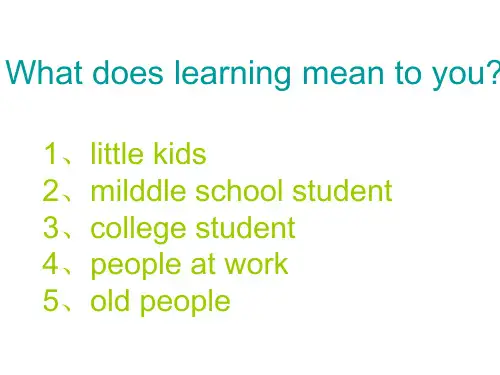
what does learning mean to you 学习的意义
- 格式:ppt
- 大小:918.00 KB
- 文档页数:11

内部资料....请勿外传....英语教学论讲义舒白梅华中师范大学前言外语教学的目的是帮助外语学习者尽快地掌握所学语言,并能成功地使用所学语言进行交际。
为了达到这一目的,应用语言学家和外语教师都在竭力寻求最佳的外语教学方法。
外语教学法就是研究外语教学的方法与过程,揭示外语教学的性质与规律的一门科学。
它除了研究外语教学的途径、方法和技巧以及原则和理论基础外,还要研究外语教学中的程序、步骤和实际操作,探讨如何使教师能根据实际情况在自己的教学中选用和创造最恰当的方法,达到最佳的教学效果。
外语教学过程是一个包含了大量动态变化的发展过程,外语教学自身体系和外语教学规律体系都是复杂的。
它涉及到大纲、课程、教师、学生、教学环境等诸多方面。
因此,我们在此书中不仅讨论了教师如何教的问题,还讨论了学生如何学的问题,重点讨论了如何为学习者提供有利的、丰富的语言环境和在课堂内外如何创设这样的环境。
内容涉及教学理论、学习理论、语言知识的学习和交际能力的培养、课堂组织、教学评估等。
还探讨了任何进行启发式,交互式,合作式教学,如何促进学生的自主学习与继续学习能力,如何利用和开发现代化教育技术,以及教师职业素质的培养与发展等问题。
力求在吸收国内外外语教学领域最新成果的基础上结合中国实际,满足学习者的需要和社会需求,同时反映外语教师的总体和个体需要。
本书的读者对象是师范院校英语专业的学生和从事外语教学和研究的外语教育工作者。
鉴于这些职前与在职的各级外语人员的需要,本书除了讨论外语教学的理论与实践外,还在每章后设有“问题与任务”,旨在帮助读者加深对内容的理解,并运用所学指导实践。
本书用英语撰写,这样使用者在学习本学科专业知识的同时还可以从语言知识与运用方面得到提高,在备课和教学时也更容易和直接些。
参与本书编写的是华中师范大学英语系的部分教师。
舒白梅教授和向宗平老师担任主编,具体分工如下:李正林负责第一、二章的编写,文斌负责第三章的编写,向宗平负责第四、五、六章的编写,王勇负责第七章的编写,舒白梅负责第八章的编写,张国华负责第九章的编写,陈浪负责第十章的编写。

为什么要学习外语英语作文Well, learning a foreign language is like opening a door to a whole new world. You know, it's not just about speaking a different tongue; it's about understanding a culture, a way of life.Imagine being able to chat with someone from Japan about their favorite anime, or discussing the latest football match with a friend from Spain. It's like having a secret pass to people's hearts.Plus, let's face it, the world is getting smaller. With technology and globalization, we're more connected than ever. Knowing a foreign language can help you land a job in an international company, or even start your own business abroad.And don't forget the fun part! You can travel to new places and explore without worrying about getting lost or not being able to communicate. Plus, learning a newlanguage is a challenge, and when you overcome that challenge, it feels like a huge accomplishment.So yeah, learning a foreign language is more than just a skill. It's an adventure, a way to broaden your horizons, and a tool to connect with people from all over the world. Why not give it a try?。


学习目的有关的英语作文Title: The Significance of Learning Objectives in Education。
Education serves as the cornerstone of personal and societal development, and learning objectives play apivotal role in guiding this journey. Understanding the importance of learning objectives is essential for both educators and learners alike. In this essay, we delve into the significance of learning objectives in education.Firstly, learning objectives provide clarity and direction. They delineate what students are expected to learn, thereby serving as a roadmap for teachers tostructure their lessons effectively. By articulatingspecific goals and outcomes, educators can tailor their instruction to meet the needs of diverse learners. Moreover, clear learning objectives empower students by providingthem with a clear understanding of what is expected of them, fostering a sense of purpose and motivation.Secondly, learning objectives promote alignment between curriculum, instruction, and assessment. When educators design learning objectives, they are essentially defining the desired outcomes of the educational process. This alignment ensures that instruction is focused on relevant content and activities that directly contribute to achieving the stated objectives. Furthermore, assessments can be designed to measure students' mastery of the learning objectives, providing valuable feedback to both teachers and learners.Additionally, learning objectives facilitate differentiation and personalized learning. In today's diverse classrooms, students come from various backgrounds and possess different learning styles and abilities. By articulating clear learning objectives, educators can differentiate instruction to accommodate the diverse needs of students. Whether through flexible grouping, scaffolded support, or varied instructional strategies, teachers can ensure that all students have opportunities to succeed.Moreover, learning objectives promote metacognition and self-regulation. When students understand what they are expected to learn, they can actively monitor their progress towards achieving those goals. By reflecting on their learning and identifying areas for improvement, students develop metacognitive skills that are essential forlifelong learning. Furthermore, clear learning objectives empower students to take ownership of their learning process, fostering self-regulated learners who are capable of setting and achieving their own goals.Furthermore, learning objectives enhance communication and collaboration. When educators communicate clear learning objectives to students, parents, and other stakeholders, they foster transparency and accountability within the educational community. Moreover, shared learning objectives provide a common language for collaboration among educators, enabling them to align their efforts towards common goals. Whether through interdisciplinary projects or professional learning communities, educators can leverage learning objectives to foster collaboration and collective efficacy.In conclusion, learning objectives play a vital role in education by providing clarity, alignment, differentiation, metacognition, and collaboration. By articulating clear goals and outcomes, educators can effectively guide the teaching and learning process, empowering students to achieve their full potential. As we continue to navigate the complexities of education, it is imperative that we recognize and harness the power of learning objectives to promote meaningful learning experiences for all learners.。