
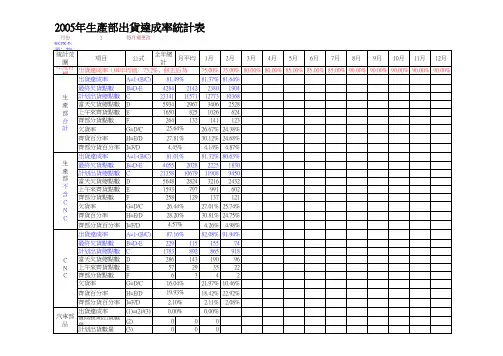
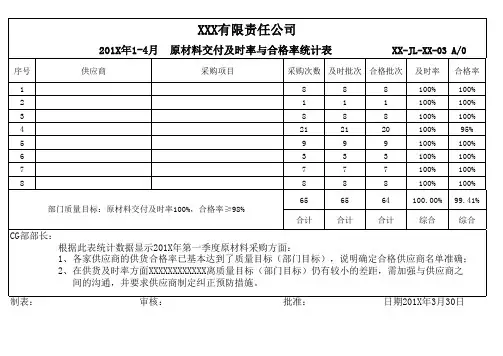
出货及时率统计表
- 格式:xls
- 大小:40.00 KB
- 文档页数:1


幼儿园月出勤率统计表一、引言随着社会经济的发展和人民生活水平的提高,幼儿教育受到了越来越多家长的重视,幼儿园作为幼儿教育的重要组成部分,承担着对幼儿进行全面培养的责任。
而幼儿园的出勤率统计,则是实施幼儿教育工作的基础,也是幼儿园管理的一项重要工作。
二、出勤率统计表的作用1. 了解幼儿园全体幼儿的出勤情况,及时发现出勤率异常情况,并进行跟进和处理;2. 为幼儿园教师、家长和管理者提供出勤情况的详尽数据,有利于教师根据实际出勤情况进行针对性的教学工作;3. 为幼儿园管理者提供重要参考依据,优化幼儿园的管理体系和管理策略。
三、出勤率统计表的内容出勤率统计表通常包括以下内容:1. 月份:记录出勤情况的月份;2. 班级:按照不同班级进行分类统计;3. 幼儿人数:每个班级的实际幼儿人数;4. 正常出勤人数:未迟到、未早退、未缺勤的幼儿人数;5. 迟到人数:迟到幼儿的人数统计;6. 早退人数:早退幼儿的人数统计;7. 缺勤人数:未到校的幼儿的人数统计;8. 出勤率统计:根据正常出勤人数与应到幼儿人数的比值计算出勤率。
四、出勤率统计表的填写与管理1. 填写人员:由幼儿园的教师或管理人员进行填写;2. 填写时间:每月月底或者次月初,根据实际情况安排填写。
3. 填写内容:按照实际出勤情况进行统计,并将数据填入相应的统计表格中。
4. 统计管理:出勤率统计表作为幼儿园教育管理的一部分,应当进行严格的管理和存档。
根据出勤情况,及时与家长进行沟通和反馈。
五、出勤率统计表的应用与优化1. 应用:出勤率统计表的数据可以为教育管理者提供决策依据,促进幼儿园的整体教育质量提升;2. 优化:可以采用信息化手段进行出勤率统计表的填写和管理,提高工作效率和准确性。
六、结语出勤率统计表作为幼儿园管理工作的一部分,对于评估教育工作的有效性、提高教育质量、保障幼儿的健康成长都具有重要的意义。
幼儿园管理者应当高度重视出勤率统计工作,确保出勤率统计表的及时、准确填写和管理,以促进幼儿园的教育事业不断发展。

出货及时率统计记录英语On-Time Shipping Rate StatisticsMaintaining a high on-time shipping rate is a critical metric for any business that relies on delivering products to customers in a timely manner. Whether you're an e-commerce retailer, a manufacturer, ora logistics provider, ensuring that orders are fulfilled and shipped according to schedule is essential for meeting customer expectations, maintaining a positive brand reputation, and driving business growth.In this essay, we will explore the importance of on-time shipping rate statistics, discuss how to calculate and track this metric, and examine strategies for improving shipping performance to achieve optimal results.The Significance of On-Time Shipping RateThe on-time shipping rate, also known as the on-time delivery rate, is a measure of the percentage of orders that are shipped and delivered to customers within the expected timeframe. This metric iscrucial for several reasons:Customer Satisfaction: Customers expect their orders to be delivered when promised. Failure to meet these expectations can lead to dissatisfaction, negative reviews, and a decline in customer loyalty. A high on-time shipping rate demonstrates a business's commitment to reliable and efficient order fulfillment, which can enhance the customer experience and foster long-term relationships.Operational Efficiency: Tracking on-time shipping rates can help businesses identify bottlenecks, inefficiencies, and areas for improvement in their supply chain and logistics operations. By analyzing shipping data, companies can make informed decisions to optimize their processes, reduce delays, and enhance overall operational efficiency.Competitive Advantage: In today's fast-paced, e-commerce-driven market, on-time shipping has become a crucial differentiator. Businesses that consistently deliver orders on time can gain a competitive edge, as customers are more likely to choose providers that offer reliable and timely delivery.Financial Impact: Late or missed deliveries can result in additional costs, such as expedited shipping fees, customer refunds or credits, and potential penalties from carriers. Maintaining a high on-timeshipping rate can help businesses avoid these financial liabilities and improve their bottom line.Calculating and Tracking On-Time Shipping RateTo calculate the on-time shipping rate, businesses typically use the following formula:On-Time Shipping Rate = (Number of Orders Shipped On-Time / Total Number of Orders Shipped) x 100The "on-time" definition can vary depending on the industry and the specific expectations set by the business. For example, an e-commerce retailer may consider an order "on-time" if it is shipped within 2-3 business days of the order placement, while a manufacturing company may have a different set of criteria based on their production and delivery timelines.Tracking on-time shipping rates can be done through various methods, including:1. Order Management Systems: Many businesses use dedicated order management software or enterprise resource planning (ERP) systems to track order fulfillment and shipping data. These systems can provide real-time insights into on-time shipping performanceand enable data-driven decision-making.2. Shipping Carrier Integrations: By integrating with shipping carriers, businesses can automatically retrieve tracking information and monitor the status of each shipment, allowing for more accurate on-time shipping rate calculations.3. Custom Reporting: Some businesses may develop custom reporting tools or dashboards to consolidate shipping data from multiple sources and generate comprehensive on-time shipping rate reports.Regardless of the method used, it's essential to establish a consistent and reliable process for tracking on-time shipping rates to ensure the accuracy and reliability of the data.Strategies for Improving On-Time Shipping RateTo enhance on-time shipping performance, businesses can implement various strategies and best practices, including:1. Inventory Management: Maintaining optimal inventory levels and having the right products in stock can help minimize delays and ensure timely order fulfillment.2. Process Optimization: Reviewing and streamlining order processing, packaging, and shipping workflows can help reduce the time required to prepare and dispatch orders.3. Carrier Partnerships: Collaborating with reliable shipping carriers and negotiating favorable shipping rates and service level agreements can improve delivery times and overall shipping performance.4. Automation and Technology: Leveraging automation tools, such as order management systems, warehouse management systems, and shipping software, can help eliminate manual errors and improve the efficiency of shipping operations.5. Supplier Collaboration: Fostering strong relationships with suppliers and ensuring their on-time delivery performance can have a direct impact on the business's own shipping capabilities.6. Customer Communication: Proactively communicating with customers about order status, delivery timelines, and any potential delays can help manage expectations and mitigate the impact of late deliveries.7. Continuous Improvement: Regularly reviewing on-time shipping rate data, identifying root causes of delays, and implementingcorrective actions can help drive continuous improvement in shipping performance.By implementing these strategies and continuously monitoring and improving on-time shipping rates, businesses can enhance customer satisfaction, optimize their operations, and gain a competitive advantage in the market.ConclusionThe on-time shipping rate is a critical performance metric that directly impacts customer satisfaction, operational efficiency, and business success. By understanding the significance of this metric, implementing effective tracking and reporting processes, and adopting proven strategies for improvement, businesses can ensure that their orders are delivered to customers in a timely and reliable manner. Maintaining a high on-time shipping rate is not only a testament to a company's operational excellence but also a key driver of long-term growth and customer loyalty.。