英语时态理解
- 格式:docx
- 大小:11.07 KB
- 文档页数:1
英语时态理解
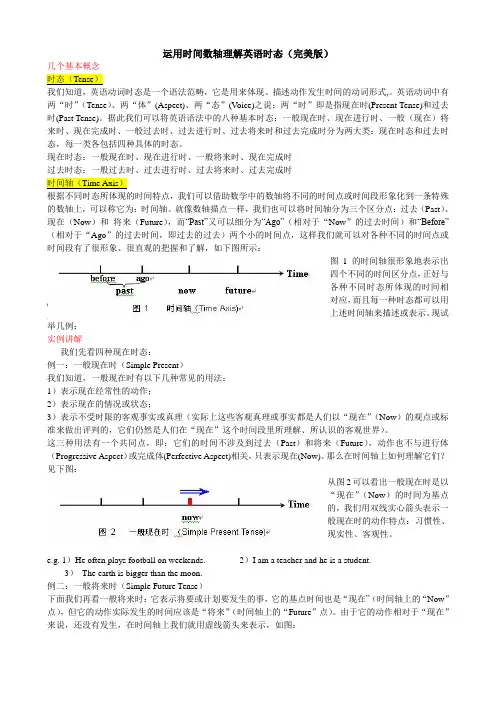
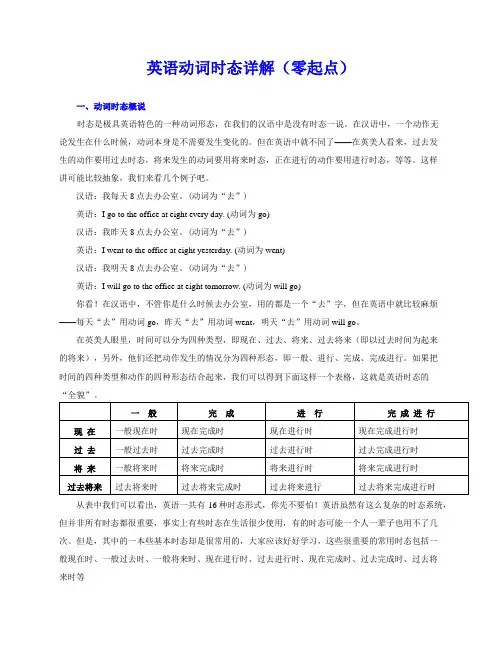
英语时态是指动词表达时间的一种方式,它用来表示动作或状态发生的时间。英语有多种时态,每种时态都有不同的形式和用法。以下是一些常见的英语时态:
1. 一般现在时 (Present Simple):
- 表示习惯、事实或普遍真理。
- 例句:She works in a bank.
2. 一般过去时 (Past Simple):
- 表示过去某个具体的时间或事件。
- 例句:I visited London last summer.
3. 一般将来时 (Future Simple):
- 表示将来的动作或计划。
- 例句:I will call you tomorrow.
4. 现在进行时 (Present Continuous):
- 表示现在正在进行的动作。
- 例句:They are studying for exams.
5. 过去进行时 (Past Continuous):
- 表示过去某个时间点正在进行的动作。
- 例句:I was reading a book when the phone rang.
6. 将来进行时 (Future Continuous):
- 表示将来某个时间点正在进行的动作。
- 例句:At this time tomorrow, they will be flying to Paris.
7. 现在完成时 (Present Perfect):
- 表示过去某个时刻开始并一直延续到现在的动作。
- 例句:I have lived here for five years.
8. 过去完成时 (Past Perfect):
- 表示过去某个时间点之前完成的动作。
- 例句:She had already left when I arrived.
9. 将来完成时 (Future Perfect):
- 表示将来某个时间点之前完成的动作。
- 例句:By next year, I will have graduated from college.