
英汉互译教程英汉语言对比PPT课件
- 格式:pptx
- 大小:1.06 MB
- 文档页数:61


Lesson 5 英汉语句子形式对比
形合与意合
单元导读:
本单元主要讲解在英汉互译时,英语句子一般趋向于形合,而汉语的句子主要靠意合来组句。前者不仅靠句中的词语或分句之间用语言形式手段(如关联词)连接起来,表达语法意义和逻辑意义,而且还有其形合手段、形式多样,主要有使用连接词语(关系词、连词和连接性副词)、介词和其他连接手段(实词的各种形态变化、it 的非人称用法、做形式主语或宾语及 there be结构中there做替补词的现象);后者靠语序和语义连贯来行文造句。总体说来,英语造句注重显性接应、注重句子的形式、注重结构完整、注重以形显义;而汉语句子注重意义的连贯、完整,句子之间靠内在的、隐性的逻辑关系来组句。
如:
① 我常见许多青年朋友, ② 聪明用功, ③成绩优异, ④而语文程度不足以达意, ⑤甚至写一封信也难得通顺, ⑥ 问其故则曰其兴趣不在语文方面。(粱实秋 《学问与兴趣》)
参考译文:
① I have come across a great many bright and diligent young friends who have done exceedingly
well in their studies, but are weak in Chinese. ② They cannot even write a letter in correct
Chinese. ③ When I asked them why, they said they were not interested in the Chinese language.
(张培基译)
将以上原句与其参考译文做一对比,我们就不难看出以下的差异:
首先,一个含有六个小句的完整的汉语句子译成了三个完整的英语句子。
其次,原来的汉语句子之间看不出明显的连接词,似乎是一种平行关系,表达一个中心思想;而三个英文句子中有明显表示上下文之间关系的连接词, 如关系代词who,并列连词but,和从属连词when等,强调句子之间的衔接和明显的逻辑关系。通过以上的分析和对比来看,汉语通过多个形散而神聚的小句表达意合,而英语句子通过一些明显的表示上下句之间的连接手段注重形合。
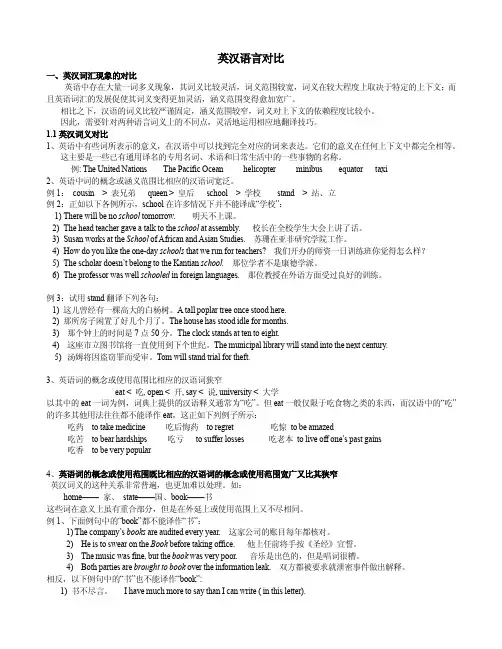
英汉语言对比
一、英汉词汇现象的对比
英语中存在大量一词多义现象,其词义比较灵活,词义范围较宽,词义在较大程度上取决于特定的上下文;而
且英语词汇的发展促使其词义变得更加灵活,涵义范围变得愈加宽广。
相比之下,汉语的词义比较严谨固定,涵义范围较窄,词义对上下文的依赖程度比较小。
因此,需要针对两种语言词义上的不同点,灵活地运用相应地翻译技巧。
1.1英汉词义对比
1、英语中有些词所表示的意义,在汉语中可以找到完全对应的词来表达。它们的意义在任何上下文中都完全相等。
这主要是一些已有通用译名的专用名词、术语和日常生活中的一些事物的名称。
例:TheUnitedNationsThePacificOceanhelicopterminibusequatortaxi
2、英语中词的概念或涵义范围比相应的汉语词宽泛。
例1:cousin>表兄弟queen>皇后school>学校stand>站、立
例2:正如以下各例所示,school在许多情况下并不能译成“学校”:
1)Therewillbenoschooltomorrow.明天不上课。
2)Theheadteachergaveatalktotheschoolatassembly.校长在全校学生大会上讲了话。
3)SusanworksattheSchoolofAfricanandAsianStudies.苏珊在亚非研究学院工作。
4)Howdoyouliketheone-dayschoolsthatwerunforteachers?我们开办的师资一日训练班你觉得怎么样?
5)Thescholardoesn’tbelongtotheKantianschool.那位学者不是康德学派。
6)Theprofessorwaswellschooledinforeignlanguages.那位教授在外语方面受过良好的训练。
例3:试用stand翻译下列各句:
1)这儿曾经有一棵高大的白杨树。Atallpoplartreeoncestoodhere.
英汉互译实用教程(郭著章)
第二章翻译过程及词义确定本章内容概述:翻译过程:1. 理解原文
2. 译文表达
3. 校核阶段翻译过程:理解原文
1. 理解语言现象a.词汇现象b.语法现象2.理解逻辑关系
3.理解所涉及事物理解原文:理解语言现象
译者必须上下有联系地理解原文的词汇含义、句法结构和惯用法等理解原文:理解语言现象
Eg.1. Life is full of ups and downs.人生充满了欢乐与痛苦。a.词汇现象:根据上下文确定词义
He has seen the ups and downsin the history of the relations between the two countries.
他经历了两国关系史上的分分合合。理解原文:理解语言现象
a.词汇现象:根据上下文确定词义
Eg. 2. The wedding ,which Heyward still remembered with pride ,was attended by a who's whoof Boston Society.
赫华德仍然记得,参加婚礼的人中有波士顿的一位社会名流,这使他感到十分得意。理解原文:理解语言现象
Eg.3. There was nolady about him. He was what the woman would call a manly man. That was why they like him.
他这人没有一点女人气。他是女人们称之为男子汉的那种人。这正是他们喜欢他的原因所在。a.词汇现象:根据上下文确定词义理解原文:理解语言现象
a.词汇现象:根据上下文确定词义4. My handwriting was so bad that after taking dictation, I couldn’t translateit.
辨识、辨认理解原文:理解语言现象
a.词汇现象:根据词性确定词义Eg.5. On his way home he bought some apples at a fruit stand.
范文范例参考
NNCE Book3课后翻译参考答案
Unit1
英译中原文:Global citizen is someone who identifies with being part of an emerging
world community and whose actions contribute to building this community's values
and practices. Global citizenship believes that humankind is essentially on and
each individual has the power to change things. In our interdependent world, global
citizenship encourages us to recognize our responsibilities toward each other and
learn from each other. Global citizens care about education, disease, poverty, and
environmental issues around the world. Today, the forces of global engagement
are helping some people identify themselves as global citizens who have a sense
of belonging to a world community. This growing global identity in large part is
made possible by the forces of modern information, communications and