WP1773_ch13
- 格式:pdf
- 大小:525.50 KB
- 文档页数:8
13 Soldering and brazing 13.1 General Soldering and brazing are important industrial methods of bonding metals, and are espe- cially widely used in connection with mass production. They have their given applica- tions in connection with particular materials and components, for which welding is unsuitable due to the considerably higher temperatures and limited abilities to bond different metals. Soldering and brazing are simple and suitable bonding processes for joining ferrous metals to non-ferrous metals, and for bonding metals having very different melting temperatures. They are the main methods of bonding used in the manu- facture of products made of copper or copper alloys. Although the main applications differ
working temperatures and to the fact that there is generally no need for any substantial chipping, grinding or cleaning of the joint as a finishing process. The following section gives an introduction to soldering and brazing methods by
describing the fundamental principles, with brief descriptions of the various methods.
Description Soldering or brazing involves heating the area to be joined to the
l), thus producing an uninterrupted metallic bond in the form of the soldered or brazed joint. Thermody- namic processes result in both materials diffusing into each other: the elevated tempera- ture of the process causes elements from the added metal to SOLDERING AND BRAZING The composition and structure of the bonding layer can be decisive for the strength of the joint, and so it is important to choose a filler metal that is compatible with the base material. The solidified layer of filler metal in the joint must be thin if the best strength and fill properties are to be achieved, which means that only in exceptional cases may the gap between the two pieces to be joined exceed 0.5 mm. Narrow gaps draw the molten metal into them by capillary attraction, with the best fill being obtained when the gap is between 0.05
i.e. the ordinary butt and overlap joints: See "Joint types" on page 6, as well as a WELDING PROCESSES HANDBOOK A particular problem when making brazed joints is that of the previously mentioned
gap width. When joining dissimilar metals
Iron 11 Brass 1) I Dzflerent combinations of materials can result in the gap . - increasing or decreasing as the parts are raised to working temperature.
Definitions Soldering, Brazing. Bonding metal parts by means of a molten bonding material
(solder, brazingJiller metal) that has a lower melting point than the base
SoIidifLing interval. The range between the lower and the upper
melting temperature
sofi soldering) and brazing are processes that
rely on the penetration of a capillary gap by a molten filler material, at a temperature which is below the melting point of the materials to be joined. The distinction between
© 2003, Woodhead Publishing LtdSOLDERING AND BRAZING the two processes depends on the working temperature: if it is below 450°C, it is referred to as brazing. Brazing may also sometimes be referred to as hard soldering. Depending on the design of the joint, we distinguish between:
Capillary joint, where the solder is drawn into the joint - which must be less than
0.5 mm wide - by capillary attraction.
Braze welding, where the gap exceeds 0.5 mm, or is a V or X joint.
Braze welding is a type of brazing, but is carried out with a procedure, and for types
of joints, that
Inj7ared soldering, using infra-red radiation from high-power halogen lamps and
reflectors.
Laser soldering is another example on radiant heating.
The choice of soldering method depends on the design of the workpiece, the quan- tities to be soldered and similar factors. WELDING PROCESSES HANDBOOK Copper and its alloys are the materials that are most commonly joined using soft soldering. The solder is normally a tin-lead alloy, and the flux is a non-corrosive or only mildly corrosive flux. Similar fluxes are also used for soldering mild steel. Strongly active fluxes must be used for soft soldering of materials with chemically stable oxide films, such as aluminium or stainless steel, in order to remove the oxide and allow the solder to come into contact with a sufficiently clean metal surface. To produce a satisfactory joint, stainless steel should be pickled immediately before soldering. Examples of solders used for aluminium include alloys of zinc and cadmium, or zinc and aluminium.
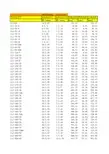
TABLE 13.1