Step 1 词类
- 格式:docx
- 大小:45.55 KB
- 文档页数:5
Step 1 词类,句子成分,构词法介绍
1、词类
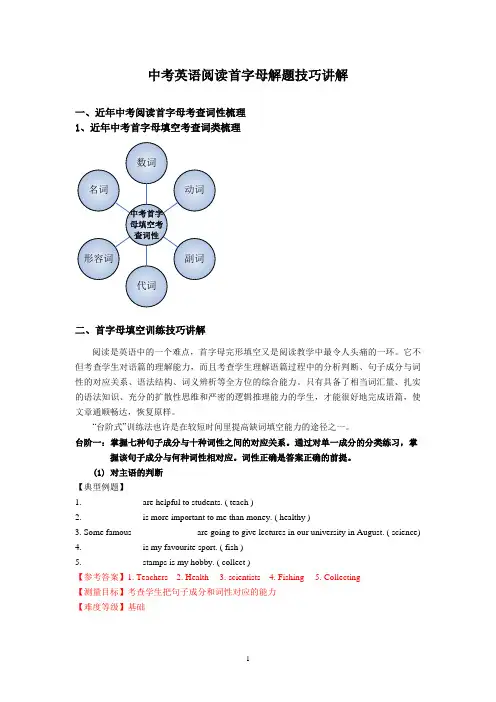
英语词类分十种:名词、形容词、代词、数词、冠词、动词、副词、介词、连词、感叹词。
(1)名词(n.):表示人、事物、地点或抽象概念的名称。如:boy,morning,bag,ball,class,
(2)代词(pron.):主要用来代替名词。如:who,she,you,it .
(3)形容词(adj.):表示人或事物的性质或特征。如:good,right,white,orange .
(4)数词(num.):表示数目或事物的顺序。如:one,two,three,first,second,third,fourth.
(5)动词(v.):表示动作或状态。如:am,is,are,have,see .
(6)副词(adv.):修饰动词、形容词或其他副词,说明时间、地点、程度等。如:now,very,here,often
(7)冠词(art.):用在名词前,帮助说明名词。如:a,an,the.
(8)介词(prep.):表示它后面的名词或代词与其他句子成分的关系。如in,on,from,above,.
(9)连词(conj.):用来连接词、短语或句子。如and,but,before .
(10)感叹词(interj.):表示喜、怒、哀、乐等感情。如:oh,well,hi,hello.
2、句子成分
英语句子成分分为七种:主语、谓语、宾语、定语、状语、表语、宾语补足语。
(1)主语是句子所要说的人或事物,回答是“谁”或者“什么”。通常用名词或代词担任。
如:I’m Miss Green.
(2)谓语动词说明主语的动作或状态,回答“做(什么)”。主要由动词担任。
如:Jack cleans the room.
(3)表语在系动词之后,说明主语的身份或特征,回答是“什么”或者“怎么样”。通常由名词、代词或形容词担任。如:My name is Ping ping。
(4)宾语表示及物动词的对象或结果,回答做的是“什么”。通常由名词或代词担任。
如:He can spell the word.
有些及物动词带有两个宾语,一个指物,一个指人。指物的叫直接宾语,指人的叫间接宾语。间接宾语一般放在直接宾语的前面。如:He wrote me a letter..
有时可把介词to或for加在间接宾语前构成短语,放在直接宾语后面,来强调间接宾语。如:He wrote a letter to me .
(5)定语修饰名词或代词,通常由形容词、代词、数词等担任。如:Shanghai is a big city .
(6)状语用来修饰动词、形容词、副词,通常由副词担任。如:He works hard .
(7)宾语补足语用来说明宾语怎么样或干什么,通常由形容词或动词充当。
如:They usually keep their classroom clean. / He often helps me do my lessons.
同位语通常紧跟在名词、代词后面,进一步说明它的情况。如:Where is your classmate
Tom ?
3、构词法 英语构词法主要有:合成法、派生法和转换法。
(1)合成法:如:spaceship,headache,basketball,playground等等。
(2)派生法:
1)派生名词:①动词+er/or ②动词+ing ③动词+(t)ion ④形容词+ness ⑤其他,
如:inventor,learner,swimming,congratulation,kindness,carelessness,knowledge
2)派生形容词:①名词+y ②名词+ful ③动词+ing/ed ④friendly ⑤dangerous
⑥Chinese;Japanese ⑦English ⑧French ⑨German ⑩国名+(i)an
如:snowy,sunny,hopeful,beautiful,interesting,follwing,daily(每日的),nervous,delicious
3)派生副词:①形容词+ly ②其它,
如:slowly,angrily,full→fully,good→well,possible→possibly等等。
(3)转换法:
1.动词转换为名词的常见方式
1)“动词+ion”
例如:pollute→pollution, invent→invention, discuss→ discussion
2)“动词去e+ ation”
例如:invite→invitation,organize→organization
3)“动词+er”
例如: work→worker, teach→teacher, write→writer, speak→speaker, run→runner, win→winner
4)“动词+ or"
例如:invent→inventor, act→actor
5)“动词+ing"
例如:build→building, begin→beginning, paint→painting
6)“动词十ment"
例如:develop→development, amuse→amusement
2.动词转换为形容词的常见方式
1)“动词+ive"
例如:act→active, attract→attractive
2)“动词+ able"
例如:change→changeable, enjoy→enjoyable
3)“动词+ing"
例如:excite→exciting, follow→following
4)“动词+ ed"
例如:frighten→frightened, bore→bored
5)“动词+ ful".
例如:forget→forgetful
3.名词转换为形容词的常见方式
1)“名词+ ful"
例如:care→careful, use→useful, power→powerful
2)”名词+ less"
例如:care→careless, home→homeless 3)“名词+ly"
例如:friend→friendly, love→lovely
4)“名词+y"
例如:sun→sunny, wind→windy, health→healthy, noise→noisy, luck→lucky, snow→snowy
5)“名词+ing"
例如:interest→interesting
6)“名词+n"
例如:America→American, Australia→Australian
7)“名词+ ern"
例如:south→southern, north→northern
8)“名词+ ous"
例如:danger→dangerous
9)“名词+ en"
例如:wood→wooden, gold→golden
10)“名词+al"
例如:nation→national, education→educational
4.形容词转换为名词的常见方式
1)“形容词+y"
例如:difficult→difficulty, honest→honesty
2)“形容词词尾t改成ce"
例如:different→difference, important→importance
3)“形容词+ ness"
例如:ill→illness, kind→kindness
4)“形容词+ dom"
例如:free→freedom, wise→wisdom
考生答题时可遵循下列步骤:(1)明确所给词的词性;(2)弄清所给句子的句意;(3)确定空处所填词的词性;(4)确定所给词的形式变化;(5)注意词汇知识及习惯用法;(6)注意句子是否通顺。
第一组
1. All the students in Shanghai should help fight ___________________ to protect the
environment. (pollute)
2. Now the good method is ___________________ used in the experiments. (wide)
3. The old man was __________________ to the policeman who found the lost car for him.
(thank)
4. For the _________________ time he became worried about the future because of the
globalfinancial crisis (金融危机). (one)
5. Help __________________ to some more shrimps, children. (you) 练一练 6.
Qingming Festival is an important Chinese festival to remember people's ________________relatives. (die)
7. Professor Brown can still tell quite a few funny ___________________ , although he is
already in his eighties. (story)
8. Bolt _________________ in winning the gold medal in the 2008 Beijing Olympic Games.
(success)
第二组
1.
As a fashion model, she is always on a diet to control her ____________________ . (weigh)
2. Could you show ___________________ how to control the new machine? (he)
3. Mike bought me a new English dictionary as a present on my birthday. (nine)
4. Many people lost their ______________ in the earthquake in Sichuan Province. (life)
5. Our new flat is going to be decorated with furniture. (tradition)
6. We can ___________________ our reading ability through reading a page of English every