
一般将来时 be going to 结构
- 格式:ppt
- 大小:4.64 MB
- 文档页数:23

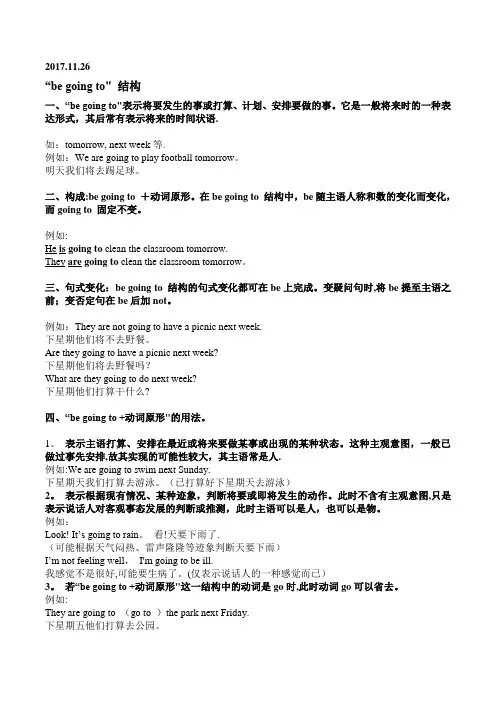
2017.11.26“be going to" 结构一、“be going to"表示将要发生的事或打算、计划、安排要做的事。
它是一般将来时的一种表达形式,其后常有表示将来的时间状语.如:tomorrow, next week等.例如:We are going to play football tomorrow。
明天我们将去踢足球。
二、构成:be going to +动词原形。
在be going to 结构中,be随主语人称和数的变化而变化,而going to 固定不变。
例如:He is going to clean the classroom tomorrow.They are going to clean the classroom tomorrow。
三、句式变化:be going to 结构的句式变化都可在be上完成。
变疑问句时,将be提至主语之前;变否定句在be后加not。
例如:They are not going to have a picnic next week.下星期他们将不去野餐。
Are they going to have a picnic next week?下星期他们将去野餐吗?What are they going to do next week?下星期他们打算干什么?四、“be going to +动词原形"的用法。
1。
表示主语打算、安排在最近或将来要做某事或出现的某种状态。
这种主观意图,一般已做过事先安排,故其实现的可能性较大,其主语常是人.例如:We are going to swim next Sunday.下星期天我们打算去游泳。
(已打算好下星期天去游泳)2。
表示根据现有情况、某种迹象,判断将要或即将发生的动作。
此时不含有主观意图,只是表示说话人对客观事态发展的判断或推测,此时主语可以是人,也可以是物。
例如:Look! It’s going to rain。

be going to 句型的用法1. 意义:be going to是"一般将来时"的一种表现形式,表示将来某个时间将要发生的动作或存在的状态,意思为"打算,将要"。
其中"be"会根据主语的人称变化成"is,am,are"等形式。
"to"跟在它后面的动词必须是动词原形。
通常和tomorrow, thisevening(week/ year…), next week(Sunday…)等连用2. 结构:主语+be(am/is/are)+going to+动词原形(系动词(am/is/are)的用法:我(I)用am,你(you)用are, is 连着他(he)她(she)它(it),凡是复数都用are)3.肯定句:主语+be(am/is/are)+going to +动词原形A.He is going to buy a book after school.B. I am going to climb mountains.4.否定句:在系动词(am/is/are)后+notA. He isn’t going to buy a book after school.5.一般疑问句:Be+主语+going to +动词原形(把系动词提到主语前面)A.Is he going to buy a book after school? -----No, he isn’t.B.Are you going to climb mountains? ------Yes, I am.(变一般疑问句时,第一人称变为第二人称)6.特殊疑问句:疑问词+be +主语+going to +动词原形He is going to have a picnic next Sunday. 下个星期天他打算去野餐。
---What is he going to do next Sunday?----When is he going to have a picnic?。
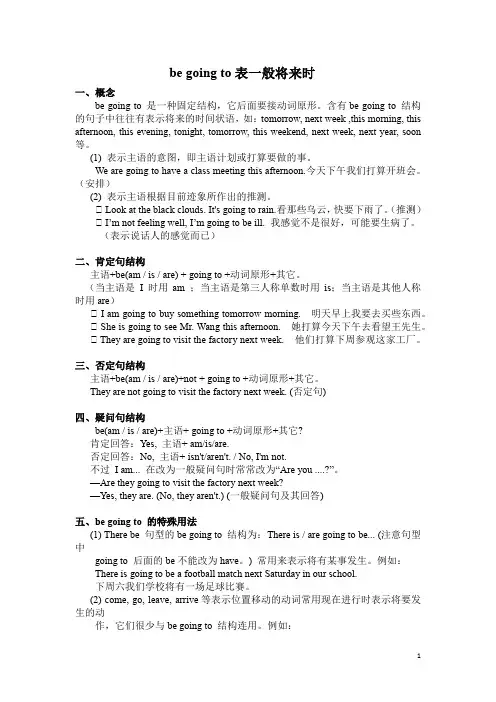
be going to表一般将来时一、概念be going to 是一种固定结构,它后面要接动词原形。
含有be going to 结构的句子中往往有表示将来的时间状语,如:tomorrow, next week ,this morning, this afternoon, this evening, tonight, tomorrow, this weekend, next week, next year, soon 等。
(1) 表示主语的意图,即主语计划或打算要做的事。
We are going to have a class meeting this afternoon.今天下午我们打算开班会。
(安排)(2) 表示主语根据目前迹象所作出的推测。
① Look at the black clouds. It's going to rain.看那些乌云,快要下雨了。
(推测)① I’m not feeling well, I’m going to be ill. 我感觉不是很好,可能要生病了。
(表示说话人的感觉而已)二、肯定句结构主语+be(am / is / are) + going to +动词原形+其它。
(当主语是I 时用am ;当主语是第三人称单数时用is;当主语是其他人称时用are)① I am going to buy something tomorrow morning. 明天早上我要去买些东西。
① She is going to see Mr. Wang this afternoon. 她打算今天下午去看望王先生。
① They are going to visit the factory next week. 他们打算下周参观这家工厂。
三、否定句结构主语+be(am / is / are)+not + going to +动词原形+其它。
They are not going to visit the factory next week. (否定句)四、疑问句结构be(am / is / are)+主语+ going to +动词原形+其它?肯定回答:Yes, 主语+ am/is/are.否定回答:No, 主语+ isn't/aren't. / No, I'm not.不过I am... 在改为一般疑问句时常常改为“Are you ....?”。