
have的用法小结
- 格式:ppt
- 大小:578.50 KB
- 文档页数:16
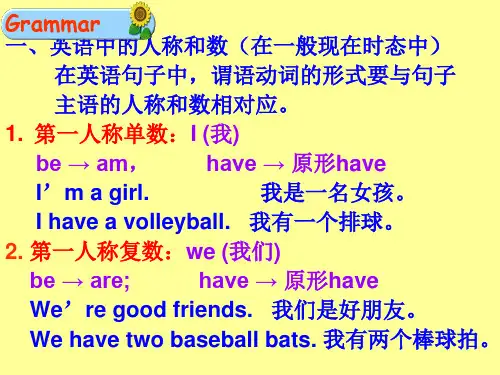

have原形,用于第一人称(I, we),第二人称(you),及第三人称复数(they)或者复数名词;has是have的第三人称单数形式(he, she, it)或单数名词,或不可数名词做主语;having 是have的现在分词;had是have的过去式;过去分词。
一、have用作实义动词。
1. have 用作“有”表示拥有的意思。
如:I have an apple and he has two bananas. 我有一个苹果,他有两个香蕉。
You have a new English teacher. 你们有了一个新的英语老师。
It has two big eyes. 它有一双大眼睛。
2.have 有“吃、喝”的含义。
如:have breakfast 吃早饭have lunch 吃午饭have supper 吃晚饭have dinner 吃正餐have a meal 吃一顿饭例句:I often have milk and eggs for breakfast.我早饭经常喝牛奶吃鸡蛋。
Do you usually have tea in the afternoon?你通常下午喝茶吗?What do you often have for your three meals?你的一日三餐通常吃什么?3.have 用来描述病情。
如:have a cold 感冒have a toothache牙痛have a fever发烧have a sore back背痛例句:“What’s the matter?”你怎么了?“I have a toothache.”我牙疼。
4. have to 不得不,与must意思相同。
如:I have to tidy my room.我不得不整理房间。
She has to help with the washing.她得帮忙洗衣服。
You don't have to go if you don't want to.如果你不想去,你就不必去。


have⽤法⼩结 have是⽤以构成完成式及完成式的不定式,表⽰已经…have⽤法⼩结有哪些呢?本⽂是店铺整理have⽤法⼩结的资料,仅供参考。
have⽤法⼩结 ⼀、have作实意动词. 1.表⽰“有”的意思. Look,I have wings,just like you. He had fair hair and blue eyes. 〔注1〕:其否定和疑问形式变化,在美国通常⽤助动词do. 〔注2〕:在英国⼝语中常⽤have got代替have. Look,can’t you see I've got teeth,too. I haven't got any jewelry. 2.have和⼀些其他名词连⽤,表⽰: (1)⼀种活动. We have no classes on Sunday.(上课) they’re going to have a volleyball match.(举⾏⽐赛) Are we going to have a meeting this week?(开会) We are going to have a talk this afternoon.(听报告) (2)患病. I have got a headache. I have a bad cold. (3)发⽣的情况. I've had so many falls that I'm black and blue all over.(跌跤)(JBⅣL10) (4)⽣育. The queen ant may have tens of thousands of babies in one summer. 3.和⼀与动词同形的名词连⽤,表⽰⼀个动作(have+a+由动词转化和名词). Are you going to have a swim. I have a long talk with the teacher. 4.have on sth.或have sth.on,表⽰“穿着”、“戴着”(=to be wearing). I noticed he had on bedroom slippers. At the ball Motile had a diamond necklace on. 5.表⽰“吃”、“喝”. I wanted to have a cup of tea and some eggs. Does she have lunch at home? 6.组成复合结构即“have+宾语+宾语补⾜语”. (1)不加to的动词不定式作宾语补⾜语(have sb.do sth.),表⽰让、叫某⼈做某事. The soldier had him stand with his back to his father. 〔注〕:否定结构表⽰“不能让…”或“从未有⼈…”. We won't have you blame it on others. She had never had anybody speak to her that way before. (2)现在分词作宾语补⾜语(have sb.(sth.)doing),表⽰让(使)某⼈做某事. …the two men had their lights burning all night long…. (3)过去分词作宾语补⾜语(have sb.(sth.)done),表⽰: ①使(让,请)别⼈作某事,表⽰的动作是别⼈做的. Emperor Qin Shi Huang had all the walls joined up. …he should have new clothes made of this splendid cloth for the coming great procession. ②遭遇到某事. Houses near airports sometimes have their windows broken. Workers in some industries have their hearing harmed by the noise of the machine. ⼆、have与to⼀起构成情态动词,表⽰“不得不”、“必 须”,可⽤于各种时态. I have to look after her at home. 三、have做助动词与动词的过去分词⼀起构成现在完成时 和过去完成时. Great changes have taken place the last two years. They said that the Arab had stolen their camel. 四、have⽤于“情态动词+have+过去分词”的结构,有推测、假设之意. 1.must+have+过去分词,表⽰对过去时间发⽣的动作或存在的情况的推测,⼀般⽤于肯定句. Her father thought that she must have met a fairy. You must have left your bag in the theatre. 2.can(could)+have+过去分词,表⽰对过去发⽣事情的“不肯定”,常⽤于否定句和疑问句. He can't have been to your home,he doesn't know your address. 3.should+have+过去分词,表⽰“某事本该早做⽽实际未做”,⽤于肯定句. You should have been here five minutes ago. 五、have⽤于某些成语,表⽰固定的意思. 1.have a word(a few words)with sb.,表⽰和某⼈说⼀(⼏)句话. Where's Peter?I want to have a word with him. 2.had better+不带to的动词不定式,表⽰“…最好…”. I'd better go and look for him now. 3.have nothing(something)to do with,表⽰“和…⽆(有)”关系. Most of questions had nothing to do with Edison's lessons. 动词have的⽤法 动词have在中学英语中的⽤法 ⼀、have作实意动词。

have,has的用法have和has是英语中常见的动词,它们表示"拥有"或者"持有"的意思。
这两个词根据主语的人称和数的不同形式有所变化:have用于第一、第二以及第三人称复数主语(I, you, we, they),以及第二人称单数主语(you),而has则用于第三人称单数主语(he, she, it)。
一、have和has的肯定句用法1. 拥有物体:have/has + 名词例如:- I have a car.(我有一辆车。
)- She has a cat. (她有一只猫。
)- They have two dogs. (他们有两只狗。
)2. 拥有特征、感觉或状态:have/has + 形容词例如:- We have a big house. (我们有一所大房子。
)- He has a lovely smile. (他有一个可爱的笑容。
)- She has a sore throat. (她喉咙痛。
)3. 持有某种位置: have/has + 介词短语例如:- They have a picnic in the park. (他们在公园里野餐。
)- He has a meeting at 2 p.m. (他下午两点有个会议。
)二、have和has的否定句用法1. 在肯定句中加入否定词not构成否定句例如:- I do not have a car. (我没有汽车。
)- She does not have a cat. (她没有猫。
)- They do not have two dogs. (他们没有两只狗。
)2. 在肯定句的缩略形式中,常用haven't 和 hasn't例如:- I haven't seen him today. (我今天还没见到他。
)- She hasn't finished her homework. (她还没有做完作业。