have宾语宾补
- 格式:docx
- 大小:9.76 KB
- 文档页数:2
have+宾语+宾补
have+宾语+动词”结构归纳
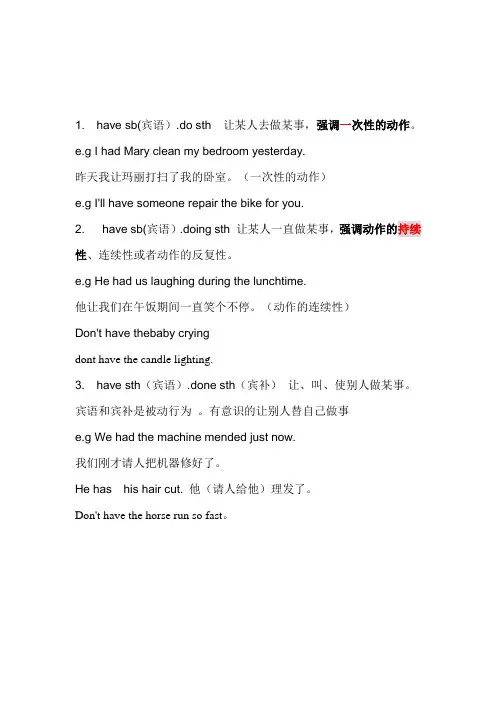
“ have+宾语+动词”这结构中的动词可以有多种形式,且表示的含义也各不相同,现分述于下:
1. have+宾语+不定式(作定语)
该结构中的不定式用作定语修饰其前的名词。
如: ⑴表示“有……要……”。
如:
I have a few letters to write.
We have a lot of work to do. (2) 表示“有……的……” 。
如:
Birds have the instinct to learn to fly. 鸟有飞的本能。
She didn ' t have the courage to refuse. 她没有勇气拒绝(即没有拒绝的勇气)
2. have+宾语+动词原形(作宾语补足语)
(1) 表示叫(使、让)某人做某事,其中的 have 是使役动词。
如: He had his son clean the car. 他叫他的儿子擦车。
I 'll have Hudson show you to your room. 我让哈德逊带你去看你的房间。
(2) 用于否定式,表示“不能让”或“从未有人” ,通常与 won 't 连用。
如:
I won 't have you tell me what to do. 我不能让你对我做的事指手划脚。
3. have+宾语+现在分词(作宾语补足语)
(1) 表示使(让)某人或某物一直不停地做某事。
如:
I have the car waiting. 我让汽车等着。
He had us laughing all through the meal. 他弄得我们整个吃饭时间都欢笑不止。
(2) 表示客观上有某情况在进行或持续。
如:
We have people standing on our steps all day. 我们的台阶上整天站着人。
I looked up and found we had water dripping through the ceiling. 我抬头一看, 发现有水渗过天花板 滴下来。
(3) 表示使(让)某人开始做起某事来。
如:
He soon had them all laughing. 他很快逗得大家都笑了。
I have them all talking to each other. 我使得他们全都相互交谈起来。
(4) 表示将要发生的事。
如:
I have guests coming. 我有客人要来。
(现在分词用作宾语补语)
It ' s lovely to have children playing in the garden again. 孩子们又来到园子里玩耍,这很有意思。
(5) 表示说服或命令某人做某事。
如:
He had me doing all kinds of jobs for her. 他叫我为她做各种事情。
(6) 表示经过一段时间达到的效果。
如:
He had me swimming in a week. 他一个星期就教会我游泳了。
I 'll have you speaking English in six months. 我要你 6 个月内就开口讲英语。
(7) 表示容忍或允许某人做某事,主要用于否定式,常与 won ' t, can 't 连用。
如:
I won ' t have you telling me what to do. 我用不着你来对我指手画脚。
She won 't have the boys arriving late. 她不允许这些男孩子迟到。
(8) 表示遭遇令 have 的主语不愉快的事。
如:
我有几封信要写。
我们有许多工作要做。
If film-stars put their numbers in telephone books they ' d have everyone ring them up. 电影明星们如果把他们的电话号码列入电话簿,就会招致所有的人给他们打
电话。
If you don 't put a fence round your garden you 'll have people walking in and stealing your fruit. 如
果你不把你的果园用篱笆围起来,人们会走进来偷摘果子。
4. have+宾语+过去分词(作宾语补足语)
(1) 表示请(让)某人做某事,此时过去分词所表示的动作不是由主语执行的。
如:They are having their house painted. 他们的房子在被粉刷。
Can I have this parcel weighed here? 我可以在这儿称一下这个包裹吗?
(2) 表示主语的经历或遭遇,这种动作往往是违背主语意愿的。
如:
He had his finger cut. 他的手指弄伤了。
He had his window broken to pieces. 他的窗户给打破了。
(3) 表示完成或解决某事,此时过去分词表示的动作主语也可能参加。
如:
We now have the problem solved. 我们现已把这个问题解决了。
We have your medicine prepared now. 我们已把你的药准备好了。
(4) 表示拒绝或不允许发生某事,多与won 't 连用。
如:
I won ' t have anything said against her. 我不允许谁说她的坏话。
I won ' t have my house turned into a hotel. 我不许把我的房子变成旅馆。