
Sonnet and Sonnet Appreciation
- 格式:ppt
- 大小:141.00 KB
- 文档页数:27

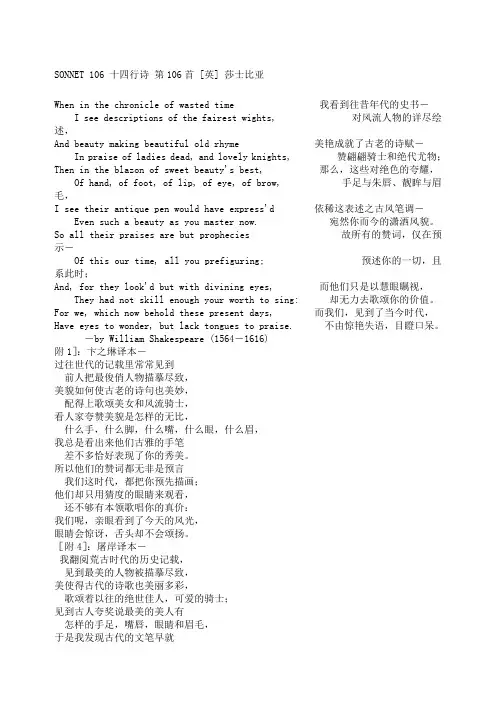
SONNET 106 十四行诗第106首 [英] 莎士比亚When in the chronicle of wasted time 我看到往昔年代的史书-I see descriptions of the fairest wights, 对风流人物的详尽绘述,And beauty making beautiful old rhyme 美艳成就了古老的诗赋-In praise of ladies dead, and lovely knights, 赞翩翩骑士和绝代尤物;Then in the blazon of sweet beauty's best, 那么,这些对绝色的夸耀, Of hand, of foot, of lip, of eye, of brow, 手足与朱唇、靓眸与眉毛,I see their antique pen would have express'd 依稀这表述之古风笔调-Even such a beauty as you master now. 宛然你而今的潇洒风貌。
So all their praises are but prophecies 故所有的赞词,仅在预示-Of this our time, all you prefiguring; 预述你的一切,且系此时;And, for they look'd but with divining eyes, 而他们只是以慧眼瞩视,They had not skill enough your worth to sing: 却无力去歌颂你的价值。
For we, which now behold these present days, 而我们,见到了当今时代,Have eyes to wonder, but lack tongues to praise. 不由惊艳失语,目瞪口呆。
-by William Shakespeare (1564-1616)附1]:卞之琳译本-过往世代的记载里常常见到前人把最俊俏人物描摹尽致,美貌如何使古老的诗句也美妙,配得上歌颂美女和风流骑士,看人家夸赞美貌是怎样的无比,什么手,什么脚,什么嘴,什么眼,什么眉,我总是看出来他们古雅的手笔差不多恰好表现了你的秀美。


English Poetry Appreciation --Sonnet 181.RhymeThe first 12 lines rhyme every other line and t he last two lines’end rhymes are the same, which forms the rhyme—scheme of abab,cdcd, efef, gg.(Sonnet 18William Shakespeare (1564—1616)Shall I compare thee to a summer’s day?/ei/ aThou art more lovely and more temperate: /eit/ bRough winds do shake the darling buds of May, /ei/ aAnd summer’s lease hath all too short a date, /eit/ bSometimes too hot the eye of heaven shines, /aiz/ cAnd often is his gold complexion dimed:/imd/ dAnd every fair form fair sometimes declines, /aiz/ cBy chance or nature’s changing course untrimm’d:/imd/ dBut thy eternal summer shall not fade,/eid/ eNor lose posses sion of that fair thou ow’st:/əʊst/ fNor shall death brag thou wander'st in his shade, /eid/ eWhen in eternal lines to time thou grow’st. /əʊst / fSo long as men can breathe, or eyes can see, /iː/ gSo long lives this,and this gives life to thee。

sonnet名词解释Sonnet(十四行诗)是一种形式固定的诗歌形式,最早起源于13世纪的意大利。
Sonnet一词源于意大利语“Sonetto”,意为“小歌”。
Sonnet通常由14行组成,采用特定的韵律和押韵格式,虽然其形式不同国家、不同时期有所变化,但是它们都保持了共同的结构特征。
Sonnet被广泛用于表达爱情、悲伤、宗教和思考等主题。
Sonnet最早是由意大利诗人彼得拉克创造的,他写的首个Sonnet集《十四行诗集》被认为是Sonnet的鼻祖。
彼得拉克的Sonnet以表达爱情为主题,情感热烈而又深沉,开创了Sonnet表达感情的传统。
不久之后,Sonnet传入了英格兰,并迅速在文艺复兴时期的英国文学中流行起来。
英国著名诗人莎士比亚在16世纪为Sonnet的发展起到了非常重要的推动作用。
他创作了一系列Sonnet,表达了爱情、美丽、时间和死亡等主题.Sonnet通常由两个部分组成,其中第一个部分有8行,被称为“八行诗”或“八行体”,通常分为两个四行的部分(四联体),押韵方案通常为ABBA ABBA。
第二部分有6行,被称为“六行诗”或“六行体”,也被称为“尾联”。
六行体通常有不同的押韵方案,如CDE CDE或CDCDCD。
Sonnet的结构可以帮助诗人在有限的空间内有条理地表达自己的想法和情感。
Sonnet的主题可以是多种多样的,但爱情是最常见和最受欢迎的主题之一。
Sonnet被广泛用于表达爱情的各个方面,如欢乐的恋爱、失恋的痛苦以及对远离或已故爱人的思念之情。
在Sonnet中,诗人常常使用隐喻、象征、比喻和其他修辞手法来表达其情感,使读者产生真实而深刻的共鸣。
除了爱情之外,Sonnet还被用来表达其他主题,如宗教、自然和社会等。
例如,一些Sonnet可以表达对上帝或宗教信仰的赞美和思考,另一些Sonnet可以描述自然的美丽和力量,还有一些Sonnet可以探讨社会问题,如不平等和流离失所。
总之,Sonnet是一种结构严谨、形式固定的诗歌形式,它以它独特的押韵和韵律格式,提供了一个有效的方式来表达诗人的感情和思想。