介词besides,but和except的用法辨析
- 格式:pdf
- 大小:50.33 KB
- 文档页数:2
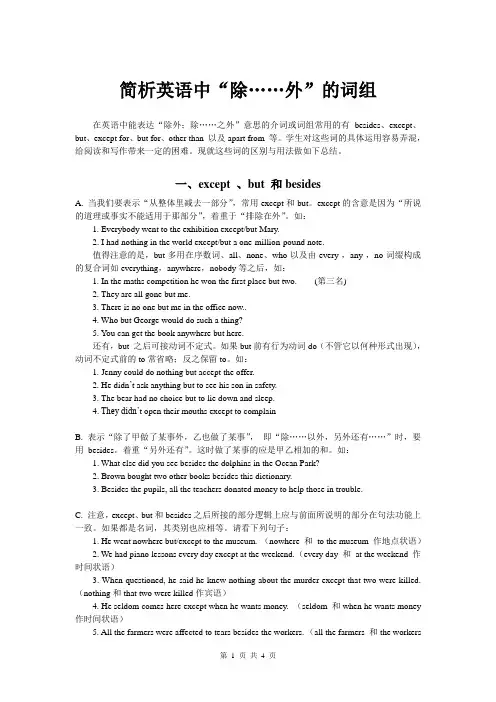
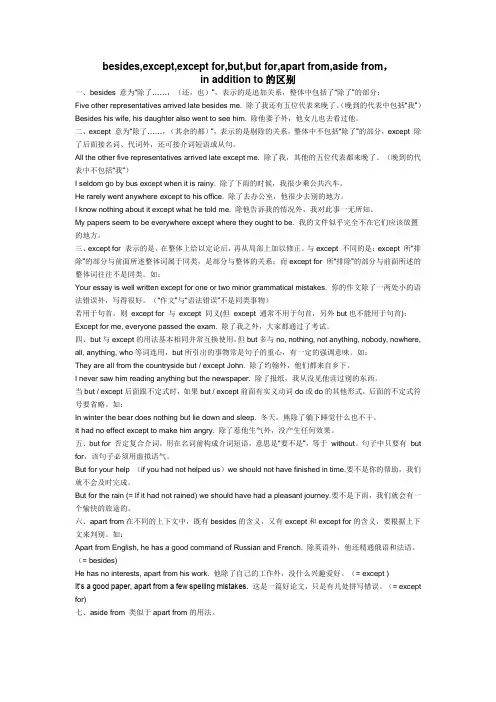
1介词besides,but,except的用法辨析 1.基本区别 三者都可表示“除外”,但besides表示一种累加关系,意指“除了什么之外,还有……”;而except或but则表示一种排除关系,意指“除了什么之外,不再有……”。如: Besides his wife,his daughter also went to see him. 除他妻子外,他女儿也去看过他(即妻子女儿都去看过他)。 Nobody went to see him except[but]his wife. 除他妻子外,没有一个人看过他(即只有他妻子去看过他)。 注:在否定句中,besides也表示“除……之外不再有……”,与but,except同义。如: No one passed the exam besides[except]Jim. 除吉姆外,没一个人通过考试。 2. but与except (1)两者都可表示“除……外不再有……”,但含义上略有差别:but侧重指意义的几乎完整性,而except则侧重指后面除去的部分。比较: All are here but one.除一个人都到了。 All are here except one.还有一个人没到。 (2)在现代英语中,but的介词用法十分有限,一般说来,它只能用在下列词语之后: no①,no one,nobody,nothing,nowhere等 any②,anyone,anybody,anything,anywhere等 every③,everyone,everybody,everything,everywhere等 all④,none等 who⑤,what,where等 Everyone knows it but you.除你之外大家都知道。 I haven't told anybody but you.除你之外,我没告诉任何人。 No one but he[him]showed much interest in it.除他之外没有一个人对此有很大兴趣。 一般说来,若没有出现上述词汇,就不宜使用介词but,否则可能造成错句。但是except却没有以上限制。比较: 正:The window is never opened except in summer. 除夏天外,这扇窗户从不打开。 误:The window is never opened but in summer. (3)but一定不能用于句首,except通常不用于句首: 除我之外每个人都累了。 正:Everyone is tired but(except)me. 2正:Everyone but(except)me is tired. 误:But(Except)me,everyone is tired. 注:except for可用于句首,表示except的意思: 正:Except for me,everyone is tired. 3. except与except for: except主要用来谈论同类的东西,而except for则主要用来谈论不同类的东西,有时含有惋惜之意。如: All compositions are well written except yours. 除了你的作文外,其他的作文都写得很好。 His composition is good except for a few spelling mistakes. 他的作文写得不错,只是有几处拼写错误。 注:若用于句首,则except for与except同义(但except通常不用于句首)。 4. except for与but for: except for主要表示排除,but for主要表示一种虚拟条件(与虚拟语气连用)。如: Except for me,everyone passed the exam. 除了我之外,大家都通过了考试。 But for my help,she would not have passed the exam. 若不是我的帮助,她就不会通过考试。 But for the atmosphere plants would die. 如果没有大气,植物就会死亡。 5.besides的其他用法 besides除用作介词外,还用作副词,其意为“此外”、“而且”,可用于分句句首(通常用逗号隔开)或句尾。如: I don't want to go;besides,I'm too tired. 我不想去,而且我也太累了。 This car belongs to Smith,and he has two others besides. 这部车是史密斯的,此外他还有两部。