
“一般将来时”的 “be going to+动词原形”结构
- 格式:ppt
- 大小:2.90 MB
- 文档页数:16
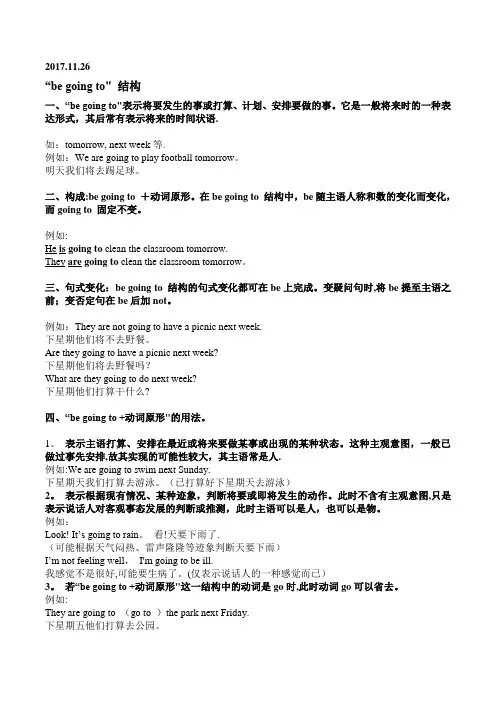
2017.11.26“be going to" 结构一、“be going to"表示将要发生的事或打算、计划、安排要做的事。
它是一般将来时的一种表达形式,其后常有表示将来的时间状语.如:tomorrow, next week等.例如:We are going to play football tomorrow。
明天我们将去踢足球。
二、构成:be going to +动词原形。
在be going to 结构中,be随主语人称和数的变化而变化,而going to 固定不变。
例如:He is going to clean the classroom tomorrow.They are going to clean the classroom tomorrow。
三、句式变化:be going to 结构的句式变化都可在be上完成。
变疑问句时,将be提至主语之前;变否定句在be后加not。
例如:They are not going to have a picnic next week.下星期他们将不去野餐。
Are they going to have a picnic next week?下星期他们将去野餐吗?What are they going to do next week?下星期他们打算干什么?四、“be going to +动词原形"的用法。
1。
表示主语打算、安排在最近或将来要做某事或出现的某种状态。
这种主观意图,一般已做过事先安排,故其实现的可能性较大,其主语常是人.例如:We are going to swim next Sunday.下星期天我们打算去游泳。
(已打算好下星期天去游泳)2。
表示根据现有情况、某种迹象,判断将要或即将发生的动作。
此时不含有主观意图,只是表示说话人对客观事态发展的判断或推测,此时主语可以是人,也可以是物。
例如:Look! It’s going to rain。

英语语法一般将来时be going to用法和习题be going to +动词原形=will +动词原形将要做.../打算做...1、肯定句结构:主语+be(am/is/are)going to +动词原形2、否定句结构:主语+be (am/is/are) not going to +动词原形3、一般疑问句结构:be (am/is/are) +主语+going to +动词原形肯定回答:Yes,主语(人称代词)+am/is/are.否定回答:No, 主语(人称代词)+am/is/are +not.be动词用法口诀I 用_____, you 用_____, is 连着____、_____、_____.单数用_____, 复数用______(一)选择填空。
()1.I ____ going to play football tomorrow. A.is B.am C.are ()2.She ____ going to climb mountain(爬山). A.am B.is C.are ()3.He ____ going to swim. A.am B.are C.is()4.They____ going to go to school. A.am B.is C.are()5.You____ going to go to bed. A.am B.are C.is()6.Lucy’s mother ____ going to watch TV. A am B is C are ()7.____ she going to dance? A.am B.is C.are()8.____ you going to have lunch? A.am B.is C.are()9.____ I going to play the piano? A am B is C are()10.I am going to ______ stories. A read B reads C reading()11.She is going to ______ the violin. A play B plays C playing ()12.Are we going to ______a play? A puts on B putting on Cput on ()13.Is my sister going to ______? A drawing B draws Cdraw ()14.What are you going to ______? A does B do Cdoing()15.Where are we going to ______? A go shopping B goes shopping (二)把下列肯定句变为否定句。
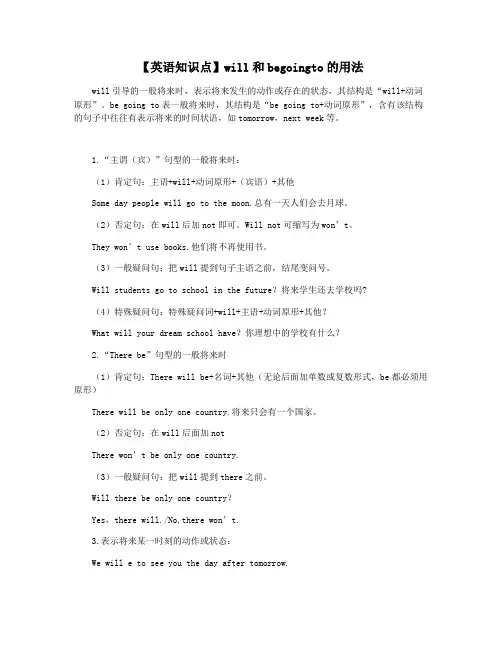
【英语知识点】will和begoingto的用法will引导的一般将来时,表示将来发生的动作或存在的状态,其结构是“will+动词原形”。
be going to表一般将来时,其结构是“be going to+动词原形”,含有该结构的句子中往往有表示将来的时间状语,如tomorrow,next week等。
1.“主谓(宾)”句型的一般将来时:(1)肯定句:主语+will+动词原形+(宾语)+其他Some day people will go to the moon.总有一天人们会去月球。
(2)否定句:在will后加not即可。
Will not可缩写为won’t。
They won’t use books.他们将不再使用书。
(3)一般疑问句:把will提到句子主语之前,结尾变问号。
Will students go to school in the future?将来学生还去学校吗?(4)特殊疑问句:特殊疑问词+will+主语+动词原形+其他?What will your dream school have?你理想中的学校有什么?2.“There be”句型的一般将来时(1)肯定句:There will be+名词+其他(无论后面加单数或复数形式,be都必须用原形)There will be only one country.将来只会有一个国家。
(2)否定句:在will后面加notThere won’t be only one country.(3)一般疑问句:把will提到there之前。
Will there be only one country?Yes,there will./No,there won’t.3.表示将来某一时刻的动作或状态:We will e to see you the day after tomorrow.There will be a wonderful show next week.4.表示将来某一段时间内经常的动作或状态:The students will e and work in the lab once a week.We will e and work in this factory every year.1.概念(1)表示主语的意图,即主语计划或打算要做的事。

be going to 句型的用法1. 意义:be going to是"一般将来时"的一种表现形式,表示将来某个时间将要发生的动作或存在的状态,意思为"打算,将要"。
其中"be"会根据主语的人称变化成"is,am,are"等形式。
"to"跟在它后面的动词必须是动词原形。
通常和tomorrow, thisevening(week/ year…), next week(Sunday…)等连用2. 结构:主语+be(am/is/are)+going to+动词原形(系动词(am/is/are)的用法:我(I)用am,你(you)用are, is 连着他(he)她(she)它(it),凡是复数都用are)3.肯定句:主语+be(am/is/are)+going to +动词原形A.He is going to buy a book after school.B. I am going to climb mountains.4.否定句:在系动词(am/is/are)后+notA. He isn’t going to buy a book after school.5.一般疑问句:Be+主语+going to +动词原形(把系动词提到主语前面)A.Is he going to buy a book after school? -----No, he isn’t.B.Are you going to climb mountains? ------Yes, I am.(变一般疑问句时,第一人称变为第二人称)6.特殊疑问句:疑问词+be +主语+going to +动词原形He is going to have a picnic next Sunday. 下个星期天他打算去野餐。
---What is he going to do next Sunday?----When is he going to have a picnic?。