
情态动词讲解 最好版
- 格式:ppt
- 大小:225.50 KB
- 文档页数:13
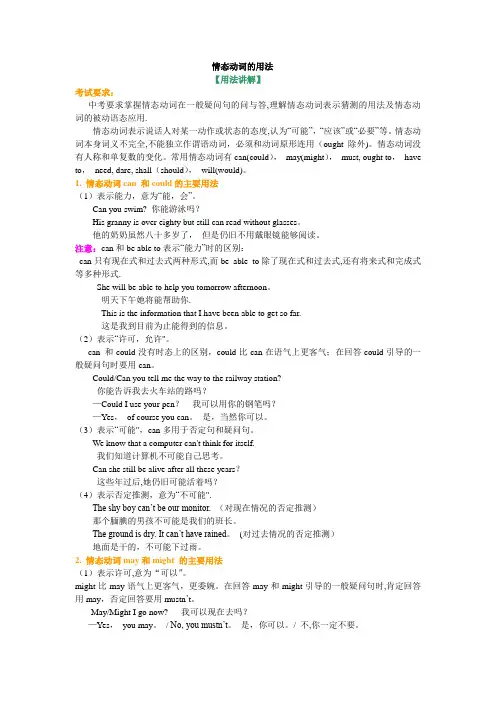
情态动词的用法【用法讲解】考试要求:中考要求掌握情态动词在一般疑问句的问与答,理解情态动词表示猜测的用法及情态动词的被动语态应用.情态动词表示说话人对某一动作或状态的态度,认为“可能”,“应该”或“必要”等。
情态动词本身词义不完全,不能独立作谓语动词,必须和动词原形连用(ought除外)。
情态动词没有人称和单复数的变化。
常用情态动词有can(could),may(might),must, ought to,have to,need, dare, shall(should),will(would)。
1. 情态动词can 和could的主要用法(1)表示能力,意为“能,会”。
Can you swim? 你能游泳吗?His granny is over eighty but still can read without glasses。
他的奶奶虽然八十多岁了,但是仍旧不用戴眼镜能够阅读。
注意:can和be able to表示“能力”时的区别:can只有现在式和过去式两种形式,而be able to除了现在式和过去式,还有将来式和完成式等多种形式.She will be able to help you tomorrow afternoon。
明天下午她将能帮助你.This is the information that I have been able to get so far.这是我到目前为止能得到的信息。
(2)表示“许可,允许"。
can 和could没有时态上的区别,could比can在语气上更客气;在回答could引导的一般疑问句时要用can。
Could/Can you tell me the way to the railway station?你能告诉我去火车站的路吗?—Could I use your pen?我可以用你的钢笔吗?—Yes,of course you can。
是,当然你可以。

Modal Verbs情态动词有can (could), may (might), must (must), have to, shall (should), will (would), need (need), dare (dared), ought to 等。
情态动词无人称和数的变化。
它不能单独使用,必须跟其后的动词原形构成谓语。
情态动词的具体用法如下:一、can, could1、表示能力。
a. Can you speak English?b. Can you finish this work tonight?c. Man cannot live without air. Note:(1) can表示能力时,可用be able to 代替。
a. I’ll not be able to come this afternoon.(2) 当我们要表示“某件事情已经成功”时,应用was/ were able to , 不能用coulda. He saw well and he was able to swim to the river when the flood happened.b. He was able to go to the party yesterday evening and he enjoyed himself very much.2、表示客观可能性a. People who live near airports can have their hearing harmed.b. The boy can sometimes be very naughty. (表示某人或某物一时的情况,“有时会。
”)c. The invention can be improved.d. Even experts can make mistakes.e. He can’t be in Beijing now because I saw him a moment ago.f. He had a lot of work to do last night, so he couldn’t have gone to see a film.Note:在肯定句中用can表示可能性时,其含义是理论上的可能性,不表示实际的可能性,也就是说,不涉及到是否真会发生。

链接中考语法:情态动词一、情态动词的特点:情态动词,又叫情态助动词。
它们具有以下特点:⑴它们必须与其他动词连用,即:情态动词+动词原形,表示说话人对所述动作的看法,如需要、可能、意愿或怀疑等。
⑵绝大多数情态动词没有人称和数的变化,即第三人称单数不加-s (以be和have开头的情态动词短语除外)。
⑶在意义上,情态动词具有“多义性”。
例如:can既可表示能力,又可表示可能、允许等意义。
二、部分情态动词的基本用法:1.can的基本用法:⑴表示体力或智力上的能力,即“能够,会”,可与beableto转换。
例如:HecanspeakEnglish./HeisabletospeakEnglish.?他会讲英语。
Canyouplaybasketball? —No,I can’t.?你会打篮球吗?——我不会。
如果表示将来具备的能力,要用willbeableto。
例如:IfIhaveagoodsleep,Iwillbeabletodotheproblem.?假如我睡个好觉,我就能做那道题目了。
⑵表示许可,主要用于口语,书面语一般用may。
例如:Canwegohomenow,please? —No,youcan’t.?我们可以现在就回家吗?——不可以。
Youcanonlysmokeinthisroom.?你只能在这间房间里抽烟。
You can’t keepthelibrarybooksformorethanamonth.?图书馆的书借期不可超过一个月。
⑶表示“可能”,与may同义,但一般用在疑问句中。
例如:Whatcanhepossiblywant?他可能会想要什么呢?另外,在否定句中,否定形式can’t表示推测“不大可能”。
例如:Anybodycanmakemistakes.?任何人都可能会犯错误。
Thenews can’t betrue.?那消息不大可能是真的。
与第一、二人称连用时,还可以就可能的解决问题的方式或可能的行为提出建议。
