
Local Tourist Attractions
- 格式:pptx
- 大小:571.04 KB
- 文档页数:10


中国旅游景点分类作文英语China is a country full of diverse and stunning tourist attractions. From ancient historical sites to modern skyscrapers, from picturesque natural landscapes to bustling cities, there is something for every traveler to explore and enjoy. In this article, we will classify China's tourist attractions into different categories to help you plan your next trip.1. Historical SitesChina is rich in history and culture, and there are countless historical sites to visit. The Great Wall, an iconic symbol of China, is a must-see for any visitor. The Forbidden City in Beijing, the Terracotta Army in Xi'an, the Potala Palace in Lhasa, and the Longmen Grottoes in Luoyang are just a few examples of the many historical sites that showcase China's long and fascinating history.2. Natural LandscapesChina boasts a diverse range of natural landscapes, from towering mountains to tranquil lakes, from lush forests to vast deserts. The Yangtze River, the Li River in Guilin, the Yellow Mountains, Jiuzhaigou Valley, and the Zhangjiajie National Forest Park are some of the most famous natural attractions inChina. These places offer breathtaking views and opportunities for outdoor activities such as hiking, camping, and boating.3. Modern CitiesChina is also home to vibrant and modern cities that offer a different kind of tourist experience. Shanghai, Beijing, Hong Kong, Guangzhou, and Shenzhen are some of the most dynamic cities in China, known for their skyscrapers, shopping malls, cultural attractions, and bustling nightlife. Visitors can explore the ancient hutongs of Beijing, stroll along the Bund in Shanghai, or enjoy the panoramic views from Victoria Peak in Hong Kong.4. UNESCO World Heritage SitesChina is home to a large number of UNESCO World Heritage Sites, which are recognized for their cultural and natural significance. The Mogao Caves in Dunhuang, the Mount Wuyi Scenic Area, the Mausoleum of the First Qin Emperor in Xi'an, and the Historic Ensemble of the Potala Palace in Lhasa are just a few examples of the many UNESCO sites in China. These sites are well-preserved and offer valuable insights into China's history and heritage.5. Ethnic Minority RegionsChina is a multi-ethnic country with 56 different ethnic groups, each with its own unique culture and traditions. Visitors can explore the ethnic minority regions of China to learn more about the country's diversity. Tibet, Xinjiang, Yunnan, and Inner Mongolia are some of the regions where visitors can experience the customs, music, dance, and cuisine of the local ethnic groups.In conclusion, China offers a wide range of tourist attractions that cater to all kinds of interests and preferences. Whether you are a history buff, a nature lover, a city dweller, or an adventure seeker, there is something for everyone to enjoy in China. So pack your bags, plan your itinerary, and get ready for an unforgettable journey through the diverse and captivating landscapes of China.。
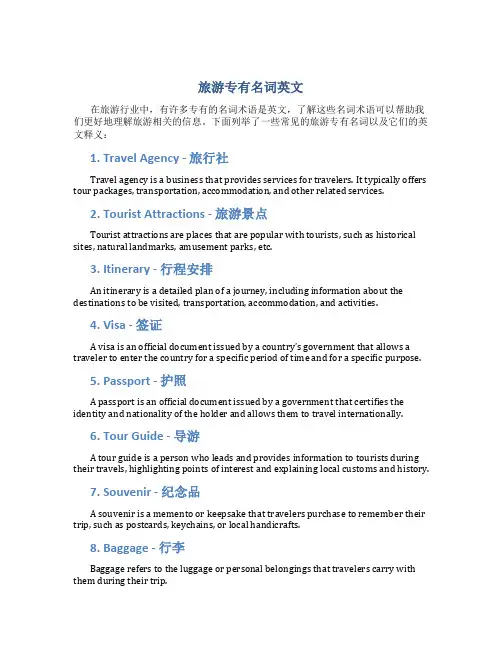
旅游专有名词英文在旅游行业中,有许多专有的名词术语是英文,了解这些名词术语可以帮助我们更好地理解旅游相关的信息。
下面列举了一些常见的旅游专有名词以及它们的英文释义:1. Travel Agency - 旅行社Travel agency is a business that provides services for travelers. It typically offers tour packages, transportation, accommodation, and other related services.2. Tourist Attractions - 旅游景点Tourist attractions are places that are popular with tourists, such as historical sites, natural landmarks, amusement parks, etc.3. Itinerary - 行程安排An itinerary is a detailed plan of a journey, including information about the destinations to be visited, transportation, accommodation, and activities.4. Visa - 签证A visa is an official document issued by a country’s government that allows a traveler to enter the country for a specific period of time and for a specific purpose.5. Passport - 护照A passport is an official document issued by a government that certifies the identity and nationality of the holder and allows them to travel internationally.6. Tour Guide - 导游A tour guide is a person who leads and provides information to tourists during their travels, highlighting points of interest and explaining local customs and history.7. Souvenir - 纪念品A souvenir is a memento or keepsake that travelers purchase to remember their trip, such as postcards, keychains, or local handicrafts.8. Baggage - 行李Baggage refers to the luggage or personal belongings that travelers carry with them during their trip.9. Hotel - 酒店A hotel is an establishment that provides accommodation, meals, and other services for travelers in exchange for payment.10. Booking - 预订Booking refers to the process of reserving and confirming travel-related services, such as flights, hotels, tours, and transportation.以上是一些常见的旅游专有名词的英文释义,了解这些名词可以帮助我们更好地沟通和理解旅游相关信息,同时也有助于提升旅行的体验和顺利度。

怎样促进当地旅游业发展英语作文全文共3篇示例,供读者参考篇1How to Promote the Development of Local Tourism IndustryIntroductionThe tourism industry plays a vital role in the economic development of a region or country. It not only generates revenue but also creates job opportunities and promotes cultural exchange. Therefore, it is essential to constantly promote the growth of the tourism industry, especially at the local level. In this essay, we will discuss some effective ways to promote the development of the local tourism industry.1. Improve InfrastructureOne of the most crucial factors in attracting tourists to a destination is the quality of its infrastructure. This includes transportation, accommodation, and other facilities. Improving roads, airports, railways, and public transportation will make it easier for tourists to access the destination. Moreover, upgrading and expanding hotels, restaurants, and recreational facilities will enhance the overall experience for visitors.2. Preserve and Promote CultureCultural heritage is a significant attraction for tourists, especially those seeking unique and authentic experiences. It is essential to preserve and promote local cultural traditions, historical sites, and arts and crafts. Organizing cultural festivals, exhibitions, and workshops can help showcase the rich heritage of the region and attract tourists interested in learning about the local culture.3. Develop Unique Tourism ProductsTo stand out in a competitive tourism market, it is essential to develop unique tourism products that cater to the interests and preferences of different types of tourists. This could include adventure sports, eco-tourism, wellness retreats, culinary tours, or cultural immersion programs. Creating innovative and personalized experiences will attract a diverse range of visitors and increase the overall appeal of the destination.4. Collaborate with StakeholdersCollaboration with various stakeholders, including local government, businesses, community groups, and tour operators, is essential for the sustainable development of the tourism industry. By working together, stakeholders can identifycommon goals, address challenges, and implement strategies to promote the growth of the industry. Building partnerships and alliances will also help leverage resources and expertise to attract more tourists and create a positive impact on the local economy.5. Invest in Marketing and PromotionEffective marketing and promotion are key to attracting tourists to a destination. Utilizing digital marketing channels, social media platforms, and travel websites can reach a wider audience and increase visibility. Creating engaging content, such as videos, blogs, and photography, can showcase the unique attractions and experiences of the destination. Investing in advertising campaigns, partnerships with travel agencies, and participation in travel fairs and events will also help raise awareness and attract potential visitors.6. Provide Quality ServicesEnsuring high-quality services and hospitality is essential for creating a positive experience for tourists. From accommodation and transportation to dining and attractions, every aspect of the visitor's journey should meet or exceed their expectations. Providing friendly and knowledgeable staff, clean and comfortable facilities, and prompt and efficient service will leavea lasting impression on tourists and encourage them to return and recommend the destination to others.ConclusionIn conclusion, promoting the development of the local tourism industry requires a coordinated effort from various stakeholders and a focus on improving infrastructure, preserving culture, developing unique products, collaborating with partners, investing in marketing, and providing quality services. By implementing these strategies effectively, destinations can attract more tourists, create economic opportunities, and contribute to the overall growth and prosperity of the region.篇2How to Promote the Development of Local Tourism IndustryIntroductionThe tourism industry plays a significant role in boosting local economies, creating job opportunities, and promoting cultural exchange. However, in order to ensure the sustainable growth of the tourism industry, it is crucial to implement effective strategies to promote and develop it. In this essay, we will discuss several ways to promote the development of the local tourism industry.1. Infrastructure ImprovementOne of the key factors to attract tourists is the quality of the infrastructure in a destination. It is essential to invest in improving transportation networks, accommodations, and tourist facilities. The construction of airports, highways, and public transportation systems can make it easier for tourists to access the destination, while the development of hotels, resorts, and recreational facilities can enhance their experience during their stay.2. Marketing and PromotionIn order to attract more tourists, it is important to invest in marketing and promotion activities. This can be done through various channels such as social media, travel websites, and tourism fairs. Collaborating with travel agencies, influencers, and media outlets can also help in promoting the destination to a wider audience. Additionally, creating attractive tourism packages, organizing events, and launching advertising campaigns can generate interest and attract more visitors to the destination.3. Diversification of Tourism ProductsTo appeal to a wider range of tourists, it is advisable to diversify the tourism products and experiences offered in the destination. This can be done by promoting cultural heritage, historical sites, natural attractions, gastronomy, adventure sports, and eco-tourism activities. By offering a variety of experiences, tourists with different interests and preferences can be attracted, leading to a more sustainable and resilient tourism industry.4. Sustainable Tourism PracticesIt is important to promote sustainable tourism practices to protect the environment, preserve cultural heritage, and support local communities. Implementing eco-friendly initiatives, promoting responsible tourism behavior, and engaging in conservation efforts can help to minimize the negative impact of tourism on the environment and society. Moreover, involving local communities in tourism development projects, providing training and employment opportunities, and supporting local businesses can contribute to the overall well-being of the destination.5. Collaboration and PartnershipsCollaborating with other stakeholders such as government agencies, tourism boards, private sector companies, NGOs, and local communities can help to leverage resources, shareknowledge, and coordinate efforts towards the development of the tourism industry. By working together, it is possible to address common challenges, implement joint initiatives, and achieve sustainable growth in the tourism sector. Moreover, building partnerships with neighboring destinations, establishing tourism corridors, and promoting multi-destination itineraries can enhance the overall attractiveness of the region and increase visitor arrivals.ConclusionIn conclusion, promoting the development of the local tourism industry requires a concerted effort from various stakeholders to invest in infrastructure, marketing, diversification of tourism products, sustainable practices, and collaboration. By implementing these strategies effectively, it is possible to enhance the competitiveness, attractiveness, and sustainability of the destination, thereby driving economic growth and creating long-term benefits for the local community. With the right approach and commitment, the tourism industry can play a key role in supporting the development and prosperity of the region.篇3Promoting the development of local tourism industry plays a crucial role in boosting the economy and improving the living standards of the local residents. In recent years, with the rapid growth of globalization, the tourism industry has become one of the most profitable sectors in many countries. Thus, it is essential for local governments and relevant stakeholders to take effective measures to promote the development of the tourism industry.To promote the development of the local tourism industry, several strategies can be adopted. Firstly, it is important to improve the infrastructure and transportation facilities. Good infrastructure, such as roads, airports, and public transportation, is essential for attracting tourists to a destination. This will not only facilitate the movement of tourists but also enhance their overall experience.Secondly, it is crucial to develop tourist attractions and promote cultural heritage. Developing unique and attractive tourist attractions can help draw more visitors to the destination. Additionally, promoting the local culture and heritage can create a sense of identity and belonging among the visitors, thereby increasing their interest in exploring the destination.Thirdly, collaboration with other tourism stakeholders is key to promoting the development of the local tourism industry. Thisincludes partnerships with travel agencies, hotels, restaurants, and other businesses that cater to tourists. By collaborating with these stakeholders, local governments can create attractive tour packages, offer discounts, and provide better services to tourists, thus attracting more visitors to the destination.Moreover, effective marketing and branding strategies are essential for promoting the local tourism industry. This includes creating a strong online presence through websites and social media platforms, developing promotional materials such as brochures and flyers, and participating in tourism fairs and events. By effectively marketing the destination and creating a strong brand image, local governments can attract more tourists and increase tourism revenue.Furthermore, it is important to focus on sustainable tourism practices to promote the development of the local tourism industry. Sustainable tourism practices involve minimizing the negative impacts of tourism on the environment, culture, and community, while maximizing the benefits for all stakeholders. By adopting sustainable tourism practices, local governments can ensure the long-term viability of the tourism industry and protect the natural and cultural resources of the destination.In conclusion, promoting the development of the local tourism industry requires a multifaceted approach that involves improving infrastructure, developing tourist attractions, collaborating with stakeholders, implementing effective marketing strategies, and adopting sustainable tourism practices. By implementing these strategies, local governments can attract more tourists, generate economic growth, and create a sustainable tourism industry that benefits the local community.。