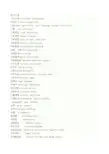
各类学科的英文单词The English language is rich in its vocabulary, with a vast array of words that encompass various academic subjects. These words not only serve as a means of communication within specific fields but also reveal the depth and complexity of human knowledge. In this essay, we will explore the diverse range of English words that are associated with different academic disciplines.One of the core academic subjects is mathematics, which is often referred to as the language of the universe. The English vocabulary in this field is extensive, covering concepts such as 'arithmetic,''algebra,' 'geometry,' 'trigonometry,' and 'calculus.' These words are essential for understanding the fundamental principles of numerical relationships, spatial reasoning, and quantitative analysis. Additionally, terms like 'theorem,' 'equation,' 'function,' and 'variable' are integral to the mathematical lexicon.In the realm of science, the English language is replete with terminology that captures the essence of various disciplines. For instance, in the field of biology, we encounter words like 'organism,''cell,' 'DNA,' 'evolution,' and 'ecosystem.' These terms enable us to comprehend the complexities of living organisms, their structures, and the intricate processes that govern life. Similarly, in physics, we find words like 'energy,' 'force,' 'motion,' 'matter,' and 'quantum,' which are crucial for understanding the physical world and the laws that govern it.The field of humanities is equally rich in its English vocabulary, encompassing disciplines such as history, literature, and philosophy. Words like 'civilization,' 'era,' 'conflict,' and 'revolution' are essential for understanding the past and the shaping of human societies. In literature, terms like 'plot,' 'character,' 'metaphor,' and 'theme' allow us to delve into the rich tapestry of storytelling and the nuances of literary expression. Meanwhile, in philosophy, concepts like 'ethics,' 'epistemology,' 'ontology,' and 'existentialism' provide a framework for examining the fundamental questions of human existence.The social sciences, too, have a vast repertoire of English words that capture the complexities of human behavior and societal structures. In the field of psychology, we find terms like 'cognition,' 'emotion,' 'personality,' and 'motivation,' which are crucial for understanding the human mind and its inner workings. In the realm of economics, words like 'market,' 'supply,' 'demand,' 'inflation,' and 'GDP' enable us to comprehend the intricate mechanisms that govern the production, distribution, and consumption of goods and services.Furthermore, the English language has embraced words from various other disciplines, such as medicine, engineering, and technology. In the medical field, we encounter terms like 'anatomy,' 'pathology,''diagnosis,' and 'treatment,' which are essential for understanding the human body and its health-related issues. In the realm of engineering, words like 'structure,' 'design,' 'technology,' and'innovation' are crucial for conceptualizing and developing solutions to complex problems. Meanwhile, in the rapidly evolving world of technology, terms like 'algorithm,' 'software,' 'hardware,' and'artificial intelligence' have become integral to our understanding of the digital landscape.The English language's vast repository of academic vocabulary not only facilitates communication within specific disciplines but also enables cross-disciplinary collaboration and the exchange of ideas. As we continue to expand our knowledge and explore new frontiers, the evolving nature of these words reflects the dynamic nature of human learning and discovery. By embracing and understanding this rich linguistic tapestry, we can deepen our appreciation for the depth and breadth of human knowledge and continue to push the boundaries of our understanding of the world around us.。