4.时态
- 格式:doc
- 大小:52.50 KB
- 文档页数:2
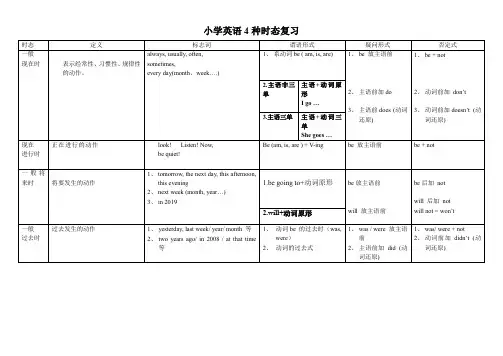
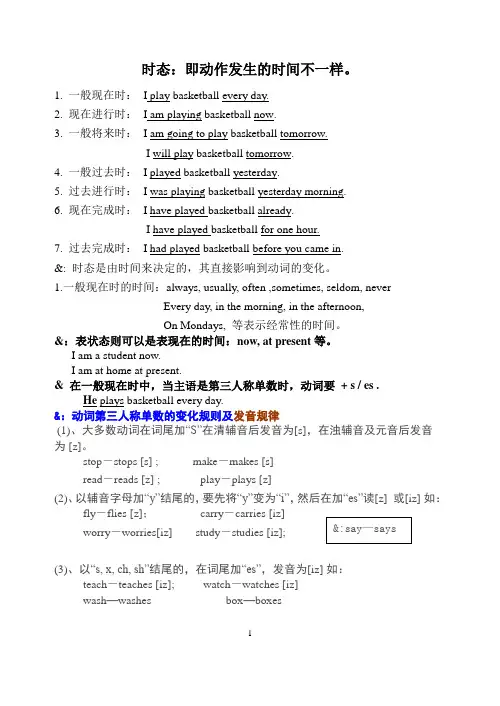
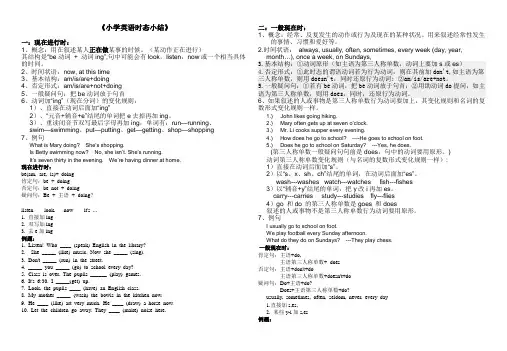
时态语态及一般用法 谓语构成 时间状语 特殊用法
一般现在时:
1)经常性或习惯性的动作
2)现在的特征,状态 及能力
3)普遍真理, 格言警句 be(am,is,are) do/does always,usually,every
time,seldom, sometimes
often, now
and then, occasionally 1)按火车、汽车、飞机等时刻表将要发生的事
2)在时间、条件、方式状语从句中,用一般现在时代替一般将来时。
特殊句型:1)Here/There comes our teacher.(一般现在时表正发生动作) 2)It is/has been+时段+since„. am/is/are done
一般过去时:
表示过去发生的,和现在无联系的动作或状态或习惯动作 be(was, were) did yesterday, last week, an
hour ago, the other
day, in 1982, just now
was/were done
一般将来时:
将来某个时刻(或某段时间内)将来要发生的动作
will/shall do
am/is/are going to do
am/is/are to do
am/is/ are about to do next…, tomorrow,
in+时段,from now on,
in the future,
1)一般将来时可用来表示一种倾向或习惯性动作.
eg. Oil will float on water. Whenever he has time, he will come.
其否定式表示“不能„ 没法„”
The machine won’t work.(机器没法开动)
2)Cf:be going to 表示说话前已经作出的主观的打算或计划,或用来表达有某种迹象要发生的事
will do表示谈话时临时决定的意图,具有临时性和偶然性
be to do表示约定、计划或职责、义务要求即将发生的动作。
be about to do “正要干什么…”,表示即将发生的动作,不与表示
将来的时间状语连用。常与when 连用,when意为:“就在这时”,是并列连词 构成句型: …be about to do …when… will/shall be done
would/should be done
was/were going to be done
现在完成时:1.表示过去发生的某一动作对现在造成的影响或结果,
有时没有时间状语,有时有时间状They have cleaned the classroom.
(They cleaned the classroom and it
is clean now.)2. 表示过去已经开始,持续到现在而且可能继续下去的动作状态。He hasn’t given me
any more trouble since then. have/has done for+时段, since, so far,
ever, never, just, yet,
till/until, up to now, in
the past(„)years,
always, recently 特殊句型:
1)It’s the first time that„(have/has done).
2)It has been/is +时间段+since„.
This is the best film that I have ever seen.
3)短暂性动词的完成时不与时间段连用, 如需连用可转化成相应的延续性动词, 如die—be dead , leave—be away , come back –be
back , fall in love with ---be in love with , marry—be married to ,
join –be a member of /be in…
He has died. He has been dead 3 years.(He died 3 years ago.) have/has been done
时态、语态及一般用法: 谓语构成 时间状语 特殊用法:
现在完成进行时: have/has been doing all day long, the
whole morning,
for+时段 表示现在以前这段时间内一直在进行或反复的动作.(可能仍在进行, 也可能停了一会儿.)
1)How long has it been raining?2)I’ve been sitting here all day. have/has been being done
将来完成时表将来某时已发生的动作.
I shall have finished it before lunch.
The new building will have been
completed by the end of August. will/shall have done
be going to have done
by +将来时间. 有时也用来表揣测.
They will have arrived by now.
We worked together for a year. He won’t have forgotten me. will/shall have been done
be going to have been done
过去完成时
表示在过去某一时刻或动作之前已经完成了的动作,即“过去的过去”。
had done …before, by, until,
when, after, once by the end of +过去时间
1)用于hardly …when ;no sooner…than …(一….就…)等句子中。
Hardly had we arrived when she started complaining.
2)hope ,think expect ,intend ,mean ,suppose ,want ,imagine等,用于过去完成时,表示过去未实现的希望或意图。
I had hoped to take my seat in all this noise without being found. had been done 我本希望乘着这些噪音不被发现地坐到位置上。(但实际上未实现)
3)It is the first time +从句(从句用现在完成时have/has done);
It was the first time +从句(用过去完成时had done)。
eg. It is the first time that I’ve been here.
It was the first time that he had ever spoken to me in such a tune.
4)用于对过去假设的虚拟语气中的从句。
If I had known his telephone number yesterday, I would have called
5)by the time+从句(用一般过去时)作状语,主句用过去完成时We had finished the work by last month( by the time he came.)
现在进行时:
1.表示说话时正在进行而尚未完成的动作或状态。
2.表示现阶段一直在进行的动作 ,但说话时不一定正在进行。
①I don’t really work here. I’m
helping until the new secretary comes. am/is/are doing these days,
nowadays,
at present,
at the moment,
now
1)下列动词用现在进行时可以表示将来很快要发生的动作,即一般将来时。如:go ,come, leave, begin, arrive ,return, fly, drive,take等。 We’re moving to the new building next week.
2)下列副词always, continually , constantly, never 等常一般现在时连用,但若用于进行时则表示厌恶或赞扬的感情色彩。
You are always forgetting the important things.
3.无进行时态的动词:表“存在、所有、知觉、认为,感情”等状态
存在: keep ,stay , remain , be, consist of , contain
所有: have ,belong to , possess, own , hold
知觉: sound,look /seem /appear,smell, taste,feel,see, hear
认识: understand, know, suppose, remember, admit, forget, believe
情感:like, love, hate , prefer, am/is/are being done
过去进行时:1.表示 过去某一时间正进行的动作 。通常有时间状语(从句),或由上下文表示。The teacher came in
when they were talking. was /were + doing at that time, then ,
this time yesterday
last week, at 10
o’clock last night 1.Hope, want, wonder等的过去进行时用来提出请求, 表示委婉的语气,实际表示现在的情况.
I was hoping you could send me some money stamps.( I hope…)
e, go , plan , expect, hope, intend, look forward to 等词可用进行时表达本来打算做实际没做成的事
He was expecting to finish the work last month , but the machine
went wrong.
3.在口语中过去进行时可表示最近刚刚过去的事情
_--What did you say? --I was asking what you thought of it. was /were + being +done