
英文字母i 的长短音
- 格式:ppt
- 大小:232.50 KB
- 文档页数:5

i自然拼读发音规则
自然拼读发音规则是一种教学方法,旨在帮助学习者快速准确地发音英语单词。
本文将介绍一些常见的自然拼读发音规则,帮助读者更好地掌握英语发音。
首先,我们来看闭音节规则。
闭音节是以一个辅音字母结尾的音节。
在闭音节中,辅音字母通常会保持原来的发音,而元音字母通常会发短音。
例如,“cat”中
的“c”发/k/音,“i”发短音/æ/,“t”发/t/音。
另外,当闭音节中有两个或更多辅音字母
结尾时,一般只读最后一个辅音字母,如“jump”中的“u”发短音/ʌ/。
其次,我们来看开音节规则。
开音节是以一个元音字母结尾的音节。
在开音节中,元音字母通常发长音。
例如,“me”中的“e”发长音/miː/,“go”中的“o”发长音
/ɡəʊ/。
需要注意的是,当开音节中有一个辅音字母紧随其后时,通常会产生不同
的发音规则,如“cap”中的“a”发短音/æ/。
此外,还有一些其他的自然拼读发音规则。
例如,“er”常常发/ər/音,如“teacher”;“ow”通常发/əʊ/音,如“window”;“ie”通常发/ai/或/iː/音,如“pie”和“field”等。
还有一些不规则的拼读发音规则,需要通过熟练的阅读和听力练习来掌握。
总之,自然拼读发音规则是学习英语发音的重要方法。
通过掌握这些规则,我
们可以更好地理解和发音英语单词,提高口语表达的准确性和流利度。
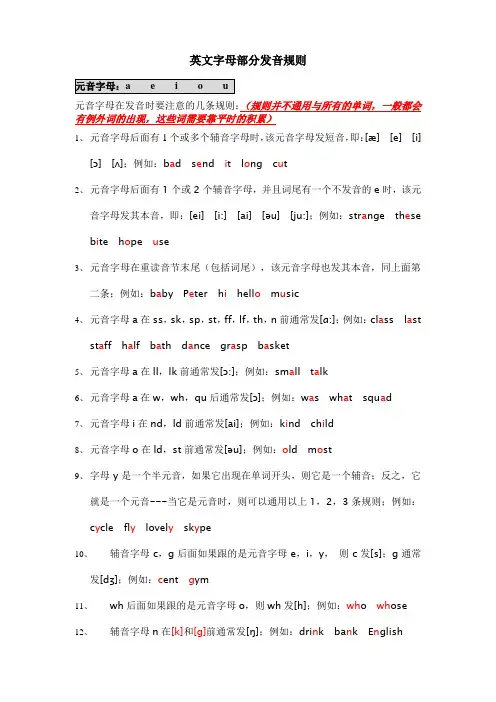
英文字母部分发音规则元音字母在发音时要注意的几条规则:(规则并不通用与所有的单词,一般都会有例外词的出现,这些词需要靠平时的积累)1、元音字母后面有1个或多个辅音字母时,该元音字母发短音,即:[æ] [e] [i][ɔ] [ʌ];例如:b a d s e nd i t l o ng c u t2、元音字母后面有1个或2个辅音字母,并且词尾有一个不发音的e时,该元音字母发其本音,即:[ei] [i:] [ai] [əu] [ju:];例如:str a nge th e seb i te h o pe u se3、元音字母在重读音节末尾(包括词尾),该元音字母也发其本音,同上面第二条;例如:b a by P e ter h i hell o m u sic4、元音字母a在ss,sk,sp,st,ff,lf,th,n前通常发[ɑ:];例如:cl a ss l a stst a ff h a lf b a th d a nce gr a sp b a sket5、元音字母a在ll,lk前通常发[ɔ:];例如:sm a ll t a lk6、元音字母a在w,wh,qu后通常发[ɔ];例如:w a s wh a t squ a d7、元音字母i在nd,ld前通常发[ai];例如:k i nd ch i ld8、元音字母o在ld,st前通常发[əu];例如:o ld m o st9、字母y是一个半元音,如果它出现在单词开头,则它是一个辅音;反之,它就是一个元音---当它是元音时,则可以通用以上1,2,3条规则;例如:c y cle fl y lovel y sk y pe10、辅音字母c,g后面如果跟的是元音字母e,i,y,则c发[s];g通常发[dʒ];例如:c ent g ym11、wh后面如果跟的是元音字母o,则wh发[h];例如:wh o wh ose12、辅音字母n在[k]和[g]前通常发[ŋ];例如:dri n k ba n k E n glish。
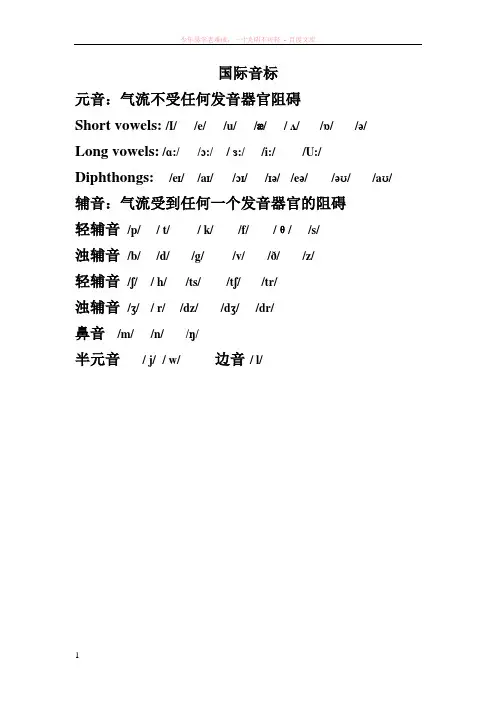
国际音标元音:气流不受任何发音器官阻碍Short vowels: /I/ /e/ /u/ /æ/ / ʌ/ /ɒ/ /ə/ Long vowels: /ɑ://ɔ:// ɜ://i:/ /U:/ Diphthongs: /eɪ/ /aɪ/ /ɔɪ/ /ɪə/ /eə/ /əʊ/ /aʊ/ 辅音:气流受到任何一个发音器官的阻碍轻辅音/p/ / t/ / k/ /f/ /θ/ /s/浊辅音/b/ /d/ /g/ /v/ /ð/ /z/轻辅音/ʃ/ / h/ /ts/ /tʃ/ /tr/浊辅音/ʒ/ / r/ /dz/ /dʒ/ /dr/鼻音/m/ /n/ /ŋ/半元音/ j/ / w/边音/ l//i:/1、发音部位:舌尖抵下齿2、舌位:舌前部向硬鄂抬起,是四个前元音中最高的3、口型:开合度小,成扁平状,口腔肌肉拉紧/i:/ 的发音组合1.字母ee组合Breeze creep deed feet jeep meet speech2.字母ea组合Bean eat mean neat pea read seat3.字母e在重读音节中Eve even evening me she peter he these4.字母ei组合Receive deceive perceive5.字母ie组合Thief field believe6.字母i、eo、ey偶尔读作/i:/Police people keyRole playYou are in a restaurant. Take turns to be the waiter or waitress. Ask each other questions, e.g. do you like… or …? ( would you like? Pay attention to the intonation.) Pay attention to the manners of the attendant.EASTFIELD RESTAURANTMENUSoupLeek soup or pea soupMeatVeal or beefVegetablesBeans or peasSweetsCheesecake or ice cream or peachesDrinksCoffee or teaBiscuits and cheeseEdam cheese or BrieWe can also add some information in this menu, e.g.It’s Japanese beef and that’s Chinese leek. And it is Portuguese coffee./i/ or /I/1.发音部位:舌前部须向硬鄂抬起2.舌位:比/i:/稍低,稍后3.口型:扁平,比/i:/稍大,接近半闭,下颚稍下垂,舌前部也比/i:/时稍降/i/的字母发音组合1.字母i常常读为前元音/i/It [ɪt] is [ɪz] this [ðɪs] in [ɪn] middle ['mɪd(ə)l] Kitchen ['kɪtʃɪn; -tʃ(ə)n] give [gɪv]2.字母e常常读为前元音/i/,尤其在非重读音节中Effect [ɪ'fekt] elect [ɪ'lekt] England ['iŋɡlənd]English ['ɪŋɡlɪʃ] pretty ['prɪtɪ]3.4.字母a在ge前的非重读音节中读为前元音/i/Courage ['kʌrɪdʒ] village ['vɪlɪdʒ] language ['læŋgwɪdʒ] Luggage ['lʌgɪdʒ] damage ['dæmɪdʒ]5.字母o、ui偶尔读为/i/Women ['wɪmɪn] building ['bɪldɪŋ]Tongue-twister1.it’s a pity it’s still misty in the city of Italy. If I assist asister-assistant, will the sister-assistant assist me?2.I wish to wish the wish you wish to wish, but if you wish the wishthe witch wishes, I won’t wish the wish you wish to wish.3.Silly Billy! Silly Billy! Why is Billy silly? Silly Billy hid a shilling.Isn’t Billy silly?Minimal Pairs/i:/ /i/Look out for that sheep. Look out for that shipStop it leaking! Stop it licking.What lovely cheeks! What lovely chicks.This peel’s got vitamin C in it. This pill’s got Vitamin C in it. Throw out that bean. Throw out that bin.He’s going to leave. He’s going to live.Mimi Bingo gamePlay in a group 3-5. One person calls out the numbers from 4a but in a random order. The others choose one of the boxes. Listen to the numbers and if a number is in your box, tick it. When all the number in your box are covered, you are the winner and you shout, BINGO.。

i.e.的读法
以下是一些关于 i.e. 的使用和读法的详细信息:
1. 使用场景:i.e. 通常用于在书面文本中提供更详细或更清晰的解释。
它可以用于避免重复前文,同时提供更多的信息。
2. 读法:"i.e." 的正确读法是 "eye-ee",其中第一个字母 "i" 发音为短音 /ɪ/,类似于 "it" 或 "in" 的发音。
第二个字母 "e" 发音为长音 /i:/,类似于 "ee" 在 "meet" 或 "see" 中的发音。
两个字母之间的连字符表示它们是一个缩写,应该一起读取。
3. 注意事项:在使用 i.e. 时,需要注意它的前后应该有逗号或冒号等标点符号进行分隔,以使句子更加清晰易懂。
4. 其他类似缩写:除了 i.e.,还有一些类似的缩写,如 e.g.(例如)和 etc.(等等)。
它们的读法也类似,分别是 "example-ee" 和 "et-cetera"。
总的来说,i.e. 是一个常见的缩写,用于提供解释或澄清。
正确的读法是 "eye-ee",需要注意在使用时前后应该有适当的标点符号进行分隔。