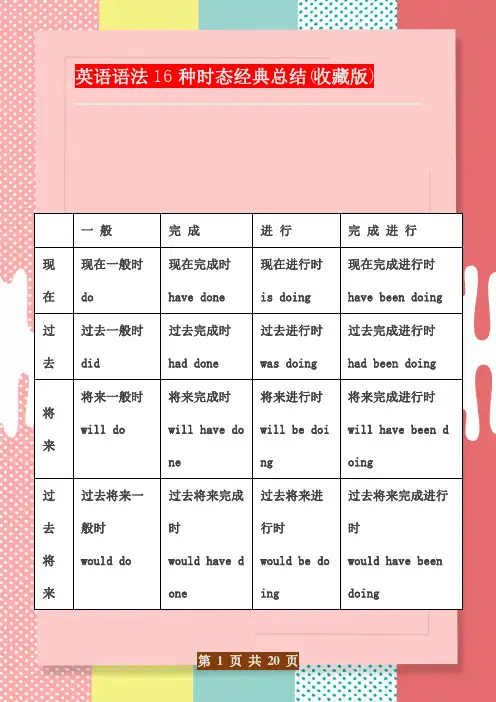
语法:时态
- 格式:doc
- 大小:27.00 KB
- 文档页数:2
一、现在时
1.一般现在时:1.经常、惯常发生的动作或存在的状态
2.永久不变的真理
3.按照时刻表(车站、飞机场)将发生的动作
4.主将从现,在时间状语从句和条件状语从句中,主句是将来时,从句
用一般现在时代替将来时
2.现在进行时:1.表示正在发生的动作
2.终止性动词用进行时表将来
3.表近一段时间内以致发生的动作 eg:He is growing taller.
3.现在完成时:1.过去的某个动作到说话时已经结束 eg:He has gone home.(结果)
2.表示过去的一个动作从过去一直持续到现在(不一定还继续)
Eg: I have lived for ten years.
I have read ten books by now.
It has been five days since(时态一定为完成时) I saw him last time.
3.过去的某个动作对现在产生影响
eg:Where did you put my book? 对现在无影响,过去时
Where have you put my book? 对现在有影响,过去完成时
4.现在完成进行时: have/has+been+doing 表示动作从过去开始一直在继续
eg:I have been living here for ten years.
5.现在完成时强调结果 一般过去时强调动作
6.特殊 It is 时间 since 过去时 eg:It is three days since I had come here.
It was 时间 since 现在完成时 eg:It was three days since I had come here.
.-Does your father smoke? –No ,it is three years xince he smoken.(smoken是延续动词,否定
含义)
二、过去时
1.一般过去时
2.过去进行时
3.过去完成时:1.(过去的过去)在过去某一时间或某一动作之前
eg:I had finished my homework before he came home.(必有一过去参照
时间或参照动作)
4.过去完成进行时:从过去的过去发生一直持续到现在
三、将来时
1.一般将来时:will 可表示临时决定
be going to 1.事先计划好或安排好.2.动作在短期内即将发生.
eg:Look!It is going to rain. 天气预告用will
be to 1.说话人的坚定的意志.2.按要求安排
eg: (Whoever breks the law) is to be punished by law.
引导词,即可引导名词性从句,又能引导状语从句
no matter who 只能引导状语从句
be about to 正要,刚要 不能与时间段搭配
He is dying. 他要死了.(表短期将来) He will die. 他会死的.
2.将来进行时:表示将来某一时间点或某一时间段正在发生的动作
eg:I will be watching TV at this time tomorrow.
3.将来完成时:在将来某一时间前完成 ,有一个将来时间之前
eg:I will have finished the work by the end of this term.
I will have finished the book by the end of this year.
4.过去将来时:多出现于间接引语中, will---would ,be going to---was/were going to
be to---was/were to,be about to---was/were about to
5.将来完成进行时
6.现在进行时表将来:都是表示马上就要发生的动作或安排好或计划好做的事。
常用动词:come,go,start,arive,leave,stay,have,do,meet,fly,wall,
ride,drive,talk,return,play,work,spend,see off,die