
英语作文Dining customs in China中国饮食习俗
- 格式:doc
- 大小:23.50 KB
- 文档页数:1
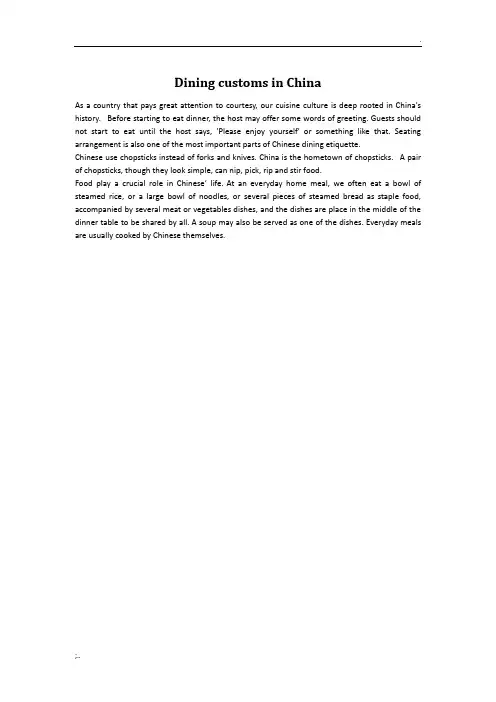

介绍中国饮食习惯的英语作文China has a rich and diverse culinary tradition that is deeply rooted in its history and culture. Chinese cuisine is known for its wide variety of flavors, cooking techniques, and ingredients. In this article, we will explore the unique eating habits and customs that are commonly found in China.First and foremost, the Chinese place great importance on the concept of balance in their meals. A typical Chinese meal consists of grains, vegetables, and meat or fish, all of which are carefully selected to create a harmonious combination of flavors and textures. The Chinese believe that a well-balanced meal is not only good for the body but also for the mind.Rice is a staple food in China and is consumed in large quantities. It is often served alongside a variety of dishes, such as stir-fried vegetables, braised meats, or steamed fish. Noodles, both wheat-based and rice-based, are also widely enjoyed and come in various shapes and sizes. They are often served in soups or stir-fried with vegetables and meat.In addition to rice and noodles, vegetables play a significant role in Chinese cuisine. Chinese people value the freshness and quality of their vegetables, and it is common to see a wide array of vegetables being used in their dishes. Stir-frying is a popular cooking method that helps to retain the natural flavors and textures of the vegetables.Meat, particularly pork, beef, and chicken, is a common ingredient in Chinese dishes. However, it is often used in smaller portions compared to vegetables. This is because the Chinese believe that meat should be enjoyed in moderation and that a diet rich in vegetables is healthier. Seafood, including fish, shrimp, and crab, is also widely consumed, especially in coastal regions.Another unique aspect of Chinese cuisine is the use of various seasonings and sauces to enhance the flavors of the dishes. Soy sauce, vinegar, oyster sauce, and sesame oil are commonly used in cooking to add depth and complexity to the flavors. Spices such asginger, garlic, and Sichuan peppercorns are also frequently used to add a kick to the dishes.In addition to the types of food consumed, the Chinese also have specific eating habits and customs. One of the most important customs is the use of chopsticks as the primary eating utensil. Chopsticks are used to pick up food and are considered a symbol of Chinese culture. It is important to note that it is considered impolite to stick chopsticks upright in a bowl of rice, as it resembles incense sticks used in funerals.Family-style dining is also a common practice in China. Multiple dishes are served simultaneously, and everyone at the table shares the food. This fosters a sense of community and togetherness during mealtime. It is also customary for the host or the eldest person at the table to offer food to others as a sign of respect and hospitality.Furthermore, the Chinese believe in the concept of "food therapy," which is the idea that certain foods have specific health benefits. For example, chicken soup is often consumed when someone is feeling unwell, as it is believed to have healing properties. Ginger is also commonly used to aid digestion and relieve cold symptoms.In conclusion, Chinese cuisine is a reflection of the country's rich history and culture. The Chinese place great importance on balance, freshness, and the use of various flavors and seasonings. Their eating habits and customs, such as family-style dining and the use of chopsticks, further enhance the dining experience. Whether it is a simple home-cooked meal or a lavish banquet, Chinese cuisine is a feast for both the senses and the soul.。

中国餐桌礼仪英语作文篇 1In China, table manners are an important part of our culture. There are several basic rules that everyone should follow. Firstly, when having a meal, the elders start to eat first and then the younger ones follow. This shows respect for the elders. Secondly, when picking up food, we should use serving chopsticks to keep hygiene. It's a way to prevent the spread of germs. Moreover, it's impolite to talk loudly during the meal. We should keep a quiet and pleasant atmosphere. Also, it's not proper to reach across the table for food. Instead, we can politely ask someone to pass it to us. Another rule is not to play with the chopsticks or spoons. We should handle them properly and use them correctly. Understanding and following these table manners not only reflects our good upbringing but also helps us show respect for others and enjoy a harmonious dining experience.篇 2China has a rich and diverse culture, and its table manners are an important aspect of this heritage. The significance of Chinese table etiquette cannot be overstated.In business banquets, adhering to table manners plays a crucial role in promoting cooperation. When interacting with business partners, showing respect through proper table etiquette, such as using chopsticks correctly and not reaching across the table for food, creates a positive impression. It indicates professionalism and courtesy, which can lay a solid foundation for successful business collaborations.During family gatherings, good table manners have the power to pass on family traditions. For instance, children learn to show respect for elders by waiting for themto start eating first. This not only strengthens family bonds but also instills values of respect and consideration.Moreover, Chinese table etiquette reflects social harmony. When everyone follows the rules, the dining atmosphere becomes pleasant and enjoyable. It promotes communication and understanding among people.In conclusion, Chinese table etiquette is not just about dining habits; it is a reflection of cultural values, social norms, and interpersonal relationships. By upholding these etiquette standards, we contribute to a more civilized and harmonious society.篇 3When it comes to table manners, China has its own unique and fascinating set of customs that distinguish it from those in the West. In the West, the individual dining system is common, where each person has their own portion of food. However, in China, the communal dining system prevails. A big round table is often filled with various dishes that are shared among all diners. This difference reflects the distinct cultural values.In Western cultures, the emphasis on individualism is reflected in the separate meals. It gives people a sense of personal space and independence. In contrast, the Chinese communal dining shows a strong sense of collectivism and unity. Sharing food symbolizes the close bonds and harmony within a group or family.Another interesting aspect is the use of chopsticks in China. Skillfully manipulating chopsticks to pick up food requires dexterity and is a traditional art. While in the West, forks and knives are the main utensils.Chinese table manners also involve paying respect to elders. Elders are often served first and given the best seats. This reflects the value placed on filial piety and seniority.In conclusion, the Chinese table manners, with their emphasis on sharing, collectivism, and respect for elders, showcase the rich and profound cultural heritage of China.篇 4When I first began to explore Chinese table manners, I was quite bewildered and found it hard to adapt. The numerous rules and customs seemed overwhelming to me. For instance, the way to hold chopsticks properly, the sequence of serving dishes, and the etiquette of toasting were all unfamiliar and confusing. However, as time went on and I participated in more and more social gatherings, I gradually started to understand the significance and wisdom behind these table manners. I realized that they are not just about formality but also reflect respect for others and the importance of harmony during a meal. I began to pay attention to details such as not reaching for food across the table and waiting for the elders to start eating first. Through this process, I not only learned the specific rules but also came to appreciate the cultural values they convey. I now understand that Chinese table manners are an integral part of the country's rich cultural heritage, and by following them, I am showing respect for the traditions and the people around me.篇 5In modern society, Chinese table manners have witnessed significant changes and developments. Traditionally, there were strict rules regarding seating arrangements, the order of serving dishes, and the use of chopsticks. However, with the advancement of the times, some of these traditional etiquettes have been simplified. For instance, in the past, it was highly emphasized that the elders should be seated first and given the most respectful positions. Nowadays, while this principle is still respected, the formality has become less rigid.At the same time, new table manners have emerged. The use of mobile phonesat the dining table, for example, has become a topic of discussion. In some cases, it is considered impolite to constantly check one's phone during a meal, as it shows a lack of attention to the dining companions. Another change is the increased emphasis on hygiene. People are now more conscious of using serving spoons and forks to avoid direct contact with shared dishes.In conclusion, the evolution of Chinese table manners reflects the adaptation of traditional values to the contemporary lifestyle. It is a balance between preserving the essence of respect and courtesy while accommodating the needs and conveniences of the modern era.。

介绍中国的餐桌礼仪英语作文初三Chinese Dining Etiquette: Customs to KnowHi there! Today I want to tell you all about the interesting customs and manners around eating in China. Food is such an important part of Chinese culture, so there are lots of traditions and polite ways to behave at the table. Let me share some key things to know about Chinese dining etiquette.The BasicsFirst up, some of the basics. In China, you'll often eat meals family-style, with lots of shared dishes in the center of the table that everyone can take food from. Using chopsticks is very common too – forks and knives aren't really used much. And you'll usually have a small bowl for rice, along with a plate for loading up bites from the shared dishes.It's considered polite to try everything that's served and to clean your plate. Leaving food behind can be seen as insulting to the hosts or cooks. At the same time, you shouldn't overeat or stuff yourself uncomfortably full. It's a balance!Making SoundsOne thing that might seem weird to foreigners is that in China, it's perfectly acceptable to make some noises while eating. Things like slurping noodles, drinking soup directly from the bowl, and giving a contented burp after a good meal are all okay and not seen as rude like in some other cultures.The idea is that these noises show you're really enjoying and appreciating the food. Just don't go overboard on the noise or spray food around, of course! A little sound is no problem though.Table MannersThere are quite a few specific manners to know about too. For example, if you're the youngest person at the table, it's polite to let the oldest relatives start eating first before you join in. And you shouldn't start eating until the eldest man (like a grandfather) takes his first bite.It's also good manners to use the hand closest to the shared dish when taking food, so you're not reaching over people's food. And when you're finished eating, you should place your chopsticks neatly across your plate or bowl – never leave them sticking straight up, as that looks like incense for the dead.One funny rule is that you shouldn't stick your chopsticks straight into a rice bowl and leave them upright like that. It looks like you're "planting" them, which reminds people of incense stuck in sand at a temple for ancestors. Just set them on the side instead.When drinking tea or soup, you can make a slurping sound to show you like it. But avoid blowing on hot food to cool it down, as the "wind" from your breath is seen as unclean. Just let it sit for a bit to cool instead.Traditional SuperstitionsChinese dining has some superstitions too, many of them going way back in history. For instance, setting a dining table with an unlucky number of people, like 4, is seen as very bad luck since the words for "four" and "death" sound similar in Chinese.There are also table rituals like tapping the table lightly before drinking to "wake up" the table's spirits. Or if you drop your chopsticks, you're supposed to prop them up against the edge of the plate so they don't roll away (another "death" superstition).No matter how silly they sound, it's polite for guests to respect these little traditions when dining with traditionalChinese families. They're cultural beliefs that have been passed down for generations.Special OccasionsFinally, special occasions like Chinese New Year, weddings, and banquets have their own unique traditions around dining too. Like serving certain lucky foods, giving particular toasts, or avoiding unfortunate numbers in the dish quantities.At Chinese New Year feasts, for example, it's customary to be served a whole fish - because the Chinese word for "fish" sounds like the word for "surplus." So having a whole fish symbolizes having more than enough good fortune for the coming year.At weddings, red decorations are lucky and dishes with lotus seeds or eggs might be included since those stand for fertility. Banquet meals are often up to 12 courses long too!So as you can see, eating and dining isn't just about the food in China. There's a whole world of etiquette, traditions, and symbolism surrounding the dinner table. It's a big part of sharing culture.I hope these insights give you a taste (pun intended!) of the fascinating customs around eating in China. Next time you'reinvited for a Chinese meal, you'll be fully prepared with your newfound knowledge of polite table manners. Bon appétit!。

中国的风俗与餐桌礼仪英语作文Dive into the rich tapestry of Chinese culture and you'll find a world of customs and etiquette that extend to thedining table, where food is not just sustenance but a symbolof community and respect. In China, the art of dining is steeped in tradition, with each meal a celebration of the country's history and values.The Chinese dining table is a place where family bondsare strengthened and where guests are treated with the utmost hospitality. To begin with, the arrangement of the table is significant; the most honored guest is seated facing the entrance, a position of respect and prominence. The host usually sits opposite, ready to serve and engage in conversation.When it comes to serving, there's a particular order to follow. Soup is typically served first, followed by the main dishes. It's customary for the host to serve the guests first, often using a pair of chopsticks to show respect. Guests are expected to wait until everyone has been served before they start eating, a sign of patience and consideration for others.Eating etiquette is also a reflection of respect. It's polite to eat with both hands on the table, and using your chopsticks to point at someone or to stick them verticallyinto a bowl of rice is considered bad luck. Additionally,it's common to see diners use their chopsticks to pass foodto others, a gesture of sharing and camaraderie.The concept of "face" is integral to Chinese dining etiquette. Offering and accepting food is a way of giving and receiving face. Refusing food can be seen as a loss of face for the host, so it's common for guests to accept a small portion to show appreciation.Another fascinating aspect of Chinese dining is the use of communal dishes. Dishes are placed in the center of the table, and diners share the food by serving themselves from the communal plates. This practice fosters a sense of unity and equality among the diners.To conclude the meal, it's customary for the host tooffer tea, which helps to cleanse the palate and signifies the end of the dining experience. In China, the dining table is not just a place to eat; it's a stage where cultural values and social graces are performed and appreciated. Whether you're a visitor or a local, understanding these customs can greatly enhance your experience and deepen your appreciation for this ancient and vibrant culture.。