动词后接不定式与动名词的问题
- 格式:doc
- 大小:40.00 KB
- 文档页数:5
动词后接不定式与动名词的问题经常会有学生问我:某某动词后,究竟是接不定式还是动名词呢?有没有什么规律呢?某某动词后究竟是接不定式还是动名词,如果单纯从语法或用法的角度进行分析归纳,我觉得会把简单的问题复杂化,很多文章中总结出不是规律的规律多少多少条。
我的建议是:后接不定式还是动名词,很大程度上是英语使用习惯。
坦率地说,我也不一定个个分得清。
好在这些动词都是些常用的词汇,多花点时间记住就可以了。
一、动词加不定式我们先来讲一下动词加不定式的问题。
后接的不定式,一般表示一件具体的事或者是还没有发生的事。
它可以分为三种情况。
1、动词+不定式后接不定式的动词有:afford负担得起 aim针对 agree同意appear 显得 arrange 安排 ask 问attempt企图 bear承受 begin开始beg请求 bother 扰乱 care关心,喜欢cease停止 choose选择 claim要求contrive 设法 consent 同意 decide决定decline推却 demand要求 design设计,预定desire愿望 determine决定 destine注定dread害怕 enable能够 endeavor努力expect期望 fail不能 forget忘记happen碰巧 hate 憎恨 hesitate犹豫hope希望 incline 倾向 intend想要learn学习 like喜欢 loathe 不喜欢long渴望 love爱 manage设法mean意欲 need需要 neglect忽视offer提供 omit忽略 plan计划prefer喜欢 prepare 准备 pretend假装profess表明 promise承诺 propose提议refuse拒绝 regret 抱歉 scorn忽视seek 寻觅 start开始 swear宣誓try试图 undertake 承接 volunteer志愿vow起誓 want想要 wish希望The driver failed to see the other car in time.司机没能及时看见另一辆车。
I happen to know the answer to your question.我碰巧知道你那道问题的答案。
2、动词+宾语+不定式部分动词后面可以带一个宾语,再接不定式。
从语法的角度说,不定式是宾语的补足语。
常见的动词有:ask, beg, choose, expect , hate, help intend like, love, need prefer, prepare, promise, want, wish 等等。
例如:I like you to keep everything tidy.我喜欢你年使每件东西都保持整洁。
Please remind me not to be late for the meeting.请提醒我不要开会迟到了。
[注意:不定式的否定形式]We watched the children play games.我们看着孩子们在玩游戏。
[注意:不定式省略了to]My boss told me not to type out a letter.They forbade her to leave the country.I consider him to be the best candidate.3)动词+疑问词+ to部分动词后的不定式前面,还可以加上特殊疑问词,如how, where, when 等,它实际上是不定式的状语。
这些动词有:decide, know, consider forget, learn, remember, show, understand, see, wonder, hear, find out, explain, tell 等。
例如:Please show us how to do that.请演示给我们如何去做。
There are so many kinds of tape-recorders on sale that I can't make up my mind which to buy.有这么多的录音机,我都拿不定主意买哪一种。
The question is how to put it into practice.问题是怎样把它付诸实施。
二、动词后接动句词我们再来看一下动词后接动句词的问题。
后接的动名词,从整体上表示某件事。
例如:I'd like to go to swim this afternoon. (今天下午我去游泳。
) 这里的“游泳”是指一件(次)具体的事。
而 I like swimming in a lake. (我喜欢在湖里游泳。
) 这里的“游泳”就是指整体上的游泳这件事,而不是一件(次)具体的游泳。
动名词或者表示已经做过的事。
不定式与动名词做宾语的区别,请参看本站相关文章。
常用的后接动名词的动词有:acknowledge 承认,自认 admit承认 advocate提倡,主张appreciate 感激,欣赏 avoid避免 bear忍受can’t help不禁can’t stand受不了 consider考虑cease停止 commence开始 complete完成confess坦白 contemplate细想 defer拖延delay 延迟 deny否认 detest嫌恶dislike 不喜欢 discourage使沮丧 dread可怕endure 忍受 enjoy享有,喜爱 envy嫉妒escape 逃跑,逃避 excuse借口 fancy幻想,爱好favor 造成,偏爱 figure描绘,计算 finish完成,结束forgive 原谅 imagine设想 involve卷入,包含hate 讨厌 keep保持 loathe 不喜欢,讨厌mention 说到,讲到 mind介意 miss错过pardon 原谅,饶恕 permit允许 postpone延迟,延期practise 实行,实践 prevent阻止 quit放弃,停止recall 回想 report报道,发表 repent悔悟resent 怨恨 resist抵抗,阻止 resume恢复risk冒险 suggest建议 save营救,储蓄stand 坚持,忍受 tolerate忍受;宽容 understand明白,理解还有部分词组也要接动名词。
例如:admit to, prefer…to,be used to, lead to, devote oneself to, object to, stick to,be busy, look forward to, no good, no use, It's worth…,as well as,can't help, It's no use /good be tired of , be fond of, be capable of, be afraid ofbe proud of, think of / about hold off ,put off, keep on, insist on, count on / uponset about, be successful in, good at, take up, give up, burst out, prevent … from…We insist on your leaving the place before any further disturbances take place.我们坚持让你在进一步的骚乱发生前离开这个地方。
I appreciate having been given the opportunity to study abroad two years ago.我很感激两年前给我出国学习的机会。
You’re going to Eng land next year.You should now practise speaking English as much as possible.你明年到英国去的话,应该现在就尽可能多说英语。
If we don’t start out now,we must risk missing the train.如果我们现在不出发,就可能赶不上火车。
Would you mind turning down your radio a little, please?The squirrel was lucky that it just missed being caught.It is no use crying over spilt milk.It is a waste of time discussing such matters with him.It is no good leaving today's work for tomorrow.That young guy still denies having started the fire behind the store.三、既可接不定式,也可接动句词。
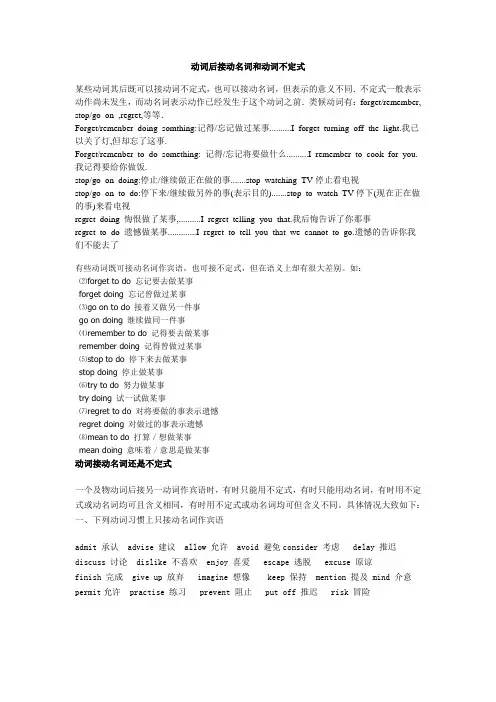
而下面这些动词,既可后接动名词作宾语,也可后接不定式作宾语。
它分两种情况:1、两种在意义上差别不大。
例如:attempt (打算) , begin (开始) , can't afford (花不起) , can't bear (无法容忍) , continue (继续) , deserve (值得) forget (忘记) , hate (不喜欢) , intend (打算) , like(喜欢) , love (爱) , neglect (忽略) , need(需要) , prefer (宁愿) , propose (提议) , want (需要)等。
例如:Do you prefer strolling outside or staying inside (to stroll outside or to stay inside)?你是想在外面散步,还是想呆在室内?I can't afford watching (to watch) the game through to the end because I should be at work in thirty minutes.这场比赛我是看不完了,因为半小时后我要上班。
I like playing (to play ) chess with you , but not today .我喜欢和你下棋,但不是今天。