
翻译技巧增词法与省译法精品PPT课件
- 格式:ppt
- 大小:428.50 KB
- 文档页数:31


翻译技巧1
翻译技巧(上)
一、增译法
增词(译)法就是指在翻译时按照修辞句法上的需要在译文中增加一些原文中虽无但有其意的词。增译的目的是为了更加忠实通顺地表达原文的内容,而决不是无中生有地随意增加。
(一)英译汉常用的增益法
I.增加原文中省略的部分
1.Since the first test of the atomic bomb the world has learnt
that the atom can be split
and its power used. (power后省略了can be)
自从第一颗原子弹试验以来,全世界都已知道,原子可以分裂,原子能可以利用。
2. A fool and his words are soon parted; a man of genius and
his money.(money后省略
了are soon parted)
愚人会很快忘记说过的话,智者会很快放弃手里的钱。
3.Both human and cow milk are naturally spiced with a small
amount of morphine.
(human后省略了milk)
人乳与牛乳均含有少量吗啡。
4.So-called convenience and frozen foods are now as
popular in Europe as
they are in America.
如今,所谓的方便食品和速冻食品风靡欧洲,就像在美国一样大众化。
II.增加意义上或修辞上的需要的部分
1.He left without a word.
他一句话也不说就走了。 2.What a leader he was!
他真是一个出类拔萃的领袖啊。
3.Personal tragedy haunted his entire life, in the deaths of
loved ones.
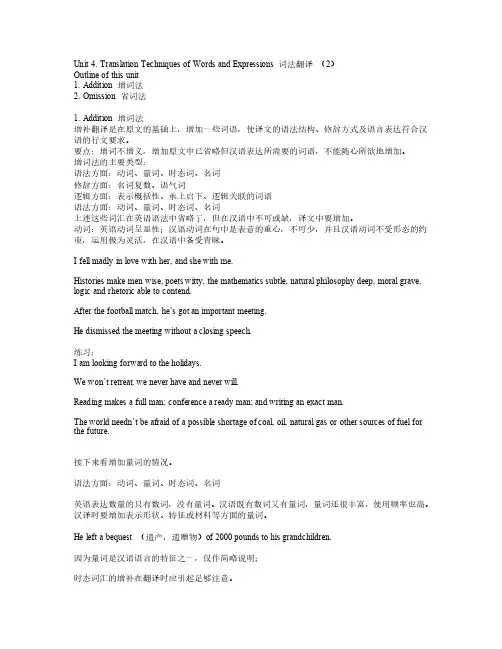
Unit 4. Translation Techniques of Words and Expressions 词法翻译 (2)
Outline of this unit
1. Addition 增词法
2. Omission 省词法
1. Addition 增词法
增补翻译是在原文的基础上,增加一些词语,使译文的语法结构、修辞方式及语言表达符合汉
语的行文要求。
要点:增词不增义,增加原文中已省略但汉语表达所需要的词语,不能随心所欲地增加。
增词法的主要类型:
语法方面:动词、量词、时态词、名词
修辞方面:名词复数、语气词
逻辑方面:表示概括性、承上启下、逻辑关联的词语
语法方面:动词、量词、时态词、名词
上述这些词汇在英语语法中省略了,但在汉语中不可或缺,译文中要增加。
动词:英语动词呈显性;汉语动词在句中是表意的重心,不可少,并且汉语动词不受形态的约
束,运用极为灵活,在汉语中备受青睐。
I fell madly in love with her, and she with me.
Histories make men wise, poets witty, the mathematics subtle, natural philosophy deep, moral grave, logic and rhetoric able to contend. After the football match, he’s got an important meeting. He dismissed the meeting without a closing speech.
练习:
I am looking forward to the holidays. We won’t retreat, we never have and never will.
Reading makes a full man; conference a ready man; and writing an exact man. The world needn’t be afraid of a possible shortage of coal, oil, natural gas or other sources of fuel for
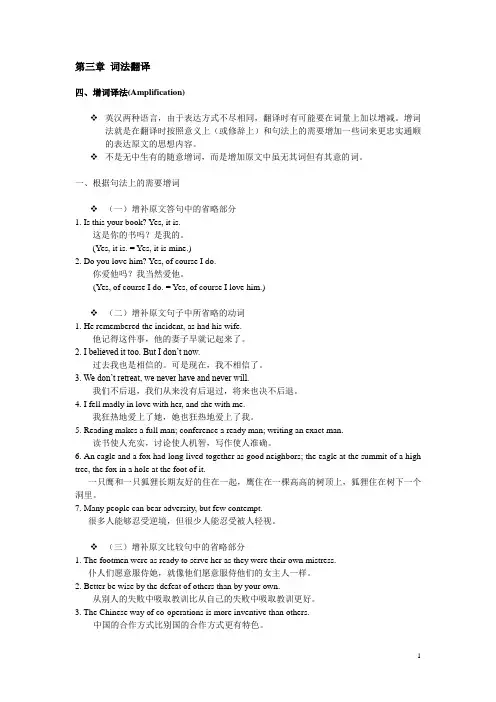
1 第三章 词法翻译
四、增词译法(Amplification)
英汉两种语言,由于表达方式不尽相同,翻译时有可能要在词量上加以增减。增词法就是在翻译时按照意义上(或修辞上)和句法上的需要增加一些词来更忠实通顺的表达原文的思想内容。
不是无中生有的随意增词,而是增加原文中虽无其词但有其意的词。
一、根据句法上的需要增词
(一)增补原文答句中的省略部分
1. Is this your book? Yes, it is.
这是你的书吗?是我的。
(Yes, it is. = Yes, it is mine.)
2. Do you love him? Yes, of course I do.
你爱他吗?我当然爱他。
(Yes, of course I do. = Yes, of course I love him.)
(二)增补原文句子中所省略的动词
1. He remembered the incident, as had his wife.
他记得这件事,他的妻子早就记起来了。
2. I believed it too. But I don’t now.
过去我也是相信的。可是现在,我不相信了。
3. We don’t retreat, we never have and never will.
我们不后退,我们从来没有后退过,将来也决不后退。
4. I fell madly in love with her, and she with me.
我狂热地爱上了她,她也狂热地爱上了我。
5. Reading makes a full man; conference a ready man; writing an exact man.
读书使人充实,讨论使人机智,写作使人准确。
6. An eagle and a fox had long lived together as good neighbors; the eagle at the summit of a high

增补与省略
增补与省略是翻译中最为常见的又一技巧,又称为增词译法和减词译法。这一技巧的使用原则是增词不增义,减词不减义,而是使意义能够更加明确,文字更加通顺。
一.增补法:根据增补的情况不同,我们将之分为语义增补、语法增补和修辞增补。
(一)语义增词:
1.英语有时用词很简洁,在翻译时要增加原文字面上没有、而意思上包含的字词,以免导致语义含糊或歧义。
⑴ The crowds melted away.
人群渐渐散开了。
评析:原文中并没有“渐渐”一词,但melt含有渐渐融化、渐渐散尽的意味,因此在译文中加入了“渐渐”这样一个状语。
⑵ As he sat down and began talking, words poured out.
他一坐下来就讲开了,滔滔不绝地讲个没完。
⑶ Ideally, one day, researchers will know enough about the genesis of earthquakes and the nature
of particular faults to predict quakes directly.
最理想的情况是,有朝一日研究人员能够对地震的成因及具体断层的性质有足够的了解,从而能够直接预报地震。
英语习惯运用抽象词汇,而汉语习惯运用具体词汇。在翻译时若要将抽象概念变为具体概念,则需要增加解释说明的词语。
⑷ We were all greatly moved by his loftiness.
我们都被他那种崇高品质所深深感染。
评析:loftiness是一个表达抽象概念的词,在译成汉语时需要添加词汇,使之符合汉语习惯,诸如此类转换,比比皆是。如对arrogance, indifference, tension等词的翻译,都需要增词。
⑸ He felt the patriot rise within his breast.