
哮喘(英文)
- 格式:ppt
- 大小:667.50 KB
- 文档页数:41


医学常见疾病中英文名称对照表
在医学领域中,了解疾病的中英文对照名称是非常重要的。这有助于医务人员之间的沟通以及医疗文件的准确填写。下面是一份医学常见疾病的中英文对照表,旨在帮助读者更好地理解和运用医学术语。
1.感冒 - Common Cold
2.发烧 - Fever
3.肺炎 - Pneumonia
4.流感 - Influenza
5.哮喘 - Asthma
6.鼻炎 - Rhinitis
7.咳嗽 - Cough
8.胃炎 - Gastritis
9.病毒性肝炎 - Viral Hepatitis
10.糖尿病 - Diabetes
11.高血压 - Hypertension
12.心脏病 - Heart Disease
13.中风 - Stroke
14.肺癌 - Lung Cancer 15.乳腺癌 - Breast Cancer
16.糖尿病 - Diabetes
17.结肠癌 - Colon Cancer
18.肾炎 - Nephritis
19.结石 - Kidney Stones
20.脑炎 - Encephalitis
21.关节炎 - Arthritis
22.精神分裂症 - Schizophrenia
23.抑郁症 - Depression
24.帕金森氏综合症 - Parkinson's disease
25.带状疱疹 - Shingles
26.痔疮 - Hemorrhoids
27.溃疡 - Ulcer
28.白血病 - Leukemia
29.贫血 - Anemia
30.哮喘 - Asthma
31.癫痫 - Epilepsy 32.脑震荡 - Concussion
33.鼻窦炎 - Sinusitis
34.失眠 - Insomnia
35.口腔溃疡 - Mouth Ulcer
36.胰腺炎 - Pancreatitis
37.食道炎 - Esophagitis
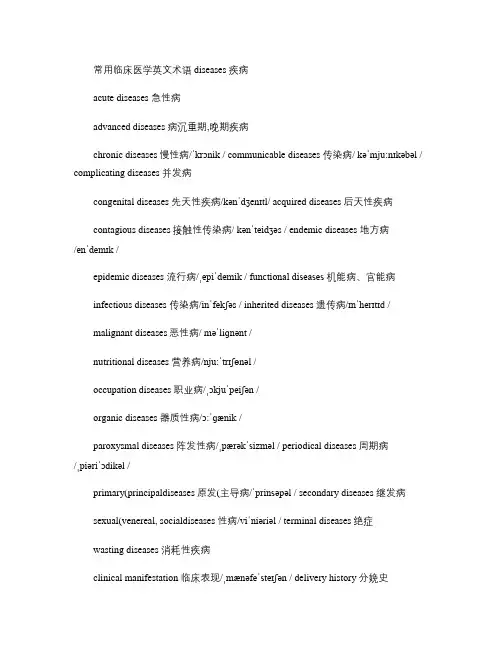
常用临床医学英文术语diseases 疾病
acute diseases 急性病
advanced diseases 病沉重期,晚期疾病
chronic diseases慢性病/ˈkrɔnik / communicable diseases 传染病/ kəˈmju:nɪkəbəl /
complicating diseases 并发病
congenital diseases 先天性疾病/kənˈdʒenɪtl/ acquired diseases 后天性疾病
contagious diseases接触性传染病/ kənˈteidʒəs / endemic diseases 地方病/enˈdemɪk /
epidemic diseases 流行病/ˌepiˈdemik / functional diseases 机能病、官能病
infectious diseases 传染病/inˈfekʃəs / inherited diseases 遗传病/ɪnˈherɪtɪd /
malignant diseases恶性病/ məˈliɡnənt /
nutritional diseases 营养病/nju:ˈtrɪʃɵnəl /
occupation diseases 职业病/ˌɔkjuˈpeiʃən /
organic diseases 器质性病/ɔ:ˈɡænik /
paroxysmal diseases 阵发性病/ˌpærəkˈsizməl / periodical diseases 周期病/ˌpiəriˈɔdikəl /
primary(principaldiseases原发(主导病/ˈprinsəpəl / secondary diseases 继发病
sexual(venereal, socialdiseases 性病/viˈniəriəl / terminal diseases 绝症
wasting diseases 消耗性疾病

全球哮喘防治倡议(GINA)最主要内容
支气管哮喘(Bronchial Asthma,简称哮喘)的英文名称 asthma 起源于古希腊文 aazein,意指“急促的呼吸”。
两千多年前,希波克拉底第一次使用这个词来描述这种病况;两千多年后,支气管哮喘全球防治倡议(The Global Initiative for Asthma,GINA)委员会成立并发展,努力改善全球的哮喘诊治工作。
GINA 委员会自 1993 年成立以来,一直致力于在全球范围内推广哮喘的防治策略。GINA 指南在 1995 年首次出版后,不断进行修订和更新,整理并反映哮喘领域最新进展,保持指南的权威性,指导全球临床医师规范用药治疗哮喘。
2014 年 5 月,GINA 委员会根据近年多项研究数据再次对 GINA 指南进行了修订,相较于之前版本,2014 GINA 指南在哮喘定义、诊断、评估和治疗等方面作出了较多更新,本文将针对这些方面的内容进行解读,以便各位查缺补漏,深入理解新版指南的变化。
新定义:哮喘者 异质性疾病也
2014 GINA 指南第一个重要更新在于对哮喘的定义:哮喘为一种异质性疾病,常以慢性气道炎症为特征,包含随时间不断变化的呼吸道症状病史,如喘息、气短、胸闷和咳嗽,同时具有可变性呼气气流受限。
既往指南中强调哮喘是“一种气道的慢性炎症性疾病”,2014 GINA 指南则强调哮喘是“一种异质性疾病”。该定义基于共识达成,考虑的是哮喘的典型特征,同时与其他呼吸系统疾病相区别。
新诊断:重视可变性呼气气流受限的意义
与修订后的哮喘定义保持一致,哮喘诊断需要基于识别特征性呼吸道症状模式,如喘息、气短(呼吸困难)、胸闷或咳嗽,同时强调识别可变性呼气气流受限。
针对存在以下典型呼吸道症状的患者,临床医师需要增加哮喘诊断的可能性,而获得呼气肺功能的过度变化证据是诊断哮喘的必要组成部分:
(1)超过 1 个症状(喘息、气短、胸闷和咳嗽),尤其在成人患者;

儿童哮喘的分度标准
英文回答:
Asthma is a chronic respiratory condition that affects
both children and adults. It is characterized by
inflammation and narrowing of the airways, leading to
symptoms such as wheezing, coughing, shortness of breath,
and chest tightness. In children, asthma can be
particularly challenging as their airways are smaller and
more sensitive.
To assess the severity of asthma in children, a grading
system called the asthma severity classification is used.
This system helps healthcare professionals determine the
appropriate treatment plan for each child. The severity
classification takes into account the frequency and
intensity of symptoms, as well as the lung function.
There are four levels of asthma severity in children:
1. Intermittent Asthma: This is the mildest form of