
人教版高一英语动名词(精)
- 格式:ppt
- 大小:278.50 KB
- 文档页数:39


高一英语语法·动名词( The Gerund)I.II.1. 起名词的作用,在句中作主语、宾语、表语、定语等。
2. 具有动词的特征,如有完成式和被动语态,可以有自己的宾语和状语。
动名词+宾语或状语构成动名词短语。
III. 动名词的用法1. 作主语1) 置于主语的位置Reading aloud is very important in learning a foreign language.2) 用it作形式主语,将动名词结构置于句末。
这种形式通常用于某些名词和形容词之后。
It is no good pretending to know what you don’t know.It’s no use / useless thinking about it now.It’s a waste of time talking with him.It is worth repairing the car.It is very difficult getting everything ready in time.It will be very nice seeing them again.[注意] important, necessary 等形容词不适用于上述结构。
It is important learning foreign languages. (×)It is important to learn foreign languages. (√)2. 作表语—表示主语的内容The real problem is knowing what to write.Y our work is bringing the chairs downstairs.[注意]1) 动名词和不定式作表语和主语时的区别(1) 一般说来可以互换,其意义没有多大差别。
It is dangerous playing (to play) with fire.What she likes is watching (to watch) the children play.但有时意义上有区别:动名词:表示抽象的一般或泛指的动作。

第01天by+动名词重要程度:★★☆☆☆难易程度:★★☆☆☆(2017·新课标卷I语法填空改编)Fast food is full of fat and salt; by (eat) more fast food people will get more salt and fat than they need in their diet.【参考答案】eating【拓展延伸】1. by 作介词,意为"通过……方式",后接名词或代词作宾语。
后接动词时,用动名词形式。
►We learn by studying with a group. 我们通过小组活动来学习。
2. 动名词其实就是动词ing形式,具有名词的性质,可以在句中作主语、宾语和表语等。
同时,它又具有动词的特点,可以接宾语构成动名词短语。
动名词的具体用法:(1)作主语:动名词作主语时一般可用动词不定式替换。
►Swimming in the river is dangerous.= To swim in the river is dangerous.在河里游泳是危险的。
(2)作表语:动名词作表语时一般句子的主语常常是无生命的名词,而且表语和主语是对等关系,说明主语的内容。
(3)作宾语:常用于allow, try, like, finish, enjoy, forget, stop, love, mind, practice, can’t stand, can’t help等动词或动词短语之后。
►His task is finishing the work. 他的任务是完成工作。
(4)作定语:表示所修饰词的用途、性质、特征等,位于所修饰词的前面。
(5)介词后的动词要使用动名词。
【易错警示】1. 动名词或动词不定式作主语时,谓语动词要使用单数第三人称形式。
2. 有些动词如forget,remember,stop,try,like,love等后面接动名词和动词不定式作宾语都可以,但意义不同。
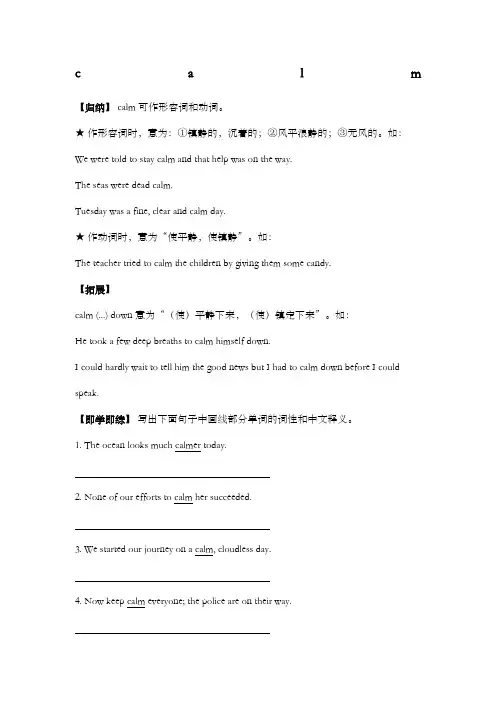
c a l m 【归纳】 calm可作形容词和动词。
★作形容词时,意为:①镇静的,沉着的;②风平浪静的;③无风的。
如:We were told to stay calm and that help was on the way.The seas were dead calm.Tuesday was a fine, clear and calm day.★作动词时,意为“使平静,使镇静”。
如:The teacher tried to calm the children by giving them some candy.【拓展】calm (...) down意为“(使)平静下来,(使)镇定下来”。
如:He took a few deep breaths to calm himself down.I could hardly wait to tell him the good news but I had to calm down before I could speak.【即学即练】写出下面句子中画线部分单词的词性和中文释义。
1. The ocean looks much calmer today.2. None of our efforts to calm her succeeded.3. We started our journey on a calm, cloudless day.4. Now keep calm everyone; the police are on their way.concern【语境展示】阅读下面句子,并试着归纳concern的意思及用法。
1. It concerns me that these people are not getting the support they need.2. These changes concern everyone who has school-age children.3. The film concerns a group of school friends.4. He loved his wife, and concerned himself with her needs and desires.5. Mary hasn’t been seen for four days and there is concern about / for / over her safety.6. His main concern is to be able to provide for his family.7. The money side of the business is your concern.【自我归纳】 concern可作动词和名词。

人教版高一英语第一单元的部分单词一、survey-读音:[ˈsɜːveɪ]-词性:名词&动词-释义:-名词:调查;测量;审视。
例如:a public opinion survey(民意调查)。
-动词:调查;勘测;审视。
例如:survey the damage(查看损失情况)。
二、add up-释义:把……加起来。
例如:Add up all the numbers.(把所有的数字加起来。
)三、upset-读音:[ʌpˈset]-词性:形容词&动词&名词-释义:-形容词:心烦的;苦恼的;不安的。
例如:be upset about/over/at sth.(为某事心烦)。
-动词:使心烦;打乱;打翻。
例如:The bad news upset him.(这个坏消息使他心烦。
)-名词:混乱;翻倒;心烦意乱。
例如:be in an upset state(处于心烦意乱的状态)。
-读音:[ɪɡˈnɔː(r)]-词性:动词-释义:忽视;不理睬。
例如:ignore sb.'s advice(忽视某人的建议)。
五、calm-读音:[kɑːm]-词性:形容词&动词&名词-释义:-形容词:平静的;镇静的。
例如:keep calm(保持镇静)。
-动词:使平静;使镇静。
例如:calm down(平静下来;镇定下来)。
-名词:平静;宁静。
例如:in a state of calm(处于平静状态)。
六、concern-读音:[kənˈsɜːn]-词性:动词&名词-释义:-动词:涉及;关系到;使担忧。
例如:be concerned about/for/with sth.(关心某事;为某事担忧)。
-名词:关心;关注;担忧。
例如:show concern for sb.(关心某人)。
七、walk the dog-释义:遛狗。
-读音:[luːs]-词性:形容词-释义:松的;松开的。