药土围根法预防番茄茎基腐病的效果
- 格式:pdf
- 大小:84.88 KB
- 文档页数:3
(1.山西省农业科学院小麦研究所,山西 临汾 041000;2.临汾经济技术开发区科润农业技术咨询中心,山西 临汾 041000; 3.山西省农业科学院农业资源与经济研究所,山西 太原 030006;4.山西省农业科学院农产品加工研究所,山西 太原 030031)
摘 要:通过试验,比较了不预防、浸苗盘法、淋茎灌根法和药土围根法 4 种方法对番茄茎基腐病的预防效果。结
文 献 标 识 码 :A
文章编号:1002- 24cts of Soil-medicine Enclosure Method on Prevention of Tomato Basal Stem Rot
CHEN Yongjie1,CHEN Tao2,BO Xiaofeng3,LIANG Mingzhu1,JIA Qiangsheng1, JIAO Liancheng1,WANG Yaodong2,ZHAO Xin4
果表明,不预防处理的番茄植株茎基腐病预防率最低,达 21.82%,淋茎灌根法和浸苗盘法分别为 81.27%和
73.45%;不同配方处理的药土围根法对番茄茎基腐病预防效果不同,使用 35%精甲霜灵可湿性粉剂配制的药土,
药土比在(1∶150)~(1∶175)内预防率达到 99.99%,对番茄苗不产生药害;药土比高于 1∶150 时,预防率虽高
Key words:tomato seedling; basal stem rot; soil- medicine enclosure method; control effect
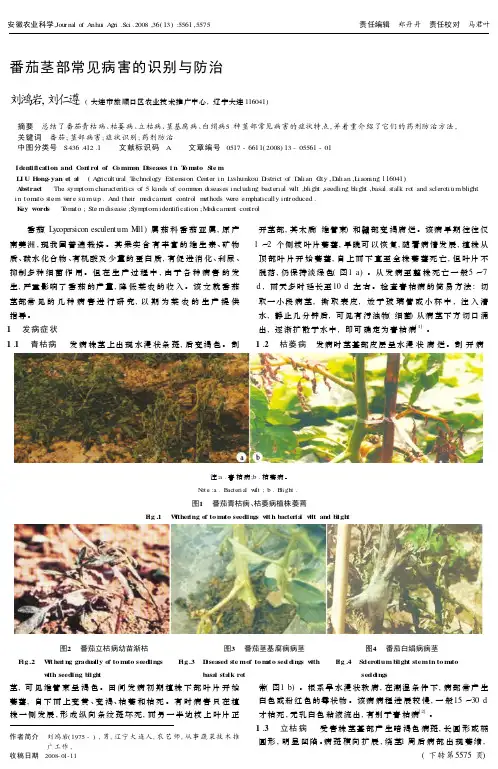
番 茄 茎 基 腐 病 是 由 立 枯 丝 核 菌(Rhizoctonia solani)引起的病害,主要为害番茄茎基部或地下主 侧根,病部开始为暗褐色,以后绕茎基部扩展一周, 使皮层腐烂,地上部叶片变黄、萎蔫,后期整株枯 死,病部表面常形成黑褐色、大小不一的菌核[1- 2]。病 菌在土壤中越冬,腐生性强,可以在土中生存 2~3 a, 大水漫灌且遇到地温过高时最易发病[3- 14]。
山西农业科学 2019,47(2):262- 264 doi:10.3969/j.issn.1002-2481.2019.02.28
Journal of Shanxi Agricultural Sciences
药土围根法预防番茄茎基腐病的效果
陈永杰 1,陈 涛 2,薄晓峰 3,梁明珠 1,贾强生 1,焦连成 1,王耀东 2,赵 鑫 4
(100%),但对番茄苗会产生药害,药害率达 6.1%~35.3%;药土比低于 1∶175 时,预防率降低,达 82.5%~
97.04%。因此,药土比在(1∶150)~(1∶175)对番茄茎基腐病的预防效果最佳,具有一定的应用价值。
关 键 词 :番茄苗;茎基腐病;药土围根;防治效果
中 图 分 类 号 :S436.412.1
4.Institute of Agricultural Products Processing,Shanxi Academy of Agricultural Sciences,Taiyuan 030031,China)
Abstr act:The research compared the effect of no preventing, seedling plate immersion, irrigation with stem and root and soil- medicine enclosure method on preventing tomato basal stem rot. The results showed that the prevention rate of no preventing treatment was the lowest among all the treatments, which was 21.82% , and the prevention rate under treatments of seedling plate immersion and irrigation with stem and root were 81.27% and 73.45% , respectively. The prevention rate reached 99.99% and no phytotoxicity was found when the medicine- soil rate was(1∶150)-(1∶175). When the ration of medicine and soil was higher than 1∶ 150, the prevention rate reached 100% , while it was harmful to the tomato seedlings. When the ration was lower than 1 ∶175, the prevention rate decreased to 82.5%- 97.04%. Therefore, the prevention effects was premium when the ration rate of medicine and soil rate was(1∶150)-(1∶175), which has certain application value.
(1.Institute of Wheat,Shanxi Academy of Agricultural Sciences,Linfen 041000,China;
2.Linfen Economic and Technological Development Zone Kernel Agricultural Technology Consultation Center,Linfen 041000,China; 3.Institute of Agricultural Resources and Economy,Shanxi Academy of Agricultural Sciences,Taiyuan 030006,China;
摘 要:通过试验,比较了不预防、浸苗盘法、淋茎灌根法和药土围根法 4 种方法对番茄茎基腐病的预防效果。结
文 献 标 识 码 :A
文章编号:1002- 24cts of Soil-medicine Enclosure Method on Prevention of Tomato Basal Stem Rot
CHEN Yongjie1,CHEN Tao2,BO Xiaofeng3,LIANG Mingzhu1,JIA Qiangsheng1, JIAO Liancheng1,WANG Yaodong2,ZHAO Xin4
果表明,不预防处理的番茄植株茎基腐病预防率最低,达 21.82%,淋茎灌根法和浸苗盘法分别为 81.27%和
73.45%;不同配方处理的药土围根法对番茄茎基腐病预防效果不同,使用 35%精甲霜灵可湿性粉剂配制的药土,
药土比在(1∶150)~(1∶175)内预防率达到 99.99%,对番茄苗不产生药害;药土比高于 1∶150 时,预防率虽高
Key words:tomato seedling; basal stem rot; soil- medicine enclosure method; control effect
番 茄 茎 基 腐 病 是 由 立 枯 丝 核 菌(Rhizoctonia solani)引起的病害,主要为害番茄茎基部或地下主 侧根,病部开始为暗褐色,以后绕茎基部扩展一周, 使皮层腐烂,地上部叶片变黄、萎蔫,后期整株枯 死,病部表面常形成黑褐色、大小不一的菌核[1- 2]。病 菌在土壤中越冬,腐生性强,可以在土中生存 2~3 a, 大水漫灌且遇到地温过高时最易发病[3- 14]。
山西农业科学 2019,47(2):262- 264 doi:10.3969/j.issn.1002-2481.2019.02.28
Journal of Shanxi Agricultural Sciences
药土围根法预防番茄茎基腐病的效果
陈永杰 1,陈 涛 2,薄晓峰 3,梁明珠 1,贾强生 1,焦连成 1,王耀东 2,赵 鑫 4
(100%),但对番茄苗会产生药害,药害率达 6.1%~35.3%;药土比低于 1∶175 时,预防率降低,达 82.5%~
97.04%。因此,药土比在(1∶150)~(1∶175)对番茄茎基腐病的预防效果最佳,具有一定的应用价值。
关 键 词 :番茄苗;茎基腐病;药土围根;防治效果
中 图 分 类 号 :S436.412.1
4.Institute of Agricultural Products Processing,Shanxi Academy of Agricultural Sciences,Taiyuan 030031,China)
Abstr act:The research compared the effect of no preventing, seedling plate immersion, irrigation with stem and root and soil- medicine enclosure method on preventing tomato basal stem rot. The results showed that the prevention rate of no preventing treatment was the lowest among all the treatments, which was 21.82% , and the prevention rate under treatments of seedling plate immersion and irrigation with stem and root were 81.27% and 73.45% , respectively. The prevention rate reached 99.99% and no phytotoxicity was found when the medicine- soil rate was(1∶150)-(1∶175). When the ration of medicine and soil was higher than 1∶ 150, the prevention rate reached 100% , while it was harmful to the tomato seedlings. When the ration was lower than 1 ∶175, the prevention rate decreased to 82.5%- 97.04%. Therefore, the prevention effects was premium when the ration rate of medicine and soil rate was(1∶150)-(1∶175), which has certain application value.
(1.Institute of Wheat,Shanxi Academy of Agricultural Sciences,Linfen 041000,China;
2.Linfen Economic and Technological Development Zone Kernel Agricultural Technology Consultation Center,Linfen 041000,China; 3.Institute of Agricultural Resources and Economy,Shanxi Academy of Agricultural Sciences,Taiyuan 030006,China;