口译笔记符号大汇总 (1)
- 格式:pdf
- 大小:200.43 KB
- 文档页数:18
“next week”, 可以表示为“wk.”
∧ 表示转折 but yet however
√ 表示“好的”状态,right/good,famous/well-known,etc.
表示“同意”状态,stand up for,support, agree with sb, certain/ affirmative, etc.
∥ 表示“结束”:end,stop,halt,bring sth to a standstill/stop, etc.
常用速记符号 大于 > 小于 <
小于或等于 ≤ 大于或等于 ≥ 等于、意味着 =
不等于 ≠ 约等于 ≈ 遗憾、悲哀 ; 高兴、荣兴 ( 错误、否、不、否定 × 正确、对、好、肯定 √
表示“领导人”:leader, head 那么 head of government, head of company 便可以表 示为 CT ⊙ 圆圈表示一个圆桌,中间一点表示一盆花,这个符号就可以表示会议、开会等:meeting, conference, negotiation,seminar,discussion,symposium ∞ 这个符号看上像条鱼,所以表示“捕鱼业”等合 fishery 有关的词汇。 O 圆圈代表地球,横线表示赤道,所以这个符号就可以表示国际的、世界的、全球的等: international, worldwide, global, universal, etc. J 表示开心:pleasant, joyful,happy,excited, etc. L 表示不满、生气 unsatisfied, discomfort, angry, sad, etc. EO 表示听到、众所周之:as we all know, as is known to all, as you have already heard of, etc. O 表示漠不关心、无动于衷:indifferent, apathetic, unconcern, don’t care much, etc.
表示效率:efficient, effective。
G 为效率符号。 Q
表示“通货膨胀”:inflation
因为这个符号酷似一个上升的气球。 A 表示农业: agriculture. agriculture 经常用到,所以用首字母代替。 B 表示商业:business。 C× 表示冲突,矛盾:conflict,confrontation “C×”中的“×”表示反对,字母“C” 将反对的概念缩小为 conflict 和 confrontation。 W 表示工作,职业: work, employ 等。它是 work 的第一个字母。所以 WZ 就可以用来表示 worker, 而 “ Z” (小圆圈)在字母上方表示 employer, 在字母下方表示 employee。 i 表示工业: industry, industrial 字母 i 像只烟囱,所以用来可以用来表示工业。
练习:
Eastern Europe, South Africa, North China, Western Germany, South Asia,Central Ital
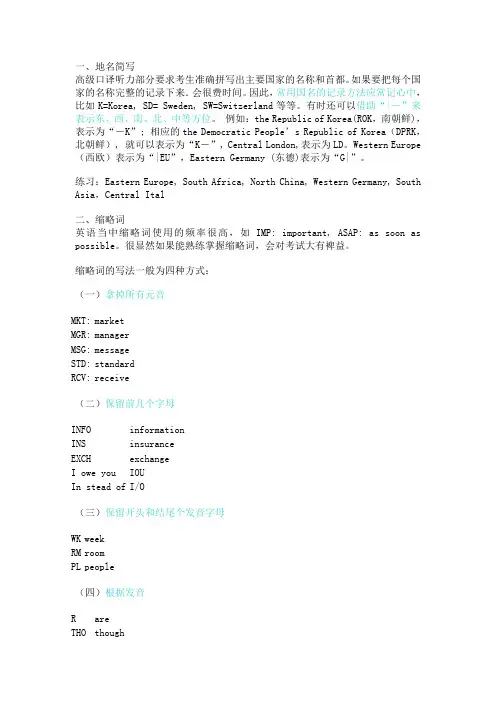
二、缩略词 英语当中缩略词使用的频率很高,如 IMP: important, ASAP: as soon as possible。很显 然如果能熟练掌握缩略词,会对考试大有裨益。 缩略词的写法一般为四种方式: (一)拿掉所有元音
5
PKG
Packing
PL
People
PLS
Please
REF
Reference
SEC
Section
STD
Standard
TEL
Telephone
THO
Though
TKS
Thanks
TRF
Traffic
WT
Weight
XL
Extra large
6
三、字母、图像
o 表示“人”people/person,因为“o”看上去像个人头,它通常被写在一个词或符号的右 上角。例如:日本人:Jo。 C 表示政府,统治:government,govern
四、箭头
g 表示到达、传达:go into,arrive at,give to,send to,present to etc. 表示导致、引导:lead to, result in, in the direction of, etc. 表示屈e from,return,receive from, etc. 表示追溯到:come/go back to,originate
口译笔记符号大汇总
一、地名简写
高级口译听力部分要求考生准确拼写出主要国家的名称和首都。如果要把每个国家的名称完 整的记录下来.会很费时间。因此,常用国名的记录方法应常记心中,比如 K=Korea, SD= Sweden, SW=Switzerland 等等。
有时还可以借助“|-”来表示东、西、南、北、中等方位。例如:the Republic of Korea(ROK,南朝鲜),表示为“-K”; 相应的 the Democratic People’s Republic of Korea (DPRK,北朝鲜), 就可以表示为“K-”, Central London,表示为 LD。Western Europe (西欧)表示为“|EU”,Eastern Germany (东德)表示为“G|”。
week
2
RM
room
PL
people
(四)根据发音
R
are
THO
though
THRU
through
(五)口译听力常用英语缩略词表
缩略词 APT
原词 Apartment
3
ACC ACDG ACPT AD ADS ADV AMAP AMT BAL BLDG CERT CMPE CMU
Accountant According Accept Advertisement Address Advice As much/many as possible Amount Balance Building Certificate Compete/competitive Communication
U 看酷似一个酒杯,在笔记中表示合同、协议(treaty, agreement)一般只有在谈判成功、
7
协议成交后才会表示“举杯祝贺”。如果在 U 内填入 2,就可以表示为 bilateral(双边的), 填入 3 表示为 trilateral (三边的)。
填入在 U 中填入 1 表示: Unilateralism(单边主义),填入 m (multiple) 表示多边主义。
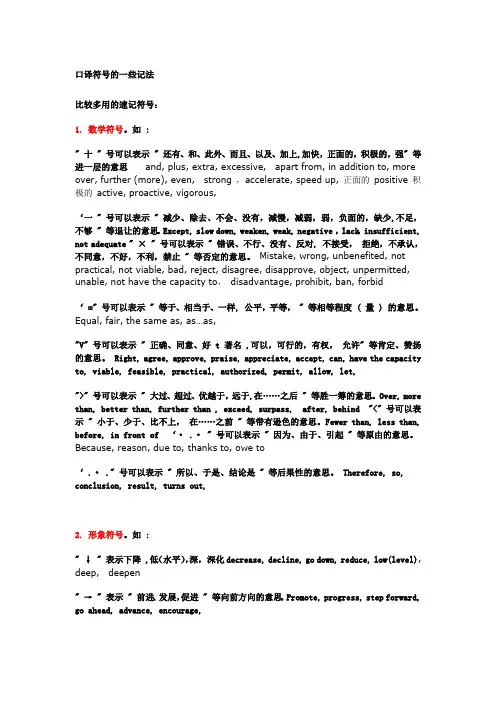
五、数学符号 + 表示“多”: many, lots of, a great deal of, a good many of, etc. ++(+2) 表示“多”的比较级:more +3 表示“多”的最高级:most - 表示“少”: little, few, lack ,in short of/ be in shortage of etc. × 表示“错误”、“失误”和“坏”的概念:wrong/incorrect,something bad,notorious, negative, etc. > 表示“多于”概念:bigger/larger/greater/more than/better than, etc.
4
CO. DEPT DISC EXCH EXT INFO I/O IOU MDL MEMO MIN MKT MSG
Company Department Discount Exchange Extent Information In stead of I owe you Model Memorandum Minimum Market Message
? 表示“问题”:question,issue,例如:台湾问题:tw?
. (dot) 这个“.”点的位置不同表示的概念也不一样
“.d” 表示 yesterday, “.y”表示 last year, “.2m”表示 two month ago。Wk 表示 week
“y” 表示 this year, “y2.” two year later
表示“高” 概念:superior to,surpass, etc. < 表示“少于”概念:less/smaller,etc.
表示“低”概念:inferior to,etc. =表示“同等”概念:means,that is to say, in other words,the same as,be equal to, etc.表示“对手”概念:a match, rival, competitor, counterpart, etc. ( ) 表示“在......之间”:among, within, etc. ≠ 表示“不同”概念:be different from, etc.
MKT:
market
MGR:
manager
MSG:
message
1
STD:
standard
RCV:
receive
(二)保留前几个字母
INFO
information
INS
insurance
EXCH
exchange
I owe you IOU
In stead of I/O
(三)保留开头和结尾个发音字母
WK
表示“无敌”概念:matchless, peerless, etc. ~ 表示“大约”概念:about/around,or so, approximately, etc. / 表示“否定”,“消除”等概念:cross out, eliminate, etc.
9
六、标点等
: 表示各种各样“说”的动词:say, speak, talk, marks, announce, declare, etc.
∧ 表示转折 but yet however
√ 表示“好的”状态,right/good,famous/well-known,etc.
表示“同意”状态,stand up for,support, agree with sb, certain/ affirmative, etc.
∥ 表示“结束”:end,stop,halt,bring sth to a standstill/stop, etc.
常用速记符号 大于 > 小于 <
小于或等于 ≤ 大于或等于 ≥ 等于、意味着 =
不等于 ≠ 约等于 ≈ 遗憾、悲哀 ; 高兴、荣兴 ( 错误、否、不、否定 × 正确、对、好、肯定 √
表示“领导人”:leader, head 那么 head of government, head of company 便可以表 示为 CT ⊙ 圆圈表示一个圆桌,中间一点表示一盆花,这个符号就可以表示会议、开会等:meeting, conference, negotiation,seminar,discussion,symposium ∞ 这个符号看上像条鱼,所以表示“捕鱼业”等合 fishery 有关的词汇。 O 圆圈代表地球,横线表示赤道,所以这个符号就可以表示国际的、世界的、全球的等: international, worldwide, global, universal, etc. J 表示开心:pleasant, joyful,happy,excited, etc. L 表示不满、生气 unsatisfied, discomfort, angry, sad, etc. EO 表示听到、众所周之:as we all know, as is known to all, as you have already heard of, etc. O 表示漠不关心、无动于衷:indifferent, apathetic, unconcern, don’t care much, etc.
表示效率:efficient, effective。
G 为效率符号。 Q
表示“通货膨胀”:inflation
因为这个符号酷似一个上升的气球。 A 表示农业: agriculture. agriculture 经常用到,所以用首字母代替。 B 表示商业:business。 C× 表示冲突,矛盾:conflict,confrontation “C×”中的“×”表示反对,字母“C” 将反对的概念缩小为 conflict 和 confrontation。 W 表示工作,职业: work, employ 等。它是 work 的第一个字母。所以 WZ 就可以用来表示 worker, 而 “ Z” (小圆圈)在字母上方表示 employer, 在字母下方表示 employee。 i 表示工业: industry, industrial 字母 i 像只烟囱,所以用来可以用来表示工业。
练习:
Eastern Europe, South Africa, North China, Western Germany, South Asia,Central Ital
二、缩略词 英语当中缩略词使用的频率很高,如 IMP: important, ASAP: as soon as possible。很显 然如果能熟练掌握缩略词,会对考试大有裨益。 缩略词的写法一般为四种方式: (一)拿掉所有元音
5
PKG
Packing
PL
People
PLS
Please
REF
Reference
SEC
Section
STD
Standard
TEL
Telephone
THO
Though
TKS
Thanks
TRF
Traffic
WT
Weight
XL
Extra large
6
三、字母、图像
o 表示“人”people/person,因为“o”看上去像个人头,它通常被写在一个词或符号的右 上角。例如:日本人:Jo。 C 表示政府,统治:government,govern
四、箭头
g 表示到达、传达:go into,arrive at,give to,send to,present to etc. 表示导致、引导:lead to, result in, in the direction of, etc. 表示屈e from,return,receive from, etc. 表示追溯到:come/go back to,originate
口译笔记符号大汇总
一、地名简写
高级口译听力部分要求考生准确拼写出主要国家的名称和首都。如果要把每个国家的名称完 整的记录下来.会很费时间。因此,常用国名的记录方法应常记心中,比如 K=Korea, SD= Sweden, SW=Switzerland 等等。
有时还可以借助“|-”来表示东、西、南、北、中等方位。例如:the Republic of Korea(ROK,南朝鲜),表示为“-K”; 相应的 the Democratic People’s Republic of Korea (DPRK,北朝鲜), 就可以表示为“K-”, Central London,表示为 LD。Western Europe (西欧)表示为“|EU”,Eastern Germany (东德)表示为“G|”。
week
2
RM
room
PL
people
(四)根据发音
R
are
THO
though
THRU
through
(五)口译听力常用英语缩略词表
缩略词 APT
原词 Apartment
3
ACC ACDG ACPT AD ADS ADV AMAP AMT BAL BLDG CERT CMPE CMU
Accountant According Accept Advertisement Address Advice As much/many as possible Amount Balance Building Certificate Compete/competitive Communication
U 看酷似一个酒杯,在笔记中表示合同、协议(treaty, agreement)一般只有在谈判成功、
7
协议成交后才会表示“举杯祝贺”。如果在 U 内填入 2,就可以表示为 bilateral(双边的), 填入 3 表示为 trilateral (三边的)。
填入在 U 中填入 1 表示: Unilateralism(单边主义),填入 m (multiple) 表示多边主义。
五、数学符号 + 表示“多”: many, lots of, a great deal of, a good many of, etc. ++(+2) 表示“多”的比较级:more +3 表示“多”的最高级:most - 表示“少”: little, few, lack ,in short of/ be in shortage of etc. × 表示“错误”、“失误”和“坏”的概念:wrong/incorrect,something bad,notorious, negative, etc. > 表示“多于”概念:bigger/larger/greater/more than/better than, etc.
4
CO. DEPT DISC EXCH EXT INFO I/O IOU MDL MEMO MIN MKT MSG
Company Department Discount Exchange Extent Information In stead of I owe you Model Memorandum Minimum Market Message
? 表示“问题”:question,issue,例如:台湾问题:tw?
. (dot) 这个“.”点的位置不同表示的概念也不一样
“.d” 表示 yesterday, “.y”表示 last year, “.2m”表示 two month ago。Wk 表示 week
“y” 表示 this year, “y2.” two year later
表示“高” 概念:superior to,surpass, etc. < 表示“少于”概念:less/smaller,etc.
表示“低”概念:inferior to,etc. =表示“同等”概念:means,that is to say, in other words,the same as,be equal to, etc.表示“对手”概念:a match, rival, competitor, counterpart, etc. ( ) 表示“在......之间”:among, within, etc. ≠ 表示“不同”概念:be different from, etc.
MKT:
market
MGR:
manager
MSG:
message
1
STD:
standard
RCV:
receive
(二)保留前几个字母
INFO
information
INS
insurance
EXCH
exchange
I owe you IOU
In stead of I/O
(三)保留开头和结尾个发音字母
WK
表示“无敌”概念:matchless, peerless, etc. ~ 表示“大约”概念:about/around,or so, approximately, etc. / 表示“否定”,“消除”等概念:cross out, eliminate, etc.
9
六、标点等
: 表示各种各样“说”的动词:say, speak, talk, marks, announce, declare, etc.