
Unit 1 Helping those in need 帮助需要帮助的人
- 格式:ppt
- 大小:25.50 KB
- 文档页数:9

单元整体教学设计表二:单元大观念:主题大观念小观念1:了解志愿服务的目的、对象、活动形式和心情感受等小观念2: 了解如何组织一个筹款活动并能通过请求信报请批准。
小观念3:了解更多志愿服务活动和组织,树立社会服务意识。
单元大观念:了解志愿服务的目的、主要形式、内容和意义,培养奉献精神和社会责任感输出:完成一份报告,记叙自己参与某一志愿服务的经历,说明自己参与志愿活动的目的以及感受和收获,并鼓励更多的人参与志愿服务活动帮助有困难的人。
输出:设计一份小组参加志愿服务活动的方案。
输出:就自己班打算参与的志愿服务活动,写一封请求信报请学校批准。
输出:写一份申请信,申请成为某一志愿服务活动或组织的志愿者。
Reading:三位学生在假期做志愿者的经历。
Grammar:动词不定式描述志愿活动的内容以及目的。
Listening:听一段有关募集善款活动的广播采访录音。
Talk time: 学习表示确定或不确定的打算货意愿的表达方式。
Speak up:谈论自己打算参与的志愿服务活动。
Writing:写一封请求校长批准筹款活动的请求信。
More practice:了解“春蕾计划”。
Culture corner:了解“联合国儿童基金会”。
核心素养的综合表现:学生能够运用与志愿服务相关的词汇和表达方式描述志愿服务的经历、阐述志愿服务的目的以及分析志愿服务的意义。
学情分析(一)自然情况本单元围绕“帮助有困难的人”这一话题,以志愿服务为主线,开展教学活动,了解志愿服务的目的、主要形式、内容和意义,培养奉献精神和社会责任感。
符合Module 1 Social munication 这个话题的内容探究,以及八年级学生对知识的汲取需求。
语言大观念小观念1:围绕语义整合性学习词汇和表达方式小观念2:围绕本单元所学目标语言点,写一封请求书,请求校长批准筹款活动。
志愿服务的对象、具体内容、目的和意义描述方式语篇结构 志愿服务活动和组织及机构voluntary work, in need, raise, disabled, offer, suffer, serious, illness, organize, express, pain, lonely, difficulty, hurt, joy, peace, friendship, courage, spiritsbud, fund, project, unable, be unable to, percent, launch, rent, supplies, disaster, longterm, protection1. 活动目的、时间和地点:in order to, the purpose of, help, think about…2. 活动安排:decide to do sth., prepare for…, invite sb. to do sth., hold, organize, activity…3. 收获:helpful, important, learn about, have an influence on…4. 请求 Could you please give sb. permission to do sth.GreetingPara.1: Why you are writing the letter Para.2: How you are going to raise money Para.3: When and where you would like to have the activityPara.4: What you would like to head teacher to do Closing。

帮助需要的人英语范文Helping Those in Need.Helping those in need is a fundamental aspect of humanity that we all share. It is what defines us as social beings and what gives us purpose in life. However, with the complexities of modern life, it can often be easy to forget about the importance of helping others and to get caught up in our own lives. In this article, I will explore the reasons why we should help those in need, the benefits it brings to both the helper and the recipient, and practical ways we can all make a difference.Firstly, helping those in need is a moral imperative. As human beings, we have a natural tendency to want to help others, and this is wired into our DNA. It is a fundamental part of our social nature and what makes us different from other animals. By helping those in need, we are fulfilling our moral duty as human beings and upholding the values of compassion and empathy.Secondly, helping others brings numerous benefits to the helper. It can boost our sense of well-being and happiness, as we feel good about ourselves for making a positive difference in someone else's life. It can also help us to develop a sense of purpose and meaning in our own lives, as we realize that we are making a valuable contribution to society. Furthermore, helping others can help us to develop empathy and understanding for those who are going through difficult times, which can make us more compassionate and understanding people.Thirdly, helping those in need also brings benefits to the recipient. It can provide them with the resources and support they need to overcome their difficulties and get back on their feet. It can give them hope and encouragement when they are feeling lost and helpless. And it can help them to feel less alone and more connected to their community.There are many practical ways that we can help those in need. One of the most effective ways is to volunteer in ourcommunity. We can get involved in local organizations that are working to address the needs of those who are struggling. We can also donate our time, skills, and resources to help those in need. Whether it's volunteeringat a soup kitchen, tutoring a child who is struggling in school, or providing emotional support to someone who is going through a difficult time, our actions can make a significant difference in someone else's life.In addition to volunteering, we can also support organizations that are working to address the root causesof poverty and need. We can donate to charities that are providing essential services to those in need, such as food, shelter, and medical care. We can also advocate forpolicies that are designed to address the structural issues that cause poverty and inequality.Finally, we can also help those in need by simply being kind and compassionate. We can show empathy and understanding towards those who are going through difficult times. We can offer a smile, a listening ear, or a helping hand when someone needs it. Our actions, even if they seemsmall, can have a profound impact on someone else's life.In conclusion, helping those in need is an important aspect of being human. It is our moral duty to uphold the values of compassion and empathy, and it brings numerous benefits to both the helper and the recipient. By getting involved in our community, volunteering, donating, and simply being kind, we can all make a difference and make the world a better place. Let us remember that every act of kindness and help, no matter how small, can have a profound impact on someone else's life.。
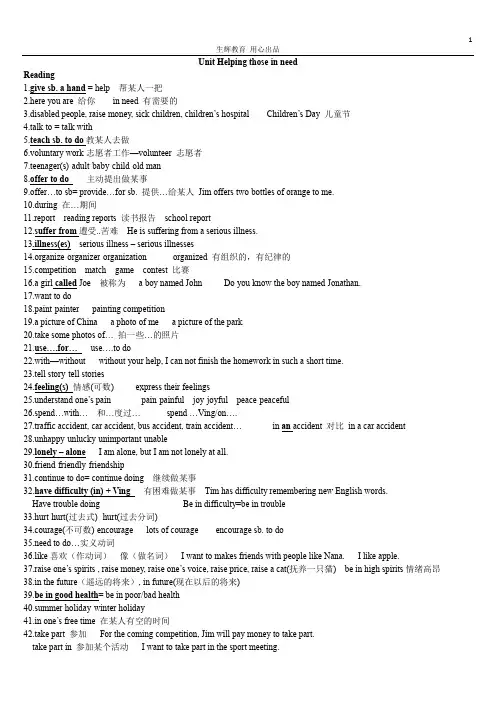
Unit Helping those in needReading1.give sb. a hand = help 帮某人一把2.here you are 给你in need 有需要的3.disabled people, raise money, sick children, children’s hospital Children’s Day 儿童节4.talk to = talk with5.teach sb. to do教某人去做6.voluntary work志愿者工作—volunteer 志愿者7.teenager(s)-adult-baby-child-old man8.offer to do 主动提出做某事9.offer…to sb= provide…for sb. 提供…给某人Jim offers two bottles of orange to me.10.during 在…期间11.report reading reports 读书报告school report12.suffer from遭受..苦难He is suffering from a serious illness.13.illness(es)serious illness – serious illnessesanize-organizer-organization organized 有组织的,有纪律的petition match game contest 比赛16.a girl called Joe 被称为 a boy named John Do you know the boy named Jonathan.17.want to do18.paint-painter painting competition19.a picture of China a photo of me a picture of the park20.take some photos of…拍一些…的照片e….for…use….to do22.with—without without your help, I can not finish the homework in such a short time.23.tell story-tell stories24.feeling(s) 情感(可数) express their feelings25.understand one’s pain pain-painful joy-joyful peace-peaceful26.spend…with…和…度过…spend …Ving/on….27.traffic accident, car accident, bus accident, train accident…in an accident 对比in a car accident28.unhappy-unlucky-unimportant-unable29.lonely – alone I am alone, but I am not lonely at all.30.friend-friendly-friendship31.continue to do= continue doing 继续做某事32.have difficulty (in) + Ving 有困难做某事Tim has difficulty remembering new English words.Have trouble doing Be in difficulty=be in trouble33.hurt-hurt(过去式) -hurt(过去分词)34.courage(不可数)-encourage lots of courage encourage sb. to do35.need to do…实义动词36.like喜欢(作动词)像(做名词)I want to makes friends with people like Nana. I like apple.37.raise one’s spirits , raise money, raise one’s voice, raise price, raise a cat(抚养一只猫) be in high spirits情绪高昂38.in the future(遥远的将来), in future(现在以后的将来)39.be in good health= be in poor/bad health40.summer holiday-winter holiday41.in one’s free time 在某人有空的时间42.take part 参加For the coming competition, Jim will pay money to take part.take part in 参加某个活动I want to take part in the sport meeting.-------------------------------------------------------------------------------------------------------------------------------------------- Grammer1.动词不定式offer to do, choose to do, hope to do, offer to do, want to do, decide to do, learn to do, plan to do, wish to do2.特殊疑问词+ to do what to do, how to do, who to do, where to, which …to do …3.teach sb.to do want sb. to do.4.to do 不定式表示目的Joe went to the park to see the flower. I offer to do some voluntary work to help Jim.Speaking1.Talk about plan: I am going to…I am planning to…I am thinking about doing…----------------------------------------------------------------------------------------------------------------------------------------------- Writing1.head teacher 校长classmates同学2.activity活动(可数)-activities a money-raising activity 一个募捐钱的活动3.write…to…I plan to write a letter to my pen friend hear from 收到…来信4.ask permission 报请批准ask sb.for permissionJim is thinking about asking his mother for permission to going out tonight.5.book fair书展书信格式与内容排版Date……Name….. Mr/Mrs…Address…(从小地方到大地方原则)Greeting…. Dear…正文….I am writing to…. how to do..when and where to do… what do you want him to do…Closing 结尾…Your sincerely, 或sincerely your,Your name and class-------------------------------------------------------------------------------------------------------------------------------------------More practice1.want to do想做某事2.tell sb. about sth告诉某人关于某事3.one of the special activies ----one of + 名词复数one of them is Lily4.4.8 million 数字+million/billion/hundred/thousand millions of/ hundreds of/ thousands of4.8 million of students(错误) 4.8 million students(正确) millions of students(正确)5.aged from…to… 年龄是从…到…(岁) the children aged from eight to ten.6.be unable to do 不能够做某事= can not <<-->> be able to do disabled children残疾儿童7.attend school上学attend class 上课attend a lecture 听讲座give a lecture做演讲uch a project 发起一个工程eight-three percent of them are girls他们中83%是女孩Twenty-one percent of the water is from that bottle.9.since then/ so far 完成时的标志since then, I have learned 2000 English words.10.return to… 回到return home11.pay for sb.付款给某人pay for sth付款买某物pay sb. for sth 付款给某人买某物I pay the shopkeeper for the sweater.12.close to = near = 附近13.rent租赁the girl rented a house for herself near the bus station yesterday.14.stay at home 待在家15.help…do… help…with…帮某人做某事16.Going to school changed my life. 去学校这件事情改变了我的生活(动名词做主语,谓语动词用单数)Climbing mountain helps Jim improve his health. Swimming in winter is my hobby.Change one’s life改变某人的生活17.learn to do 学习着去做18.many other things. other其他的other girls/ students we should offer to help others.19.work as从事…工作20.wish to do希望做某事plan to打算去做would like to do 愿意去做21.purpose目的what is your purpose of going here so early?22.all kinds of各种各样的many kinds of许多种类的what kind of help do you want?23.fifteen percent of students take dogs home as their pets. 作为I used the box as a gift for my daughter.24.amount of money 钱的数量things to buy 该去买的东西25. 联合国儿童基金会(United Nations International Children's Emergency Fund,简称UNICEF),原名“联合国国际儿童紧急救助基金会”,于1946年12月11日创建,最初目的是满足第二次世界大战之后欧洲与中国儿童的紧急需求。

牛津深圳版英语八下Unit 1《Helping those in need》基础说课稿一. 教材分析《牛津深圳版英语八下Unit 1》是一篇以帮助有需要的人为主题的文章。
文章主要讲述了一个关于帮助他人的故事,通过这个故事,让学生了解帮助他人的意义,学会如何去帮助他人。
教材的内容安排紧扣主题,通过阅读文章,听听力材料,以及完成各种练习,使学生对帮助他人的主题有深入的理解。
教材还设计了丰富的活动,激发学生的学习兴趣,提高他们的语言运用能力。
二. 学情分析八年级的学生已经具备了一定的英语基础,他们对英语学习有了一定的认识和理解。
但是,他们的英语听说能力还有待提高,对一些复杂的语言现象和语法规则还不够了解。
同时,学生在这个年龄阶段,已经有了一定的社会责任感和同情心,他们愿意去帮助他人,对社会现象有自己的看法。
因此,教师在教学过程中,要充分利用学生的这些特点,激发他们的学习兴趣,提高他们的语言运用能力。
三. 说教学目标1.知识目标:让学生掌握文章中的关键词汇和短语,理解文章的主旨大意。
2.能力目标:提高学生的阅读理解能力,听力和口语表达能力。
3.情感目标:培养学生帮助他人的意识,提高他们的社会责任感。
四. 说教学重难点1.重点:让学生掌握文章中的关键词汇和短语,理解文章的主旨大意。
2.难点:理解文章中的一些复杂句子和语言现象,提高学生的阅读理解能力。
五. 说教学方法与手段1.教学方法:采用任务型教学法,让学生在完成任务的过程中,掌握知识,提高能力。
2.教学手段:利用多媒体教学,播放听力材料,让学生在真实的语言环境中学习英语。
六. 说教学过程1.导入:利用图片或故事引入主题,激发学生的学习兴趣。
2.阅读理解:让学生阅读文章,回答相关问题,理解文章的主旨大意。
3.听力理解:播放听力材料,让学生完成相关练习,提高他们的听力能力。
4.口语表达:让学生根据文章内容,进行角色扮演或讨论,提高他们的口语表达能力。
5.语法讲解:讲解文章中的一些复杂句子和语言现象,帮助学生提高阅读理解能力。