国外主要节日(双语)
- 格式:doc
- 大小:82.00 KB
- 文档页数:8
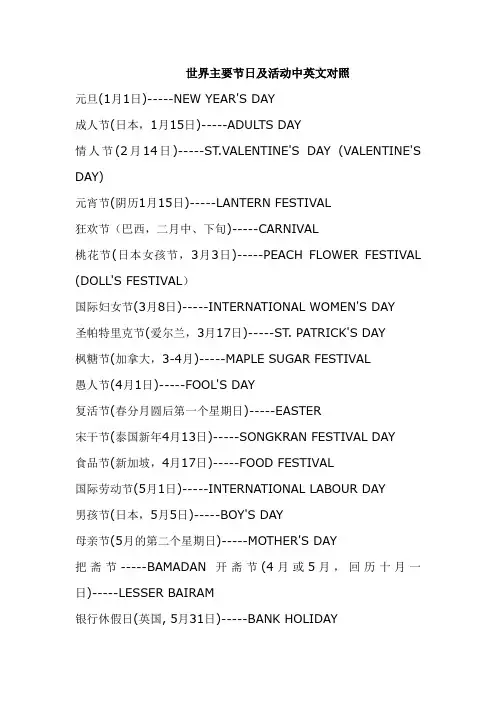
国外主要节日元旦(1月1日)-----NEW YEAR‟S DAY成人节(日本,1月15日)-----ADULTS DAY情人节(2月14日)-----ST.V ALENTINE‟S DAY (V ALENTINE‟SDAY)狂欢节(巴西,二月中、下旬)-----CARNIVAL桃花节(日本女孩节,3月3日)-----PEACH FLOWER FESTIV AL (DOLL‟S FESTIVAL)国际妇女节(3月8日)-----INTERNA TIONAL WOMEN‟S DA Y愚人节(4月1日)-----FOOL‟S DAY复活节(春分月圆后第一个星期日)-----EASTER宋干节(泰国新年4月13日)-----SONGKRAN FESTIV AL DAY国际劳动节(5月1日)-----INTERNA TIONAL LABOUR DAY男孩节(日本,5月5日)-----BOY‟S DAY母亲节(5月的第二个星期日)-----MOTHER‟S DAY国际儿童节(6月1日)-----INTERNA TIONAL CHILDREN‟S DAY父亲节(6月的第三个星期日)-----FATHER‟S DAY筷子节(日本,8月4日)-----CHOPSTICS DAY敬老节(日本,9月15日)-----OLD PEOPLE‟S DAY南瓜节(北美10月31日)-----PUMPKIN DAY鬼节(万圣节除夕,10月31日夜)-----HALLOWEEN万圣节(11月1日)-----HALLOWMAS感恩节(美国,11月最后一个星期4)-----THANKSGIVING圣诞除夕(12月24日)-----CHRISTMAS EVE圣诞节(12月25日)-----CHRISTMAS DAD节礼日(12月26日)-----BOXING DAY新年除夕(12月31日)-----NEW YEAR‟S EVE(a bank holiday in manycountries)中国主要节日春节(农历一月一日) --------------- Spring Festival (Chinese NewYear)元宵节(农历一月十五日) -----------the Lantern Festival植树节(3月12日)------------------ Arbor Day清明节(4月5日) ------------------- Ching Ming Festival;Tomb-sweepingFestival中国青年节(5月4日)----------------Chinese Youth Day端午节(农历五月初五) --------------the Dragon Boat Festival中国共产党成立纪念日(7月1日) ---the Party‟s Bir thday建军节(8月1日) --------------------the Army‟s Day中秋节(农历八月十五) --------------Mid-autumn (Moon) Festival教师节(9月10日)------------------- Teachers‟ Day重阳节(农历九月九日)-------------- Double-ninth Day国庆节(10月1日)------------------- National Day除夕(农历十二月三十日) ------------New Year‟s EveADULTS DAY(成人节)The second Monday of January is Coming-of-Age Day, a national holiday to encourage those who newly entered adulthood to become self-reliant members ofsociety. The holiday used to be on January 15, but in 2000 it was moved to the second Monday of the month.一月的第二个星期一就是成人节,这个节日是日本鼓励那些即将成为成年人的人举行的节日。
这个节日以前是在一月15日,但从2000年起被定为一月的第二个星期一。
Municipal governments host special coming-of-age ceremonies for 20-year-olds, since an "adult" in Japan is legally defined as one who is 20 or over. They gain the right to vote on their twentieth birthday, and they're also allowed to smoke and drink. But along with these rights come new responsibilities as well, and so age 20 is a big turning point for the Japanese.市政府会为年满二十岁的男女举行特别的仪式,因为在日本年满20岁在法律上就是成年人了。
在他们20岁生日时他们就有选举权,也被允许吸烟饮酒了。
但是拥有权力的同时他们也必须承担新的义务,责任,所以20岁对于日本人来说是一个重大转折。
These days, yong men and women must wear traditional kimono or a suit. males generally wear suits to their coming-of-age ceremony, but a lot of females choose to wear traditional (振袖,状似和服的长袖)--a special type of (和服)for unmarried women with extra-long sleeves and elaborate designs.在这一天,年轻男男女女必须穿上传统的和服或者西服。
男的一般穿西服迎接他们的成人礼,女的会选择传统和服,就是一种未婚女性穿的长袖的精心装饰的和服。
Valentine‟s Day(情人节)February 14th is a complicated but interesting holiday. First of all, Valentine's Day is not a holiday from work. No one gets a day off. On Valentine's Day people usually send romantic cards to someone they love or want to be loved by. The cards are called "valentines". They are very colourful, often decorated with hearts, flowers or birds, and have humorous or sentimental verses printed inside. 二月十四日是一个复杂而又有趣的节日。
首先,情人节不是一个休假日。
没人放假。
在情人节这一天,人们爱谁或想得到谁的爱,就可给那个人寄去充满浪漫情趣的卡片。
这种卡片叫"情人卡"。
情人卡色彩鲜艳,常装饰有心、花或鸟,里面还印有幽默或感伤性的诗句。
One of the symbols of St. Valentine's Day is the Roman god of Love, called Cupid. Cupid is often printed on the card, who is winged infant without wearing anything, poised to shoot his arrow into a heart. He would shoot an arrow of love into a person's heart to make the person fall in love immediately, maybe with the first person to come along. So on February 14th not only do we have picture of the Christian St. Valentine but we also have pictures of the non-Christian Cupid, the Roman god of Love.情人节的标志之一是罗马爱神--丘比特。
丘比特经常被印在卡片上,他是一个赤身裸体、长有翅膀的婴儿,手里拿着箭,摆出一副要射心的姿势。
他把爱之箭射中一个人的心,这个人会很快坠入爱河,可能是和他(她)第一个见到的人。
有时候,一只箭会射中两颗心,把它们穿在一起。
所以在二月十四日,我们不仅有基督的"圣·瓦伦登"的画像,还有非基督的罗马爱神丘比特的画像。
Carnival (狂欢节)The annual Carnival in Brazil is a unique festival. It is also the most important ethnic celebration. It comes between the end of February and the beginning of March every year. Hundreds of thousands of tourists from overseas were attracted to join the feast of rejoicing, which involves flamboyant1 costumes, sexy Brazilian girls and passionate Samba dance。
在巴西,一年一度的狂欢节是一种特有的节日,也是最重要的民族庆典,于每年二月底至三月初举行。
艳丽的服装、性感的巴西女郎、奔放的桑巴舞,吸引着海外无数游客前往尽享乐宴。
The earliest Carnival dates back to 1641, when the colonial rulers implemented a decree2. According to it, people would be encouraged to parade, dance and drink unrestrained to celebrate the birthday of the Portuguese King. More than three hundred years later, the Carnival has become the most important folk festival of Brazil.最早的狂欢节追溯到1641年,当时的殖民统治者颁布了一条法令。