
Questionnaire & Interview
- 格式:ppt
- 大小:150.00 KB
- 文档页数:29


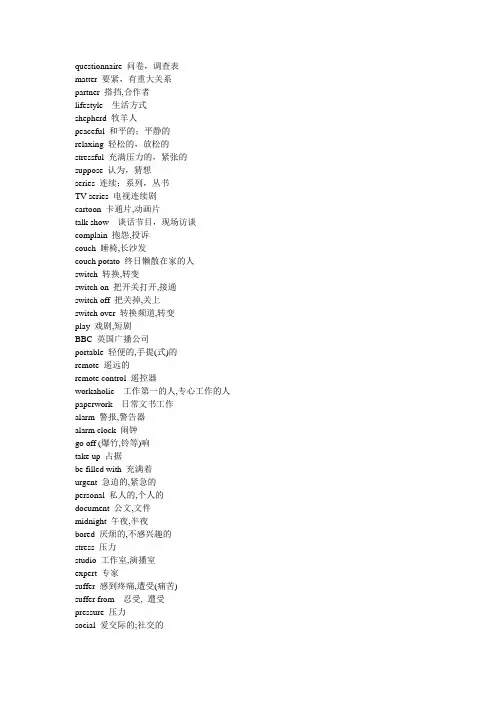
questionnaire 问卷,调查表matter 要紧,有重大关系partner 搭挡,合作者lifestyle 生活方式shepherd 牧羊人peaceful 和平的;平静的relaxing 轻松的,放松的stressful 充满压力的,紧张的suppose 认为,猜想series 连续;系列,丛书TV series 电视连续剧cartoon 卡通片,动画片talk show 谈话节目,现场访谈complain 抱怨,投诉couch 睡椅,长沙发couch potato 终日懒散在家的人switch 转换,转变switch on 把开关打开,接通switch off 把关掉,关上switch over 转换频道,转变play 戏剧,短剧BBC 英国广播公司portable 轻便的,手提(式)的remote 遥远的remote control 遥控器workaholic 工作第一的人,专心工作的人paperwork 日常文书工作alarm 警报,警告器alarm clock 闹钟go off (爆竹,铃等)响take up 占据be filled with 充满着urgent 急迫的,紧急的personal 私人的,个人的document 公文,文件midnight 午夜,半夜bored 厌烦的,不感兴趣的stress 压力studio 工作室,演播室expert 专家suffer 感到疼痛,遭受(痛苦)suffer from 忍受, 遭受pressure 压力social 爱交际的;社交的reduce 减少;降低organize 组织diet 饮食,节食stand 忍耐,忍受prefer 更喜欢,宁愿volunteer 志愿者graduate 毕业minus 负,零下basin 水盆,脸盆challenge 挑战support 支持;支撑dial 拨(电话号码)design 设计advertisement 广告presentation 表演,展示solve 解答,解决accountant 会计,会计师tube (英)地铁crowded 拥挤的nearby 附近的在附近otherwise 否则,另外forecast 预测,预报crowd 人群,一伙人lung 肺distance 距离distance learning 远程学习sickness 疾病cigar 雪茄烟at the moment 此刻,目前over the years 数年间classical 古典的survey 调查formal 正式的,合礼仪的mini-skirt 迷你裙,超短裙cycle 骑自行车kung fu (中国)功夫style 风格,作风calm 镇静的,沉着的generous 慷慨的,大方的violent 暴力的character 人物,性格spaceship 太空船manned spaceship 载人宇宙飞船province 省astronaut 宇航员flight 飞行,航班launch 发射gravity 地心引力rocket 火箭soar 高飞;翱翔the United Nations 联合国explore 探险peacefully 和平地,平静地reporter 记者,通讯员glow 发光atmosphere 大气,气氛parachute 降落伞helicopter 直升机million 百万millions of 数百万wave 挥手示意,致意afterwards 然后,后来revolution 革命found 建立,创立republic 共和国light bulb 电灯泡opinion 意见,看法,主张in my opinion 在我看来personally 就自己而言racism 种族主义equal 平等的struggle 斗争,拼搏protest 抗议march 行军brilliant 卓越的,辉煌的skilful 灵巧的,熟练的awful 极度的,糟糕的useless 无用的,无效的compete 比赛,竞争amazing 令人惊异的unusual 不平常的champion 冠军violence 暴力,暴行bullet 子弹career 职业,一生的事业keen 热心的,渴望的event 竞赛;事件fortunately 幸运地athlete 运动员superhero 超级英雄superman 超人disaster 灾难on one's own 单独地,独自地promote 促进,提升injury 损害,伤害give up 放弃come to 达到某种状态pull through 使从(受伤)中活下来,渡过难关commit 犯(错误),干(坏事)commit suicide 自杀get on 融洽相处,进展relationship 关系react 反应divorce 离婚involve 涉及,参与get involved with 参加,参与charity 施舍,慈善quality 质量,品质disabled 残废的confident 自信的far too 太,极为come off it 别胡扯Olympic 奥运会的badminton 羽毛球admire 钦佩,羡慕dive 潜水,跳水dead right 完全地,绝对地medal 奖章,勋章absolutely 完全地,绝对地get a point 得分graduation 毕业scholarship 奖学金the Mid-Autumn Festival 中秋节wedding 婚礼Halloween 万圣节前夕dragon 龙the Dragon Boat Festival 端午节merry 高兴的,愉快的turkey 火鸡occasion 场合traditional 传统的bean paste 豆馅nowadays 现今,现在include 包括,包含lantern 灯笼the Lantern Festival 元宵节celebration 庆祝,庆典power 权力,影响力darkness 黑暗,漆黑destroy 破坏,毁坏burn down 烧毁decorate 装饰,布置battery 电池sweet dumpling 元宵boil 煮沸,沸腾serve 服务;招待,伺候lunar 月球的,与月亮有关的lunar month 太阴月,阴历一个月tradition 传统,惯例take part in 参加…,参与…sticky 粘的,粘性的alcohol 酒精,乙醇hot pot 火锅snack 小吃,快餐reception 接待;招待会retire 退休salary 薪水apply 申请,应用apply for 请求,申请opportunity 机会teenager 十几岁的青少年depend on 根据,依据on time 准时smartly 潇洒地,漂亮地congratulations 祝贺bunch 束,串bride 新娘新郎bridegroom 男傧相best man 入口entrance 邀请,请柬invitation even if 即使ceremony 典礼,仪式attend 出席,参加Indonesian 印尼的ought 应该,应当contribute 捐献,贡献Greek 希腊的,希腊人的crown 王冠,花冠ribbon 缎带,丝带link 连接carol 圣诞节颂歌stocking 长袜seriously 认真地,真诚地pole 棒,竿;极the North Pole 北极envelope 信封calendar 日历put up 举起,建造decoration 装饰;装饰品pudding 布丁breast 胸部swallow 吞下;咽下adult 成年人carry on 继续,坚持mat 垫子litre 升,公升fry 用油煎,用油炸as well 也unfortunately 不幸地mess 混乱,脏乱production 生产,制造needle 针pillow 枕头。

关于questionare的英语作文Unlocking the Power of Questionnaires: Insights, Trends, and Transformative PotentialQuestionnaires have long been a fundamental tool in the pursuit of understanding human behavior, attitudes, and preferences. As a versatile research instrument, the questionnaire has the power to extract valuable data, uncover hidden trends, and drive informed decision-making across a wide range of industries and domains. In this essay, we will delve into the multifaceted nature of questionnaires, exploring their applications, methodologies, and the transformative impact they can have on individuals, organizations, and society as a whole.At the core of a questionnaire's effectiveness lies its ability to gather quantifiable data from a targeted audience. Whether it's gauging customer satisfaction, assessing employee engagement, or exploring public perceptions on a particular issue, questionnaires provide a structured and systematic approach to data collection. By carefully crafting a series of questions, researchers can elicit responses thatreveal insights into the thoughts, experiences, and motivations of the respondents.One of the key advantages of questionnaires is their scalability. Unlike face-to-face interviews or focus groups, questionnaires can be distributed to a larger and more diverse sample size, allowing for the collection of data from a broader spectrum of participants. This scalability enables researchers to identify patterns, trends, and outliers that might otherwise be missed in smaller-scale studies. Moreover, the standardized format of questionnaires ensures consistency in data collection, facilitating meaningful comparisons and statistical analysis.Beyond their data-gathering capabilities, questionnaires also play a crucial role in informing decision-making processes. The insights gleaned from questionnaire responses can serve as a powerful foundation for strategic planning, product development, and policy formulation. By understanding the needs, preferences, and pain points of their target audience, organizations can make more informed and customer-centric decisions, ultimately enhancing their products, services, and overall effectiveness.The versatility of questionnaires is further exemplified by their application in a wide range of fields. In the realm of marketing, questionnaires are used to gauge brand awareness, assess customerloyalty, and explore consumer purchasing behaviors. In the healthcare sector, questionnaires are employed to evaluate patient satisfaction, monitor treatment outcomes, and gather feedback on the quality of care. In the educational domain, questionnaires are utilized to assess student learning, gather feedback on teaching methods, and inform curriculum development.The methodological approaches to questionnaire design and administration have also evolved over time, reflecting the changing landscape of research and technological advancements. Traditional paper-based questionnaires have given way to online and mobile-friendly formats, enabling faster data collection, streamlined analysis, and enhanced accessibility for respondents. The integration of advanced analytical tools and data visualization techniques has further amplified the power of questionnaires, allowing researchers to uncover hidden patterns, identify causal relationships, and present findings in a more impactful and engaging manner.One of the most significant transformations in the realm of questionnaires has been the rise of big data and the integration of digital technologies. By leveraging the vast troves of data generated through online surveys, mobile apps, and social media interactions, researchers can now gain a more holistic understanding of human behavior and preferences. This convergence of questionnaire data and big data analytics has opened up new avenues for predictivemodeling, personalized recommendations, and real-time decision-making.Moreover, the increasing emphasis on user experience and human-centered design has also influenced the evolution of questionnaires. Researchers are now placing greater emphasis on the design, layout, and flow of questionnaires, ensuring a seamless and engaging experience for respondents. This focus on user-centric design not only enhances participation rates but also contributes to the reliability and validity of the data collected.Beyond the practical applications, questionnaires also hold the potential to drive positive social change. By incorporating questions that explore societal issues, such as diversity, equity, and inclusion, questionnaires can shed light on pressing challenges and inform initiatives aimed at fostering more inclusive and equitable communities. Additionally, questionnaires can be utilized to amplify the voices of marginalized populations, giving them a platform to share their experiences and perspectives, ultimately informing policy decisions and social interventions.However, it is important to acknowledge the potential limitations and ethical considerations surrounding questionnaires. Researchers must be mindful of biases, both in the design of the questionnaire and in the interpretation of the data. Furthermore, the protection ofrespondent privacy and the responsible handling of sensitive information must be a top priority, ensuring that questionnaire-based research adheres to ethical guidelines and regulatory frameworks.In conclusion, the humble questionnaire is a powerful tool that continues to evolve and transform the way we understand and interact with the world around us. From its foundational data-gathering capabilities to its potential to drive social change, the questionnaire remains a cornerstone of research and decision-making across diverse domains. As we navigate the ever-changing landscape of human behavior and preferences, the questionnaire stands as a testament to the power of inquiry, the value of data-driven insights, and the transformative potential of well-designed research instruments.。

QuestionnaireA questionnaire is a good way to gather information from a group of people. You can learn a group's knowledge, opinions and preferences by surveying them through a questionnaire. Use the following steps to create a questionnaire that will get the best results.How to make a questionnaire1.Decide what information you want to gather from the survey2.Keep the survey as short as possible, asking only those questions that will providee a casual, conversational style, making the questions easy for almost anyone tounderstand.4.Structure the survey so that the questions follow a logical order and evolve fromgeneral to specific.e multiple-choice questions whenever possible. This helps the respondent tobetter understand the purpose of your question and will reduce the time it takes to complete the questionnaire6.Avoid leading questions that might generate false positive responses. For example,the question "How great was the service provided by our excellent waiters?"should be "How was the service provided by our waiters?"e the same rating scale throughout your survey for questions requiring therespondent to rate items. For example, if the scale is from 1 to 5, with 5 being the most positive, keep that same scale for all of the questions requiring a rating.8.Test the survey on 10 to 15 people before you produce it for mass distribution.Conduct an interview with each of those respondents after he or she completes the survey to determine if your questions were easily understood and easy to answer.。