
冀教版七年级下英语 Lesson 49
- 格式:ppt
- 大小:919.50 KB
- 文档页数:14


教案教案 备注备注Lesson 1 May I Go To Beijing? Teaching goals 教学目标教学目标a. 掌握词汇及短语掌握词汇及短语 may go go go shopping shopping to mom on trip the city of too and please far from kilometer okay hard great eat ask leave of so but busy only square Tian’anmen Square restaurant question sorry b. 句型句型 —May I …? —Yes, you may. /No, you may not. t oo… to… Teaching important and difficult points 教学重难点教学重难点 Teach the student to learn the following expressions: —May I…? —Yes, you may. /No, you may not. too … to … / be far from / go on a trip Teaching methods 教学方法教学方法 Listening and speaking. Teaching aids 教具准备教具准备 Audiotape. Teaching procedures & ways 教学步骤与方式教学步骤与方式教学步骤与方式 Step I Greeting and lead-in Greet the students and get them to talk about their holidays. Get some other students to talk about their holidays. And then show some places of interest and continue talking with the students to make them understand the phrase go on a trip to. T: I had a nice holiday too. I went on a trip to Beijing. Look! There are some pictures about this city. T: How about the first picture? S: It’s Tian’anmen Square. T: That’s right ! The second one? ! The second one? S: It’s Gugong. (In Chinese) T: In English It is named the Palace Museum. S: The Palace Museum. T: How about the last one? S: It’s Changcheng. T: It’s the Great Wall in English. S: The Great Wall. T: There are so many beautiful places in Beijing. And Beijing is the capital city of our country. Would you like to travel to Beijing? (To one student) S: Y es. T: Would you like to go on a trip to Beijing too? Help the student to answer. Make sure the students know the meaning of go on a trip to. S: Yes. I’d like to go on a trip to Beijing. Step II Practice Get the students to learn to talk about permission by using the phrase: to go on a trip to. The teacher can show them some pictures of places of interest to help them to discuss. T: What city would you like to go on a trip to, Beijing or Guilin? S: I’d like to go on a trip to Guilin. Ask more students the same question to let them learn the phrase go on a trip to well T: Gulin is a very beautiful place. May I go on a trip with you? Help the student to answer: Yes, you may. Or No, you may not. Explain the meaning in Chinese if necessary. S: Yes, you may. T: T: (To (To (To another another another student) student) student) I I I have have have no no no money money money to to to go go go on on on a a a trip trip trip to to to Guilin. Guilin. May I borrow some money? S: No, you may not. Step III Text learning Get the students to learn the text. Listening Get the students to listen to the tape and answer a question. And then get them to repeat after the tape. T: T: Li Li Li Ming Ming Ming wants wants wants to to to go go go on on on a a a trip trip trip to to to Beijing. Beijing. Beijing. Listen Listen Listen to to to the the the tape tape carefully. Does Li Ming’s mother go on a trip to Beijing too? S: (After listening) Yes. Paraphrasing Explain the following sentences. Notes: 1. You are too young to go, Ling Ming. It means Li Ming is too young. If he goes to Beijing, he cannot take care of himself. 2. Beijing is far from our city. It means Beijing is not near Shijiazhuang. 3. You work hard in school. It means Li Ming studies hard. Practice Get the students to read and act out the dialogue in pairs. And then ask them to work in pairs and make up their own dialogues using go on a trip to, too… to…, be far from and May I…? They can talk from the following aspects: 1.Where you want to go for a trip; 2. Why you cannot / can go there; 3.Who will go with you. Walk around to give them a hand if necessary. Sample dialogue: S1: May I go on a trip to New York, mom? S2: No, you may not. Now York is too far to go. S1: Dad? S3: No, you are too young to go. You can go to a city near our home. S1: May I go on a trip to Lasa? S3: No, you may not. It’s far from our city.S1: May I go on a trip to Beijing? S2 and S3: Yes, you may. We will go to Beijing too. Step IV Homework Finish the exercises in Activity book. Practice the dialogue in pairs. Preview Lesson 2 Lesson 2 May I Invite Danny and Jenny? Teaching goals 教学目标教学目标 a. 掌握词汇掌握词汇want come hello with who when do leave for arrive. b. 认知词汇认知词汇 invite them Mrs. call oh wonderful invitation bye hooray c. 句型句型 When do you leave for …? / When do you arrive in / at …? —May I speak with / to …? —This is … (speaking). Who’s that?Teaching important and difficult points 教学重难点教学重难点Grasp the expressions of making phone calls. Teaching methods 教学方法教学方法 Listening and speaking. Teaching aids 教具准备教具准备 Audiotape and pictures. Teaching procedures & ways 教学过程与方法教学过程与方法教学过程与方法 Step I Lead-in and speaking T: Good morning, class. S: Good morning, Miss /Mr. /Ms. … T: We know that Li Ming will go on a trip to… S: Beijing! T: Do you want to go to Beijing? Why or why not? Help Help the the the students students students to to to answer answer answer these these these questions questions questions from from from the the the following following aspects: Affirmative: 1. have fun; 2. learn a lot that can not be found in the text book; 3. make other friends … Negative: 1. Beijing is too far away; 2. too young to go; 3. … T: If you can go to Beijing, who do you want to take with you? Why? S: I may go with my parents. They can take care of me, and share the happiness together. S: I may go with my friends. We have the same interest and can have a lot of fun. S: I may go with my little brother. I can learn to take care of him and learn a lot. T: Good! Wish you a good trip to Beijing. Step II Reading Fast reading Get the students to scan the dialogue to look for the expressions about making phone calls in English. T: Li Ming wants to go to Beijng, do you know who does he want to take to Beijng? Now, look through the text and show me the answer. S: Jenny and Danny. T: That ’s it! But where are Jenny and Danny? S: They live in Canada. T: So how can Li Ming invite them? S: Make a phone call. T: Good! Please read the dialogue in Lesson 2 silently and try to find out ways to make a phone call. After the students finish reading, summarize the following patterns. —Hello. May I speak with / to …?—Yes, this is…. Who’s that?—This is …T: Great! Careful reading Get the students to learn about how to invite somebody on the phone. 1. Paraphrasing Make a dialogue to help the students understand the phrases leave for and arrive at / in. T: Hello. May I speak to Mary? S: Hello. This is Mary. Who is that? T: This is … I’m going on a trip to Beijing. Would you like to go with me? S: Y es. T: Let’s meet at the school gate at 9:00 on Friday. OK? S: OK. Draw Draw the the the school school school gate gate gate and and and Beijing Beijing Beijing West West Railway Railway Station Station Station on on on the the blackboard and let the student come to the front of the classroom to act act with with with you. you. you. The The The two two two walk walk walk from from from the the the school school school gate gate gate in in in the the the picture picture picture to to Beijing Railway Station in the picture. T: We are leaving our school. We are leaving for Beijing. Now we are arriving arriving in in in Beijing, Beijing, Beijing, arriving arriving arriving at at at Beijing Beijing Beijing West West West Railway Railway Railway Station. Station. Station. W W e usually arrive at a small place; and arrive in a big place. Got it? Write Write the the the phrases phrases phrases on on on the the the blackboard, blackboard, blackboard, explain explain explain them them them and and and lead lead lead the the students to read them. 2. Reading Get the students to read the dialogue and answer the questions given. After that ask them to listen and repeat, and then act out the dialogue. Who does Li Ming want to take to Beijing? (He wants to take Danny and Jenny to Beijing.) Can Jenny come? (Yes, she can.) When do Li Ming and his mother leave for Beijing? (They leave on February 1 in the morning.) When When do do do they they they arrive arrive arrive in in in Beijing? Beijing? Beijing? (They (They (They arrive arrive arrive in in in Beijing Beijing Beijing in in in the the afternoon on February 1.) Step III Presentation Let Let the the the students students students work work work in in in pairs pairs pairs to to to make make make up up up similar similar similar dialogues dialogues dialogues to to practice the expressions of making a phone call. They can talk from the following aspects: 1. Where you want to go for a trip; 2. Who you want to invite to have a trip; 3. When you leave. Ask some pairs to act out their dialogues. Step IV Homework Finish off the exercise in Activity book. Preview Lesson 3. Lesson 3 How Far Is Beijing? Teaching goals 教学目标教学目标 a. 掌握词汇掌握词汇 me about here him there say thousand b. 认知词汇认知词汇 dinosaur think visit Edmonton laugh worry be partner practice c. 句型句型 How far is it from … to …? It It’’s about … kilometers. Teaching important and difficult points 教学重难点教学重难点 Grasp the expressions of talking about distance. How to express numbers from one hundred to ten thousand. Teaching methods 教学方法教学方法 Listening, and speaking. Teaching aids 教具准备教具准备 Audiotape and maps. Teaching procedures & ways 教学过程与方式教学过程与方式教学过程与方式 Step I Revision Greeting T: How are you doing? S: We are fine. Revision Help the students review Lessons 1 & 2 by asking questions. Why does Li Ming want to go on a trip to Beijing? Because Beijing is the capital city of our country and it’s not far from his city, Shijiazhuang. Why does Li Ming’s mother let Li Ming go on a trip to Beijing? Because Because Li Li Li Ming Ming Ming is is is not not not too too too busy, busy, Beijing Beijing is is is not not not very very very far far far from from Shijiazhuang, Li Ming is a good student and works hard in school. What can Li Ming do in Beijing? He can go shopping, eat in restaurants and go to a hotel. Step II Lead-in Show the students the map of China and the world map to help them to talk about distance. Lead the students to read the numbers in this lesson. Step III Text learning Reading Get Get the the the students students students to to to read read read the the the text text text again again again and and and answer answer answer the the the following following questions. T: Now please read the dialogue and find out the answer to the two questions: Why is Mrs. Dinosaur worried? And can Danny go? S: Because Canada is too far from China. S: Yes, he can. T: That’s right. Listening Then get the students to listen to and repeat after the tape. Later, ask them to act out the dialogue. Step IV Get the students to talk about distance. Speaking Write How far is it from … to …? / It’s about… kilometers and some numbers on the Bb to let the students practice talking about distance. Explain the usage of hundred and thousand. Notes: Notes: hundred, hundred, hundred, thousand thousand 前面有具体数字时,不要加s; 一般情况下,百位与个位之间用and (也可以不用and )十位和个位之间可以用连字符,也可以不用。
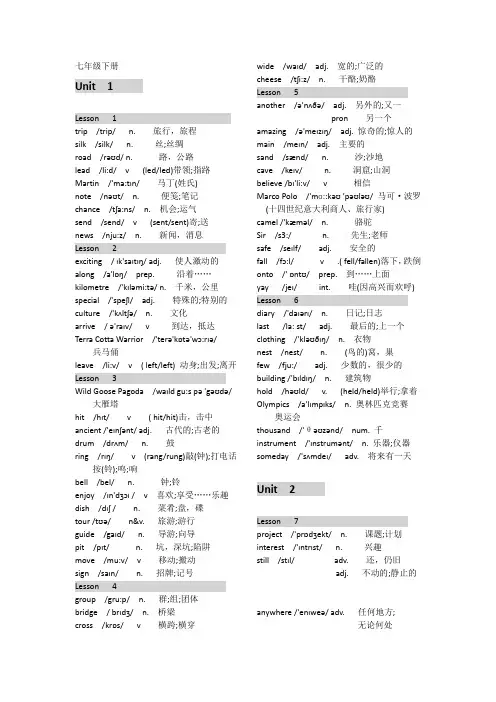
七年级下册Unit 1Lesson 1trip /trip/ n. 旅行,旅程silk /silk/ n. 丝;丝绸road /rəʊd/ n. 路,公路lead /li:d/ v (led/led)带领;指路Martin /'ma:tɪn/ 马丁(姓氏)note /nəʊt/ n. 便笺;笔记chance /tʃa:ns/ n. 机会;运气send /send/ v (sent/sent)寄;送news /nju:z/ n. 新闻,消息Lesson 2exciting / ɪk'saɪtɪŋ/ adj. 使人激动的along /a'lɒŋ/ prep. 沿着……kilometre /'kɪləmi:tə/ n. 千米,公里special /'speʃl/ adj. 特殊的;特别的culture /'kʌltʃə/ n. 文化arrive / ə'raɪv/ v 到达,抵达Terra Cotta Warrior /'terə'kɒtə'wɔ:rɪə/兵马俑leave /li:v/ v ( left/left) 动身;出发;离开Lesson 3Wild Goose Pagoda /waɪld gu:s pə 'gəʊdə/大雁塔hit /hɪt/ v ( hit/hit)击,击中ancient /'eɪnʃənt/ adj. 古代的;古老的drum /drʌm/ n. 鼓ring /rɪŋ/ v (rang/rung)敲(钟);打电话按(铃);鸣;响bell /bel/ n. 钟;铃enjoy /ɪn'dʒɔɪ / v 喜欢;享受……乐趣dish /dɪʃ / n. 菜肴;盘,碟tour /tʊə/ n&v. 旅游;游行guide /gaɪd/ n. 导游;向导pit /pɪt/ n. 坑,深坑;陷阱move /mu:v/ v 移动;搬动sign /saɪn/ n. 招牌;记号Lesson 4group /gru:p/ n. 群;组;团体bridge / brɪdʒ/ n. 桥梁cross /krɒs/ v 横跨;横穿wide /waɪd/ adj. 宽的;广泛的cheese /tʃi:z/ n. 干酪;奶酪Lesson 5another /ə'nʌðə/ adj. 另外的;又一pron 另一个amazing /ə'meɪzɪŋ/ adj. 惊奇的;惊人的main /meɪn/ adj. 主要的sand /sænd/ n. 沙;沙地cave /keɪv/ n. 洞窟;山洞believe /bɪ'li:v/ v 相信Marco Polo /'mɑː:kəʊ 'pəʊləʊ/ 马可·波罗(十四世纪意大利商人、旅行家)camel /'kæməl/ n. 骆驼Sir /s3:/ n. 先生;老师safe /seɪlf/ adj. 安全的fall /fɔ:l/ v .( fell/fallen)落下,跌倒onto /' ɒntʊ/ prep. 到……上面yay /jeɪ/ int. 哇(因高兴而欢呼) Lesson 6diary /'daɪərɪ/ n. 日记;日志last /la: st/ adj. 最后的;上一个clothing /'kləʊðɪŋ/ n. 衣物nest /nest/ n. (鸟的)窝,巢few /fju:/ adj. 少数的,很少的building /'bɪldɪŋ/ n. 建筑物hold /həʊld/ v. (held/held)举行;拿着Olympics /a'lɪmpɪks/ n. 奥林匹克竞赛奥运会thousand /'θəʊzənd/ num. 千instrument /'ɪnstrumənt/ n. 乐器;仪器someday /'sʌmdeɪ/ adv. 将来有一天Unit 2Lesson 7project /'prɒdʒekt/ n. 课题;计划interest /'ɪntrɪst/ n. 兴趣still /stɪl/ adv. 还,仍旧adj. 不动的;静止的anywhere /'enɪweə/ adv. 任何地方;无论何处joke / dʒəʊk/ n.&v. (开)玩笑Lesson 8Italy /'ɪtəlɪ/ 意大利(地名)age /eɪdʒ/ n. 年龄goods /gʊdz/ n. 商品;物品Europe /'jʊərəp/ n. 欧洲Asia /'eɪʃə/ n. 亚洲journey /'dʒ3:nɪ/ n. 旅行;旅程king /kɪŋ/ n. 国王coal /kəʊl/ n. 煤discover / dɪs'kʌvə/ v. 发现;了解invent /ɪn'vent/ v. 发明;创造other /'ʌðə/ adj. 别的;其他的Lesson 9describe /dɪ'skraɪb/ v. 描写;描述build /bɪld/ v. (built/built)修建;建造ago /ə'gəʊ/ adv. 前;以前army /'a:mɪ/ n. 军队;陆军clay /kleɪ/ n. 黏土soldier /'səʊldʒə/ n. 战士,士兵important /ɪm'pɔ:tənt/ adj. 重要的tool /tu:l/ n. 工具;用具desert /'dezət/ n. 沙漠;荒漠more /mɔ: / adj.&pron.(much/many的比较级)更多,较多Lily /'lɪlɪ/ 莉莉(人名)Lesson 10realize /'rɪəlaɪz/ v. 认识到;实现rich /rɪtʃ/ adj. 丰富的;富有的western /'westən/ adj. 西方的;西式的violin /,vaɪə'lɪn/ n. 小提琴dancer /'dɑ:nsə/ n. 跳舞的人Lesson 11online /,ɒn'laɪn/ adj. 在线的;联网的especially / ɪ'speʃəlɪ/ adv. 尤其;特别treasure /'treʒə/ n. 宝物;财富end /end/ n. 最后;末端product /'prɒdʌkt/ n. 产品;结果worth /w3:θ/ adj.值得(做某事);有价值的hand-made /,hænd'meɪd/ adj. 手工的taste /teɪst/ v. 尝起来;品尝;体验Dora /'dɔ:rə/ 多拉(人名)Mcmica /'mɒnɪkə/ 莫妮卡(人名)true /tru:/ adj. 真实的;真正的;正确的supper /'sʌpə/ n. 晚餐Paul /p ɔ:l/ 保罗(人名)once /wʌns/ adv. 从前;一度;一次Lesson 12blog /blɒg/ n. 博客(网络电子日志) experience / ɪk'spɪərɪəns/v&n. 体验;经历;经验alive /ə'laɪv/ adj. 活着的;有活力的own / əʊn/ adj. 自己的should /ʃʊd/ v.aux. 应该;将要anyone /'enɪwʌn/ pron. 任何人;无论谁suggestion /sə'dʒestʃən/ n. 建议yum /jʌm/ int. 好吃;味道或气味非常好Unit 3Lesson 13life /laɪf/ n. 生活term /t3:m/ n. 学期start / sta: t/ v. 开始;出发finish /'fɪnɪʃ/ v. 完成;结束twice /twaɪs/ adv. 两次;两倍win /win/ v. ( won/won)赢得;获胜yeah /jeə/ int. (口语)是;对social /səʊʃl/ adj. 社会的shop /ʃɒp/ n. 手工艺课myself /maɪ'self/ pron. 我自己Lesson 14Edmonton /'edməntən/ 埃德蒙顿(加拿夕西南部城市,阿尔伯塔省省会) middle /'mɪdl/ adj. 中等的Greenwood /'gri:nwʊd/ Middle School 格林伍德中学grade /greɪd/ n. 年级wood /wʊd/ n. 木头;木材print /prɪnt/ v. 印图案于;印刷guitar /gɪ'ta:/ n. 吉他fair /feə/ n. 展览会worm /w3: m/ n. 蠕虫silk worm 蚕Lesson 15difference /'dɪfrəns/ n. 差异;差别village /'vɪlɪdʒ/ n. 村庄,乡村education /,edjʊ'keɪʃn/ n. 教育yourself /jɔ:'self/ pron. 你自己drop /drɒp/ v. 放弃;停止possible /'pɒsəbl/ adj. 可能的never /'nevə/ adv. 从来没有;决不future /'fju: tʃə/ n. 未来Lesson 16Jason Glen /'dʒeɪsn glen/ 杰森·格伦(人名) Riverside/'rɪvəsaɪd/ High School 河畔中学terrible /'terəbl/ adj. 可怕的;非常严重的happen /'hæpən/ v. 发生lose /lu:z/ v. (lost/lost)失去;失败fire /'faɪə/ n. 火;火灾raise /reɪz/ v. 筹募(钱财) Lesson 17prize /praɪz/ n. 奖品;奖赏video /'vɪdɪəʊ/ n. 录像;视频piece /pi: s/ n. 张;片visitor /'vɪzɪtə/ n. 参观者Lesson 18teach /ti:tʃ/ v. (taught/taught)教;讲授quite /kwaɪt/ adv. 非常;十分nervous /'n3:vəs/ adj. 紧张的;不安的comfortable /'kʌmftəbl/ adj. 舒服的relaxed /rɪ'lækst/ adj. 轻松的;放松的helpful /'helpfl/ adj. 有用的;有帮助的Unit 4Lesson 19Activity / æk'tɪvətɪ/ n. 活动Steven /'sti:vn/ 史蒂文(人名) Volleyball /'vɒlɪbɔ:l/ n. 排球;排球运动Practice /'præktɪs/ n.&v 练习Chess /tʃes/ n. 国际象棋club /klʌb/ n. 俱乐部;社团volunteer /,vɒlən'tɪə(r)/ v. 自愿帮助n 志愿者bingo /'bɪŋgəʊ/ n. 宾戈游戏both /bəʊθ/ adj.&pron. 二者(的) nothing /'nʌθɪŋ/ n.&pron. 无事;无物Lesson 20join / dʒɔɪn/ v. 参加improve / ɪm'pru:v/ v. 提高;改善thinking /'θɪŋkɪŋ/ adj. 思想的;理性的skill /skil/ n. 技能;技巧challenge /'tʃælɪndʒ/ v.&n. 挑战meeting /'mi:tɪŋ/ n. 聚会;会议act /ækt/ v.&n. 行动;扮演useful /'ju:sfl/ adj. 有用的;有益的role /rəʊl/ n. 职能;角色team /ti:m/ n. 队;组shape /ʃeip/ n. 样子;形状level /'levl/ n. 水平;标准;质量pool /pu:l/ n. 小池;水塘Lesson 21type /taɪp/ n. 类型;种类following /'fɒlaʊɪŋ/ adj. 接着的;下述郎which /wɪtʃ/ adj.&.pron. 哪(那)一个circle /'sɜː:kl/ v. 圈出n. 圆add /æd/ v. 加;增加;添加score /skɔ:/ n. 得分relax /rɪ'læks/ v. 放松;休息free /fri:/ adj. 空闲的;自由的mind /maɪnd/ n. 头脑;思想active /'æktɪv/ adj. 积极的;活跃的quietly /'kwaɪətlɪ/ adv. 安静地;平静地must /mʌst/ v.aux. 必须;应当without /wɪ'ðaʊt/ prep. 没有;不用bored /bɔ:d/ adj. 无聊的;无趣的example /ɪg'zɑːmpl/ n. 例如;范例Lesson 22hurry /'hʌrɪ/ n.&v. 赶紧;匆忙somewhere /'sʌmweə/ adv. 在某处actually /'æktʃʊəlɪ/ adv. 的确;真实地cooking /'kʊkɪŋ/ n. 烹调surf /s3:f/ v. 冲浪Internet /'ɪntənet/ n. 因特网;互联网housework /'haʊswɜːk/ n. 家务劳动Lesson 23phone /fəʊn/ n. 电话v . 打电话bookworm /'bʊkwɜːm/ n. 书迷;书虫anything /'eɪnθɪŋ/ pron. 任何事物;某事grocery /'grəʊsərɪ/ n. 杂货expensive /ɪk'spensɪv/ adj. 昂贵的Lesson 24yummy /'jʌmi/ adj. 好吃的;美味的everybody /'evrɪbɒdɪ/ pron. 每人;人人Unit 5Lesson 25foreign /'fɒrən/ adj. 外国的could /kʊd/ v. aux. 能;可能loudly /laʊdlɪ/ adv. 高声地,大声地;吵闹地understand /,ʌndə'stænd/v. ( understood/ understood) 懂得;理解cartoon /kɑː 'tu:n/ n. 动画片;漫画Canadian /kə'neɪdɪən/ adj. 加拿大(人)的n. 加拿大人Lesson 26Alicia /ə'lɪʃɪə/ 艾丽西娅(人名) Russia /rʌʃə/ 俄罗斯(地名)reply /rɪ'plaɪ/ n.&v. 回答;答复competition /,kɒmpɪ'tɪʃən/ n. 比赛;竞赛proud /praʊd/ adj. 自豪的;引以为荣的such /sʌtʃ/ adj. 那么的;这样的Lesson 27letter /'letə/ n. 字母exactly /ɪg'zæktlɪ/ adv. 确切地;精确地fact /fækt/ n. 事实;真实的事物sentence /'sentəns/ n. 句子quick /kwɪk/ adj. 快的;迅速的fox /fɒks/ n. 狐狸lazy /'leɪzɪ/ adj. 懒惰的forwards /'fɔ:wədz/(=forward/'fɔ: wəd/) adv. 向前backwards /'bækwədz/(=backward/' bækwəd/) adv. 向后;倒therein /,ðeər'ɪn/ adv. 在那里;在其中even /'i:vn/ adv. 甚至;还;其实dig /dɪg/ v. (dug/dug)挖;掘Lesson 28Teresa /tə'ri:zə/ 特里萨(人名)Hong Kong /hɒŋ kɒŋ/ 香港storybook /'stɔ:rɪbʊk/ n. 故事书magazine /,mægə'zi:n/ n. 杂志newspaper /'nju:zpeɪpə/ n. 报纸mistake /mɪ'steɪk/ n. 错误Silly /'Sɪlɪ/ adj. 愚蠢的;傻的Susan /'su:zən/ 苏姗(人名)oops /ʊps/ int哎哟;啊呀(摔倒或出小差错时的用语) Lesson 29article /'ɑːtɪkl/ n. 文章opportunity /,ɒpə'tju:nətɪ/ n. 机会knowledge /'nɒlɪdʒ/ n. 知识;学问communicate /kə'mju:nɪkeɪt/ v. 交流connect /kə'nekt/ v. 连接;联结Lesson 30pal /pæl/ n. 伙伴;朋友Jessica /'dʒesɪkə/ 杰西卡(人名) introduce /,ɪntrə'dju:s/ v. 介绍Unit 6Lesson 31strange /streɪndʒ/ adj. 奇怪的;奇特的不熟悉的notice /'nəʊtɪs/ v. 注意到;看到n. 布告;启事wild /waɪld/ adj. 怪异的;荒诞的;野生的wake /weɪk/ v. (woke/woken)醒surprised /sə'praɪzd/ adj. 感到惊讶的become /bɪ'kʌm/ v.(became/become ) 变得;成为dark /da:k/ adj.&n. 黑暗(的)ski /ski:/ v. 滑雪snowball /'snəʊbɔ:l/ n. 雪球Lesson 32research /rɪ'sɜːtʃ/ n.&v. 研究;调查website /'websaɪt/ n. 网站hill /hɪl/ n. 山丘;小山ice / aɪs/ n. 冰snowman /'snəʊmæn/ n. 雪人clear /klɪə/ adj. 晴朗的;明亮的;清澈的Lesson 33temperature /'temprətʃə/ n. 温度pie /paɪ/ n. 馅饼clap /klæp/ v.&n. 拍手;鼓掌happily /'hæpɪlɪ/ adv. 幸福地;满足地Lesson 34maple /'meɪpl/ n. 枫树syrup /'sɪrəp/ n. 糖浆goose /gu:s/ n. (复数geese)(加拿大)雁;鹅honk /hɒŋk/ n. 鹅(雁)声;汽车喇叭声cloud /klaʊd/ n. 云wet /wet/ adj. 湿的Lesson 35surfing /'sɜːfɪŋ/ n. 冲浪运动mate /meɪt/ n . 朋友;伙伴Aaron /'eərən/ 艾伦(人名)reach /ri: tʃ/ v. 到达;达到degree /dɪ'gri:/ n. 度数,度sea /si:/ n. 海洋,海surfboard /'sɜːfbɔ:d/ n. 冲浪板popular /'pɒpjʊlə/ adj. 流行的;普及的surfer /'sɜːfə/ n. 冲浪者Lesson 36everywhere /'evrɪweə/ adv. 到处;处处strawberry /'strɔ:bərɪ/ n. 草莓Unit 7Lesson 37truth /tru:θ/ n. 真相;真实decide /dɪ'saɪd/ v. 决定;作出判断change / tʃeɪndʒ/ v.&n. 改变habit /'hæbɪt/ n. 习惯;行为usual /'ju:ʒʊəl/ adj. 通常的health /helθ/ n. 健康;健康状态saying /'seɪɪŋ/ n. 俗语;谚语awful /'ɔ:fʊl/ adj. 可怕的Lesson 38remember /rɪ'membə/ v. 记得;记起information /, ɪnfə'meɪʃn/ n. 信息keep /ki:p/ v. ( kept/kept)保持;保留brain /breɪn/ n. 脑;头脑ping-pong /'pɪŋpɒŋ/ n. 乒乓球Lesson 39success /sək'ses/ n. 成功;胜利event / ɪ'vent/ n. 竞赛项目;大事throw /θrəʊ/ v. (threw/thrown)投;掷;扔winner /'wɪnə/ n. 获胜者;优胜者teammate /'ti:mmeɪt/ n. 队友Lesson 40Ben /ben/ 本(人名)Tim /tɪm/ 蒂姆(人名) outdoors /,aʊt'dɔ:z/ adv. 在户外weight /weɪt/ n. 重量couch /kaʊtʃ/ n. 睡椅;长沙发椅air /eə/ n. 空气;天空lucky /'lʌkɪ/ adj. 幸运的;侥幸的side /saɪd/ n. 边;侧边Lesson 41Dena Morin /'di:nə'mɔ:rɪn/迪娜·莫材(人名) nation /'neɪʃn/ n. 国家;民族hunt /hʌnt/ v. 打猎;搜索spend /spend/ v (spent/spent) 用(钱); 花(钱)natural /'nætʃrəl/ adj. 自然的;天然的pow-wow /'paʊwaʊ/ n. 帕瓦(北美原住民族一种歌舞庆典)Lesson 42step /step/ n. 步骤;脚步towards /tə'wɔ:dz/ prep. 向;朝向brush /brʌʃ/. v. 刷n. 刷子tooth /tu:θ/ n. (pl. teeth) 牙齿organized /'ɔ:gənaɪzd/ adj.做事有条理的有组织的mess /mes/ n. 杂乱;肮脏develop /dɪ'veləp/ v. 发展;使形成;培育Unit 8Lesson 43final /'faɪnəl/ adj. 最后的;最终的exam / ɪg'zæm/ n. 考试;检查tennis /'tenɪs/ n. 网球Lesson 44rights /raɪts/ n. 权益;权利care /keə/ n. 照料;保护;小心v. 关心;照料pet /pet/ n. 宠物puppy /'pʌpɪ/ n. 小狗,幼犬rocket /'rɒkɪt/ n. 火箭(文中指狗名) alone /a'ləʊn/ adj. &adv. 独自(的) field /fi:ld/ n. 旷野;地方;领域luckily /'lʌkɪlɪ/ adv. 幸运地;有好运地Lesson 45baseball /'beɪsbɔ:I/ n. 棒球snack /snæk/ n. 点心;小吃pop /pɒp/ n. 汽水if / ɪf/ conj. 如果;假若ever /'evə/ adv. 曾经;究竟;到底root /ru:t/ n.&v. 加油toot /tu:t/ n. 嘟嘟(喇叭声) shame /ʃeɪm/ n. 羞愧;惭愧Lesson 46noon /nu:n/ n. 中午hamburger /'hæmbɜːgə/ n. 汉堡包nature /'neɪ ʃə/ n. 大自然wish /wɪʃ/ v.&n. 希望Lesson 47Germany /'dʒɜːmənɪ/ 德国(地名) university /,ju:nɪ'vɜːsətɪ/ n. 大学Lesson 48organize /'ɔ:gənaɪz/ v. 组织camp /kæmp/ n. 露营;营地share /ʃeə/ v. 分享;合用。

