情态动词+have_done的用法(1)
- 格式:ppt
- 大小:258.00 KB
- 文档页数:20

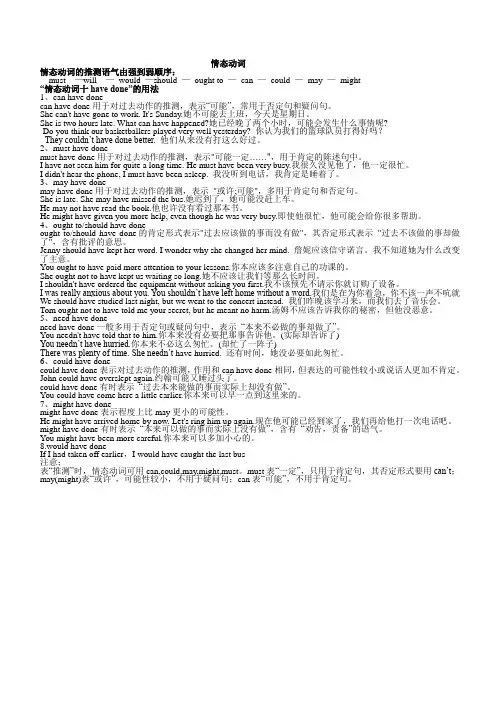
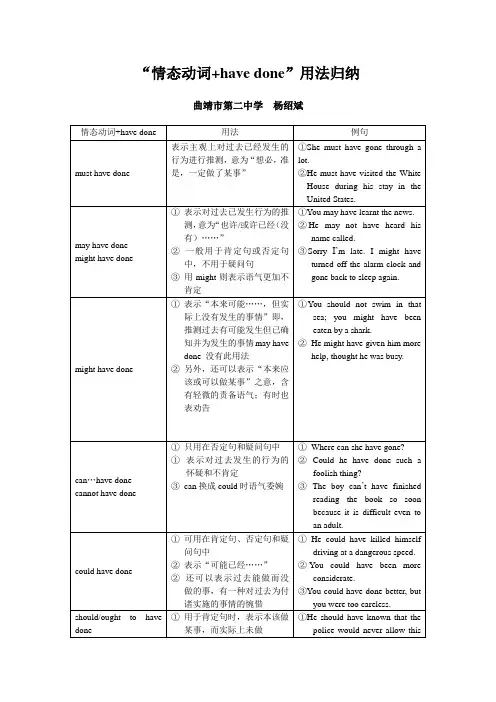
情态动词情态动词的推测语气由强到弱顺序:must —will —would —should —ought to —can —could —may —might“情态动词十have done”的用法1、can have donecan have done用于对过去动作的推测,表示“可能”,常用于否定句和疑问句。
She can't have gone to work. It's Sunday.她不可能去上班,今天是星期日。
She is two hours late. What can have happened?她已经晚了两个小时,可能会发生什么事情呢?-Do you think our basketballers played very well yesterday? 你认为我们的篮球队员打得好吗?- They couldn’t have done better. 他们从来没有打这么好过。
2、must have donemust have done用于对过去动作的推测,表示"可能一定……",用于肯定的陈述句中。
I have not seen him for quite a long time. He must have been very busy.我很久没见他了,他一定很忙。
I didn't hear the phone, I must have been asleep. 我没听到电话,我肯定是睡着了。
3、may have donemay have done用于对过去动作的推测,表示"或许;可能",多用于肯定句和否定句。
She is late. She may have missed the bus.她迟到了,她可能没赶上车。
He may not have read the book.他也许没有看过那本书。
He might have given you more help, even though he was very busy.即使他很忙,他可能会给你很多帮助。
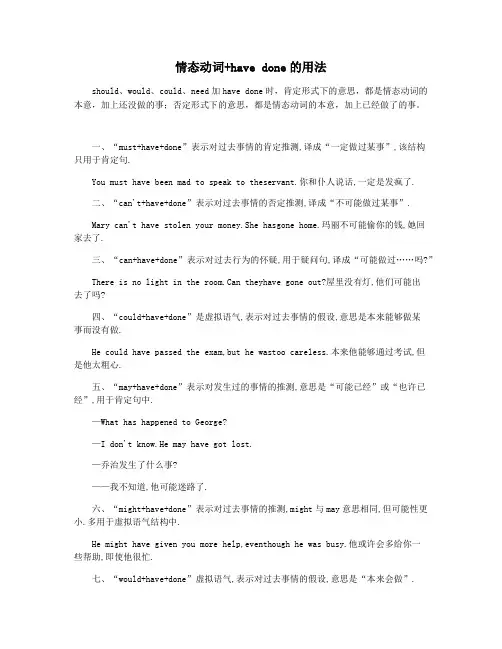
情态动词+have done的用法should、would、could、need加have done时,肯定形式下的意思,都是情态动词的本意,加上还没做的事;否定形式下的意思,都是情态动词的本意,加上已经做了的事。
一、“must+have+done”表示对过去事情的肯定推测,译成“一定做过某事”,该结构只用于肯定句.You must have been mad to speak to theservant.你和仆人说话,一定是发疯了.二、“can't+have+done”表示对过去事情的否定推测,译成“不可能做过某事”.Mary can't have stolen your money.She hasgone home.玛丽不可能偷你的钱,她回家去了.三、“can+have+done”表示对过去行为的怀疑,用于疑问句,译成“可能做过……吗?”There is no light in the room.Can theyhave gone out?屋里没有灯,他们可能出去了吗?四、“could+have+done”是虚拟语气,表示对过去事情的假设,意思是本来能够做某事而没有做.He could have passed the exam,but he wastoo careless.本来他能够通过考试,但是他太粗心.五、“may+have+done”表示对发生过的事情的推测,意思是“可能已经”或“也许已经”,用于肯定句中.—What has happened to George?—I don't know.He may have got lost.—乔治发生了什么事?——我不知道,他可能迷路了.六、“might+have+done”表示对过去事情的推测,might与may意思相同,但可能性更小.多用于虚拟语气结构中.He might have given you more help,eventhough he was busy.他或许会多给你一些帮助,即使他很忙.七、“would+have+done”虚拟语气,表示对过去事情的假设,意思是“本来会做”.Without your help,I wouldn't haveachieved so much.没有你的帮助,我是不会取得如此大的成绩.八、“should+have+done”意思是“本来应该做某事,而实际没做.”“shouldn't+have+done”表示本来不应该做某事,而实际做了.含有指责对方或自责的含意.Look,Tom is crying.I shouldn't have beenso harsh on him.看,汤姆哭了,我本来不应该对他如此严厉.九、“ought to+have+done”表示过去应该做而实际并没有做,译成“理应做……”,往往表示遗憾.与“should+have+done”用法基本一样.I ought to have gone home last Sunday.我理应上星期日回家.十、“need+have+done”表示本来需要做某事而没有做.“needn't+have+done”则表示“本来不需要做某事而做了”.I needn't have bought so much wine—only fivepeople came.我本来没有必要买这么多酒,只来了五个人.感谢您的阅读,祝您生活愉快。
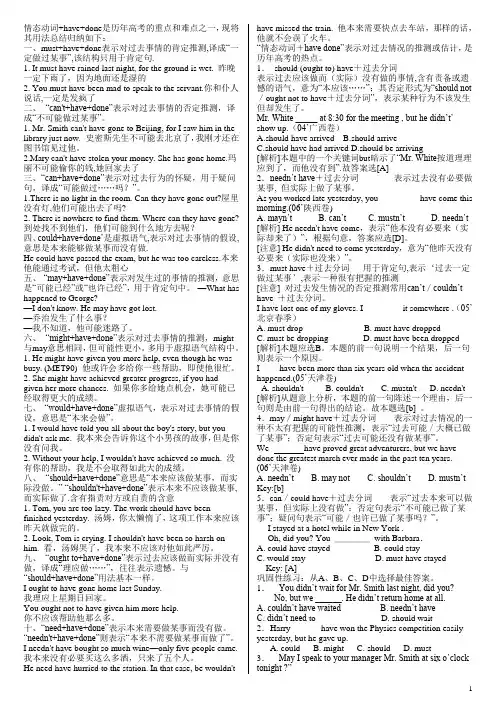
情态动词+have+done是历年高考的重点和难点之一,现将其用法总结归纳如下:一、must+have+done表示对过去事情的肯定推测,译成“一定做过某事”,该结构只用于肯定句.1. It must have rained last night, for the ground is wet. 昨晚一定下雨了,因为地面还是湿的2. You must have been mad to speak to the servant.你和仆人说话,一定是发疯了二、“can't+have+done”表示对过去事情的否定推测,译成“不可能做过某事”。
1. Mr. Smith can't have gone to Beijing, for I saw him in the library just now. 史密斯先生不可能去北京了,我刚才还在图书馆见过他。
2.Mary can't have stolen your money. She has gone home.玛丽不可能偷你的钱,她回家去了三、“can+have+done”表示对过去行为的怀疑,用于疑问句,译成“可能做过……吗?”。
1.There is no light in the room. Can they have gone out?屋里没有灯,他们可能出去了吗?2. There is nowhere to find them. Where can they have gone? 到处找不到他们,他们可能到什么地方去呢?四、could+have+done’是虚拟语气,表示对过去事情的假设,意思是本来能够做某事而没有做.He could have passed the exam, but he was too careless.本来他能通过考试,但他太粗心五、“may+have+done”表示对发生过的事情的推测,意思是“可能已经”或“也许已经”,用于肯定句中。