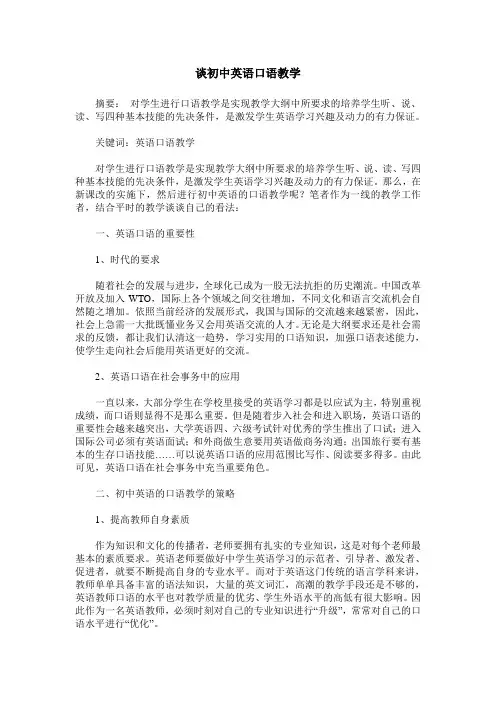
谈初中英语教学中的口语训练
- 格式:docx
- 大小:36.75 KB
- 文档页数:2
谈初中英语教学中的口语训练
In middle school English classes, oral training is
pivotal for students to grasp the language's practical use.
It fosters confidence and fluency, essential for real-world
communication.
Engaging activities such as role-plays and debates are
effective in encouraging students to speak up. These
activities provide a safe environment where mistakes are seen
as learning opportunities rather than failures.
Peer-to-peer interactions are also crucial. Pair work and
group discussions allow students to practice speaking in a
more natural and less intimidating setting, enhancing their
listening and speaking skills.
Technology can be a powerful ally in oral training.
Utilizing language learning apps and online platforms can
offer students additional practice and exposure to different
accents and dialects.
Feedback is a critical component of oral training.
Constructive criticism from teachers helps students
understand their strengths and areas for improvement, guiding
them towards better pronunciation and expression.
Integrating culture into English lessons can make oral
training more appealing. Learning about English-speaking countries' customs and traditions can spark interest and
provide context for language use.
Regular assessment of students' oral skills is necessary
to track progress and adjust teaching methods accordingly.
This can be done through oral presentations, quizzes, and
informal conversations.
In conclusion, oral training in middle school English
education is multifaceted, requiring a blend of interactive
activities, technological support, cultural insights, and
consistent feedback to truly prepare students for effective
communication in English.