
八年级(人教版)英语下册课件:unit 10 语法精讲
- 格式:ppt
- 大小:779.56 KB
- 文档页数:6
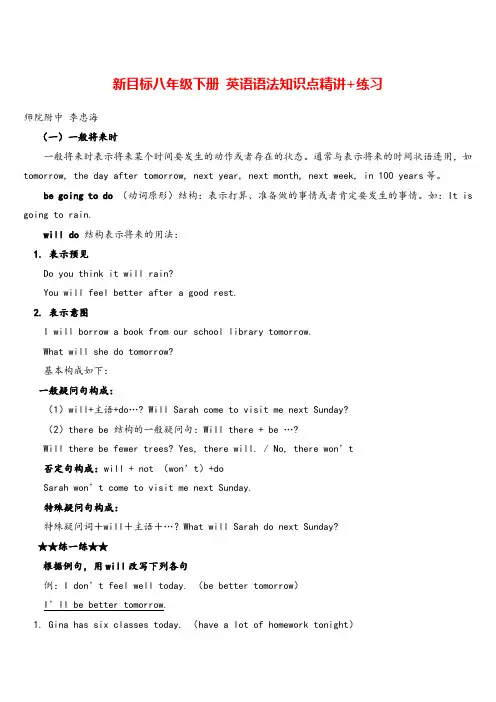
新目标八年级下册 英语语法知识点精讲+练习
师院附中 李忠海
(一)一般将来时
一般将来时表示将来某个时间要发生的动作或者存在的状态。通常与表示将来的时间状语连用,如tomorrow, the day after tomorrow, next year, next month, next week, in 100 years等。
be going to do (动词原形)结构:表示打算、准备做的事情或者肯定要发生的事情。如:It is
going to rain.
will do 结构表示将来的用法:
1. 表示预见
Do you think it will rain?
You will feel better after a good rest.
2. 表示意图
I will borrow a book from our school library tomorrow.
What will she do tomorrow?
基本构成如下:
一般疑问句构成:
(1)will+主语+do…? Will Sarah come to visit me next Sunday?
(2)there be 结构的一般疑问句:Will there + be …?
Will there be fewer trees? Yes, there will. / No, there won’t
否定句构成:will + not (won’t)+do
Sarah won’t come to visit me next Sunday.
特殊疑问句构成:
特殊疑问词+will+主语+…?What will Sarah do next Sunday?
★★练一练★★
根据例句,用will改写下列各句

人教版 ▏八年级英语(下册)Unit 10 词汇、句型精讲
词汇精讲
1. for/since
(1) for与表示一段时间的词连用,表示“做某事多长时间了”,常用于现在完成时,表示从过去某时开始,持续到现在的动作或状态。for所在句子中的动词是延续性动词。例如:
I’ve lived inChinafor two years. 我住在中国两年了。
I’ve known him for more than twenty years. 我认识他20多年了。
(2) since作连词,引导时间状语从句,从句用一般过去时,主句常用完成时。例如:
I have studied English since I came here. 自从我来这里就学习英语。
I have known her since I was five years old. 自从我五岁就认识她。
since还可以作介词,连接一个过去的时间点或一段时间+ago。例如:
She has been ill since last weekend.
她自从上周末就病了。
She has been in Wuhan since four years ago.
自从四年前她就在武汉。
2. maker
maker是名词,意为“生产者;制造者”,是由“动词make + 后缀-r”构成的。英语中,表示职业或身份的名词小结:
(1) 以-ist结尾的有:
pianist钢琴家 chemist化学家 violinist小提琴家
physicist物理学家 scientist科学家
(2) 以-er,-r或-or结尾的有: teacher教师 painter画家
writer作家 singer歌唱家
visitor参观者 actor演员
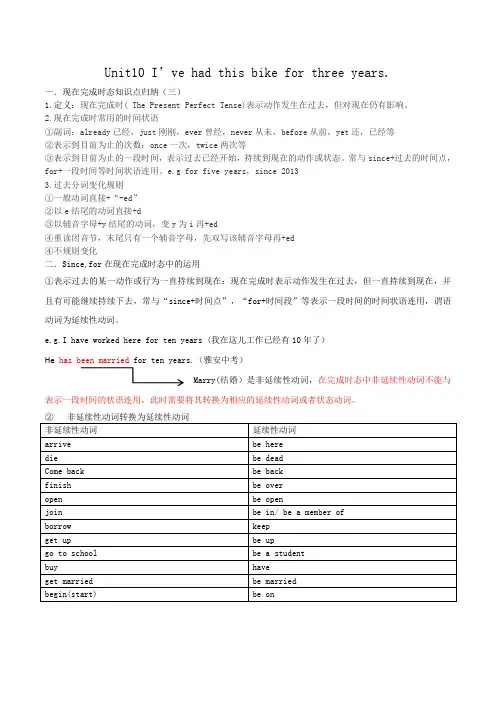
Unit10 I’ve had this bike for three years.
一.现在完成时态知识点归纳(三)
1.定义:现在完成时( The Present Perfect Tense)表示动作发生在过去,但对现在仍有影响。
2.现在完成时常用的时间状语
①副词:already已经,just刚刚,ever曾经,never从未,before从前,yet还,已经等
②表示到目前为止的次数:once一次,twice两次等
③表示到目前为止的一段时间,表示过去已经开始,持续到现在的动作或状态。常与since+过去的时间点,for+一段时间等时间状语连用。e.g for five years,since 2013
3.过去分词变化规则
①一般动词直接+“-ed”
②以e结尾的动词直接+d
③以辅音字母+y结尾的动词,变y为i再+ed
④重读闭音节,末尾只有一个辅音字母,先双写该辅音字母再+ed
④不规则变化
二.Since,for在现在完成时态中的运用
①表示过去的某一动作或行为一直持续到现在:现在完成时表示动作发生在过去,但一直持续到现在,并且有可能继续持续下去,常与“since+时间点”,“for+时间段”等表示一段时间的时间状语连用,谓语动词为延续性动词。
e.g.I have worked here for ten years (我在这儿工作已经有10年了)
He
has been married for ten years.(雅安中考)
Marry(结婚)是非延续性动词,在完成时态中非延续性动词不能与表示一段时间的状语连用,此时需要将其转换为相应的延续性动词或者状态动词。
② 非延续性动词转换为延续性动词
非延续性动词 延续性动词
arrive be here
die be dead
Come back be back

2016年八年级下册英语语法知识点
(一)一般将来时
一般将来时表示将来某个时间要发生的动作或者存在的状态。通常与表示将来的时间状语连用,如tomorrow, the
day after tomorrow, next year, next month, next week, in 100 years等。
be going to do (动词原形)结构:表示打算、准备做的事情或者肯定要发生的事情。如:It is going to rain.
will do 结构表示将来的用法:
1. 表示预见
Do you think it will rain?
You will feel better after a good rest.
2. 表示意图
I will borrow a book from our school library tomorrow.
What will she do tomorrow?
基本构成如下:
一般疑问句构成:
(1)will+主语+do…? Will Sarah come to visit me next Sunday?
(2)there be 结构的一般疑问句:Will there + be …?
Will there be fewer trees? Yes, there will. / No, there won’t
否定句构成:will + not (won’t)+do
Sarah won’t come to visit me next Sunday.
特殊疑问句构成:
特殊疑问词+will+主语+…?What will Sarah do next Sunday?
(二)should的用法:
should用来提出建议和忠告,后边加动词原形,否定句直接在should后边加not.