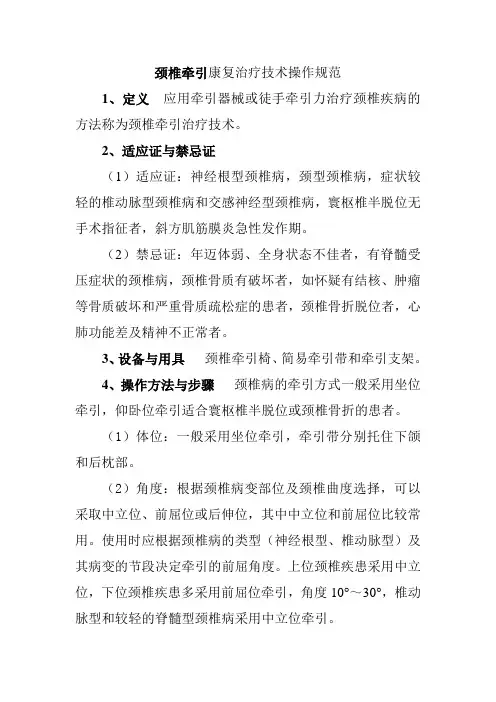
颈椎牵引操作流程及注意事项
- 格式:doc
- 大小:38.50 KB
- 文档页数:4
颈椎牵引操作流程及注意事项
When it comes to cervical traction, it is important to first understand
the purpose of this procedure. 首先要了解颈椎牵引的目的是什么。Cervical traction is a technique used to treat neck pain, stiffness, and
other related issues by applying a gentle pulling force to the cervical
spine. 颈椎牵引是一种治疗颈部疼痛、僵硬和其他相关问题的技术,通过对颈椎施加轻微的牵引力来实现。It can help relieve pressure on the
spinal disks and nerves, improve posture, and increase mobility in
the neck. 颈椎牵引可以帮助减轻对脊椎盘和神经的压力,改善姿势,并增加颈部的活动性。
One of the key benefits of cervical traction is its ability to alleviate
symptoms of conditions such as herniated discs, osteoarthritis, and
muscle tension. 颈椎牵引的一个关键好处是它能够缓解疾病的症状,比如椎间盘突出、骨关节炎和肌肉紧张。By gently stretching the spine and
neck muscles, traction can help reduce inflammation and promote
healing in affected areas. 通过轻轻地拉伸脊柱和颈部肌肉,颈椎牵引可以帮助减少炎症,并促进受影响区域的愈合。It can also improve blood
flow to the neck, allowing for better circulation and oxygen delivery to the tissues. 它还可以提高颈部的血液流动,使组织更好地循环和得到氧气。
When performing cervical traction, it is important to follow a proper
procedure to ensure safety and effectiveness. 进行颈椎牵引时,必须遵循正确的程序,确保安全和有效性。First, the patient should be properly
positioned on a traction table or device, with their head secured in a
comfortable position. 首先,患者应该在牵引桌或设备上正确地定位,头部以舒适的姿态固定。The traction force should be gradually applied
and adjusted according to the patient's tolerance level. 牵引力应逐渐施加,并根据患者的耐受水平进行调整。It is important to monitor the
patient closely during the traction session to ensure they are
comfortable and not experiencing any adverse effects. 在牵引过程中,要密切监视患者,确保他们感到舒适,没有出现任何不良反应。
In addition to the technical aspects of cervical traction, it is also
important to consider the emotional and psychological impact on
the patient. 除了颈椎牵引的技术方面,还要考虑患者的情感和心理影响。Many patients may feel anxious or apprehensive about undergoing
traction, especially if they have never experienced it before. 许多患者可能会对接受牵引感到焦虑或担忧,特别是如果他们以前没有经历过。As healthcare providers, it is important to communicate effectively with
patients, explaining the procedure in a clear and reassuring manner.
作为医护人员,与患者有效沟通非常重要,以清晰而令人放心的方式解释手术流程。Providing emotional support and encouragement can help
alleviate any fears or concerns the patient may have. 提供情感支持和鼓励可以帮助缓解患者可能存在的恐惧或担忧。
Another important consideration when performing cervical traction
is the potential risks and contraindications associated with the
procedure. 在进行颈椎牵引时,另一个重要考虑因素是与该程序相关的潜在风险和禁忌症。While cervical traction is generally considered safe
when performed correctly, there are certain conditions that may
make it unsuitable for some patients. 尽管颈椎牵引在正确进行时通常被认为是安全的,但有些情况可能会导致某些患者不适合。Patients with
certain spinal conditions, such as fractures, infections, or tumors, may
be at a higher risk of complications from traction. 有些脊柱病患者,比如骨折、感染或肿瘤患者,可能由于牵引而产生并发症。It is important to
assess each patient's medical history and condition carefully before
proceeding with traction therapy. 在进行牵引治疗之前,必须仔细评估每位患者的病史和病情。
In conclusion, cervical traction is a valuable therapeutic technique for
treating neck pain and related conditions. 总的来说,颈椎牵引是一种对治疗颈部疼痛和相关疾病非常有价值的疗法。When performed
correctly and under the guidance of a healthcare provider, it can help
improve symptoms, alleviate pain, and promote healing in the
cervical spine. 在医护人员的指导下,正确进行颈椎牵引可以帮助改善症状,缓解疼痛,并促进颈椎的康复。By understanding the procedure,
following proper protocols, and considering the emotional well-being of the patient, cervical traction can be a safe and effective
treatment option. 通过了解该程序、遵循正确的操作流程,以及考虑患者的情感健康,颈椎牵引可以成为一个安全而有效的治疗选择。Patients
should always consult with a healthcare provider before undergoing
cervical traction to ensure it is appropriate for their individual needs.
进行颈椎牵引之前,患者应该始终与医护人员咨询,以确保它符合他们的个人需求。