人教版九年级英语Unit9单词、知识梳理,词汇句式精讲
- 格式:docx
- 大小:81.50 KB
- 文档页数:24
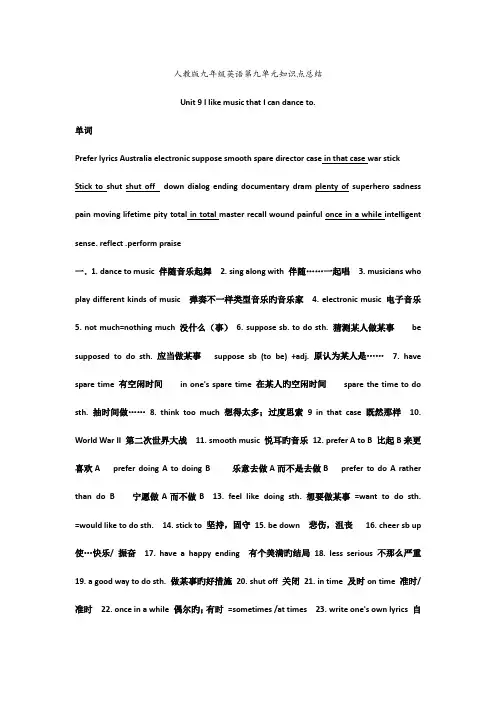
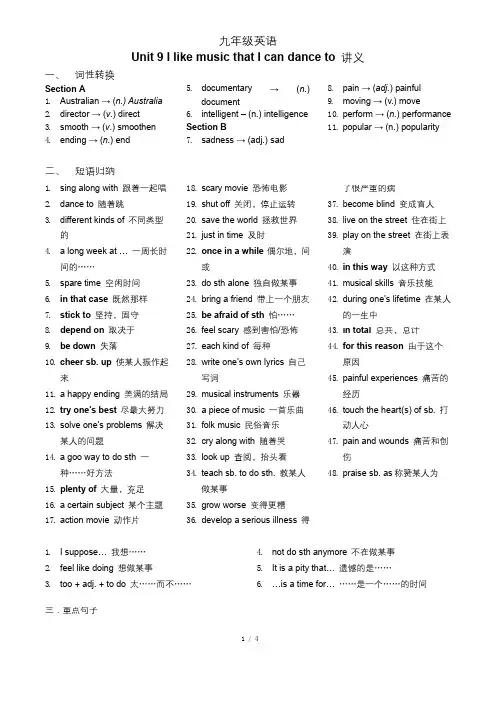
人教版九年级英语Unit9单词、知识梳理/词汇句式精讲Unit9 单词prefer[prifə:(r)]v. 更喜欢Lyrics[liriks]n.(pl.) 歌词Australian[ɔstreiliən]a.澳大利亚;人的n. 澳大利亚人electronic[ilektrɔnik]a. 电子(设备)的[səpəuz]v. 推断;料想smooth[smu:θ]adj. 平滑的;悦耳的spare[speə]adj. 空闲的;不用的case[keIs]n.情况;实情in that case既然那样;假使那样的话warn. 战争;战争状态director[direktə]n.导演;部门负责人dialogue[daiəlɔg ]n. (=dialog) 对话;对白documentary[dɔkjumentri]n.纪录片drama[dra:mə]n. 戏;剧plenty[plenti[ pron. 大量;众多plenty of大量;充足shut[ʃʌt]v. (shut; shut) 关闭;关上superhero[su:pə(r)hiərəu]n.超级英雄horror[hɔrə]n. 震惊;恐惧thriller[θril@(r)]n.惊险电影(小说、戏剧intelligent[intelIdʒənt]a.有才智的;聪明的sense[sens]v. 感觉到;意识到n. 感觉;意识pain[pein]n. 痛苦;苦恼reflect[riflekt]v. 反映;映出perform[pə(r)fɔ:(r)m]v. 表演;执行amazing[əmeiziŋ]a. 令人惊奇;喜的pity[piti]n. 遗憾;怜悯total[təutl]n. 总数;合计a. 总的;全体的in total总共;合计master[ma:stə]n.能手;主人v. 掌握praise[preiz]v. & n. 表扬;赞扬national[næʃnl]adj. 国家的;民族的recall[rikɔ:l]v. 回忆起;回想起wound[wu:nd]n. 伤;伤口;创伤World War II二战Titanic[taitænik]《泰坦尼克号》(电影名)Carmen[ka:(r)men]卡门(女名)Dan Dervish[dæn; də:(r)viʃ]丹•德维什Unit9 知识梳理【重点短语】1. dance to (music) 随着(音乐)跳舞2. sing along with 随着…一起唱3. musicians who play different kinds of music 弹奏不同类型音乐的音乐家4. electronic music 电子音乐5. not much 没什么(事)6. suppose sb to do sth. 猜想某人做某事7. be supposed to do sth 应该做某事8. suppose sb (to be) +adj. 原以为…9. have spare time 有空闲时间10. in one’s spare time在某人的空闲时间11. spare the time to do sth 抽时间做…12. a film director 一名电影导演13. think too much 想太多14. in that case 既然那样15. World War II 第二次世界大战16. smooth music 悦耳的音乐17. prefer A to B 比起B来更喜欢A18. prefer doing A to doing B19. prefer to do sth. rather than do sth.20. feel like doing sth 想要做某事21. stick to 坚持,固守22. be down 悲哀,沮丧23. cheer sb up 使…高兴/ 振奋24. have a happy ending 有个美满的结局25. try one’s best to do sth. 尽某人最大努力做…26. less serious 不那么严重27. a good way to do sth 做某事的好办法28. make me feel even sadder 让我感觉更伤心29. provide plenty of information about a certain subject 提供了大量的关于某个主题的信息30. shut off my brain 关闭我的大脑【重点句型】1. I love singers who write their own music.我喜欢自己创作曲子的歌手。
2. We prefer music that has great lyrics.我们更喜欢歌词很棒的曲子。
3. What do you dislike about this CD.你不喜欢这张CD的什么?4. What does it remind you of?它使你想起了什么?5. The music reminds me of Brazilian dance music.这首曲子使我想起了巴西舞曲。
6. It does have a few good features, though.然而,它的确也有一些好的方面。
7. She really has something for everyone.每个人的确都能从她的作品中领悟到一些东西。
8. Whatever you do, don’t miss this exhibition.无论怎样,你都不能错过这次展出。
9. As the name suggests, the band has a lot of energy.正如乐队名字所暗示的那样,这支乐队很有活力。
10. Some people say they are boring, but others say they are great. 有些人说他们很无聊,但也有人说,他们是伟大的。
11.I f I were you, I’d eat nuts instead.如果我是你,我会改吃坚果。
词汇精讲1. along withalong with是介词短语,意为“连同……一起”,与together with同义。
如果句子的主语为单数,后接along with等介词短语时,谓语用单数。
例如:He sent the books along with other things.我把一些书和其他东西一起寄走了。
The apple,along with some grapes,has gone bad.苹果,还有葡萄,都变质了。
【拓展】单数主语即使后面带有由with, along with, together with, like, but, except, besides, as wellas, more than, no less than, rather than等引导的短语,谓语动词仍用单数。
例如:Air as well as water is matter. 空气和水都是物质。
My friend said everyone except Tom and Jim was there then.我的朋友说那时除了汤姆和吉姆大家都在那儿。
2. prefer(1)prefer是及物动词,意思是“更喜欢、比较喜欢”,相当于like better。
例如:Which do you prefer(=like better),rice or bread?你比较喜欢哪一样,米饭还是面包?(2)由prefer构成的短语:1)preferA to B意为“喜欢A胜过B、比起B来更喜欢A”,此短语中A和B 的形式一样,可以是名词、代词或者动名词,但必须两个词形式统一。
例如:We prefer apples to oranges.比起桔子来我们更喜欢苹果。
My grandma prefers taking a walk to sitting in front of the TV.我奶奶宁愿去散步而不愿看电视。
2)prefer to do something rather than do something 宁愿做某事,而不愿意做某事.此短语中prefer 的后面用动词不定式,than的后面用省略to的动词不定式。
例如:They prefer to stay at home and watch TV, rather than go out for a walk.他们宁愿呆在家里看电视,也不愿意出去散步。
3. too many &toomuch(1)too many 意为“太多,大量的”,后跟可数名词复数。
例如:There are too many books in theroom. You can choose any one to read. 房间里有太多的书了,你可以选择任何一本来读。
The boy has too many questions toask.那个男孩有太多的问题要问。
(2)too much作形容词,意为“许多,大量”,后接不可数名词;用作副词,修饰动词。
例如:I ate too much meat. I’mfat. 我吃太多肉了,我胖了。
Watching TV too much is bad for your eyes.看电视太多对你的眼睛不好。
4. stick(1)stick作名词,意为“棍,棒,拐杖等”。
例如:The old man has to walk with a walking stick.那个老人得靠拐杖走路。
(2)stick 作动词,意为“刺;粘贴;卡住”。
例如:The needle stuck her in the hand. 针扎了她的手。
Remember to stick a stamp on envelope. 记住在信封上贴张邮票。
The car was stuck in the mud. 那辆车陷在泥里了。
【拓展】(1)stick to 意为“坚持,信守”。
例如:Young people should not stick to old ideas and must have the courage to innovate.年轻人不应该拘泥于旧说, 要勇于创新。
(2)stick out意为“伸出,突出”。
例如:She stuck out her foot and tripped him over.她伸出脚把他绊倒。
5. cheer(1)cheer 作不及物动词,意为“欢呼;喝彩”。