
必修三unit-1-Warming-up
- 格式:ppt
- 大小:16.50 MB
- 文档页数:55

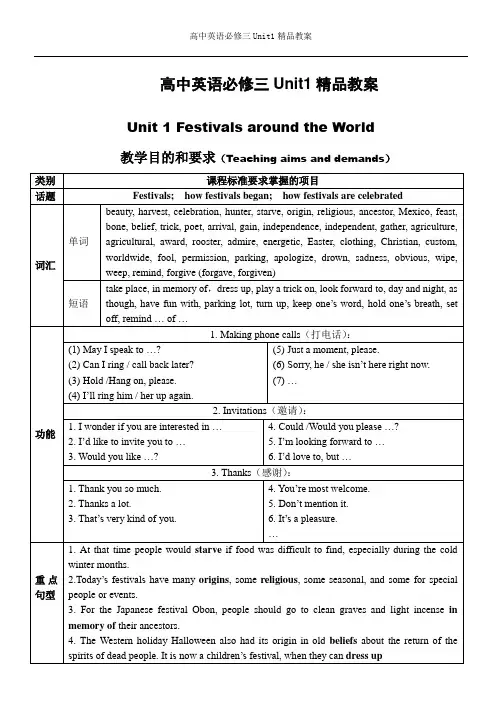
高中英语必修三Unit1精品教案
高中英语必修三Unit1精品教案
Unit 1 Festivals around the World
教学目的和要求(Teaching aims and demands)
类别 课程标准要求掌握的项目
话题 Festivals; how festivals began; how festivals are celebrated
词汇 单词 beauty, harvest, celebration, hunter, starve, origin, religious, ancestor, Mexico, feast,
bone, belief, trick, poet, arrival, gain, independence, independent, gather, agriculture,
agricultural, award, rooster, admire, energetic, Easter, clothing, Christian, custom,
worldwide, fool, permission, parking, apologize, drown, sadness, obvious, wipe,
weep, remind, forgive (forgave, forgiven)
短语 take place, in memory of,dress up, play a trick on, look forward to, day and night, as
though, have fun with, parking lot, turn up, keep one’s word, hold one’s breath, set
off, remind … of …
功能 1. Making phone calls(打电话):

Unit 2 Healthy Eating
课 题Period 1: warming up and pre-reading
授课时数: 1
日期:2015年 3月 23日
一.教学内容分析(Analysis of the Teaching Contents)
This is the first teaching period of this unit. by showing students some pictures about
foods and talking about them. Warming Up is to tell students how different kinds of food are grouped. This is important as it enables us to talk about the value of particular foods to our health. We want students to appreciate what a balanced diet is. Too much fatty food will mean they store extra energy in their bodies. Too much body-building food may cause problems for digestion and lead to illness unless enough fibre foods are eaten to aid digestion. The teacher can have a free talk with students, let them work in pairs to read through the chart and discuss the questions.

Unit 1 Festival around the world
教材分析和教材重组
教材分析 本单元以节日为话题,介绍了世界各地的一些节日、含义、由来和民俗。通过本单元的学习,可以帮助学生更多地了解节日、体味文化;同时又能教育学生理解、尊重不同的文化和习俗。通过本单元的语言技能训练,要求学生学会使用请求以及感谢的表达法。
1. Warming Up 要求学生以小组形式完成一个表格填充,列出中国的五个节日和这些节日的时间、庆祝的内容以及节日里人们的所作所为。激发学生的阅读兴趣,为本单元Reading部分的世界节日做好铺垫。
2. Pre-reading 通过若干个问题了解学生对节日的认识,比如:你最喜欢的节日是什么?你喜欢与家人还是与朋友共度佳节?你喜欢节日的哪部分——音乐、拜访朋友,可看的还是可吃的?
3. Reading 由五篇小短文组成,分别介绍古代节日、亡灵节、纪念名人的节日、丰收节和春天的节日等,使学生了解节日的由来及其存在的意义。最古老的节日主要庆祝冬天的结束,春天的播种,秋天的收获等。鬼节是为祭奠亡灵,取悦祖先而举行的节日,例如日本的盂兰盆节(Obon),墨西哥的亡灵节,万圣节(Halloween)等。纪念名人的节日有中国的端午节,美国的哥伦布日,印度的甘地纪念日。春天的节日包括中国的春节,西方的狂欢节、复活节,日本的樱花节。
4. Comprehending 第一部分提出的6个问题让学生对所读文章有一个浅层理解。第二部分要求学生讨论哪些节日是最重要的,哪些是最有趣的,结合所读文章和自己的想法填表。第三部分要求找出各个节日中共有的三件事,然后与同伴讨论为什么这些事情对各地的人们都是重要的。这一任务不仅使学生重温所读文章的内容,而且结合他们的实际,给学生机会阐述自己的想法和观点,挖掘学生的思维潜力。这3个练习的设置由表及里,由浅入深,非常科学。
5. Learning about Language 主要突出本单元的重点词汇和主要语法项目。通过本单元的学习,要求学生熟练掌握情态动词may/ might,can/could,will/would,shall/should,must/can的各种语用功能。

1 / 2 Unit 1 Festivals and Celebrations
Period 2 Reading and Thinking教学设计
教材分析
本文为一篇探究节日和庆典的论说文。文本通过探讨人们为何欢庆节日,对世界各地的人们庆祝节日的现象追根溯源,进而探讨节日的传承与发展变化。该板块围绕“探究节日与庆典的缘由”(Discover the reasons for festivals and celebrations),要求学生通过阅读该文本,体会节日文化的内在实质,感悟世界各国人民共同的精神追求和美好愿望。
教学目标
在本课学习结束时,学生能够:
1. 梳理论说文的语篇结构和文本逻辑;
2. 能够正确识别文章中的主题句,抓住段落大意;
3. 了解节日风俗习惯的发展与变迁,感悟节日的内涵与意义。
教学重难点
【教学重点】
1. 结合文本特点快速而准确地找到主题句。
2. 正确理解和掌握文本中的新词汇。
3. 了解不同国家、不同民族的节日文化。
【教学难点】
能准确地找到段落主题句,并能够分析、提炼节日的精神内涵。
教学过程
Step 1 Warming-up
Look at the pictures and discuss the following questions.
1. What festivals do you celebrate with your family each year?
2. Why do you think people celebrate different festivals?
设计意图:欣赏图片,引出话题,并对本课将要学习的节日文化做好铺垫。
Step 2 Pre-reading
1. Learn to analyze the title and the pictures in the text.
设计意图:引导学生关注标题和插图,为后面的标题分析解决障碍。