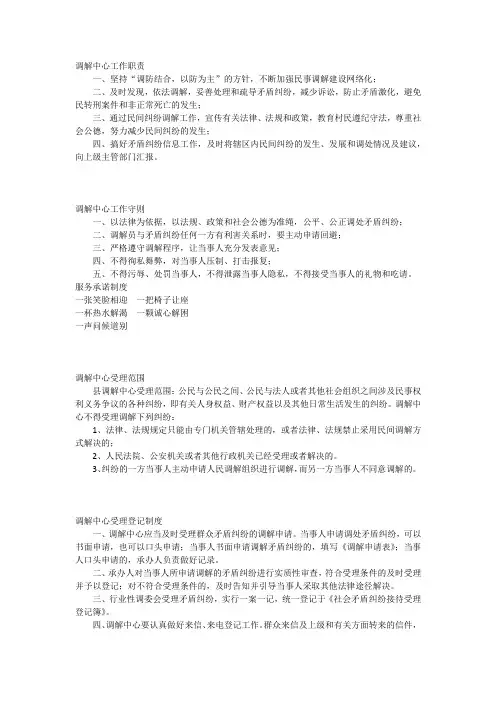
非诉讼调解中心工作流程
- 格式:doc
- 大小:17.20 KB
- 文档页数:7
非诉讼调解中心工作流程
英文回答:
Working Process of Non-litigation Mediation Center.
Non-litigation mediation centers play a crucial role in
resolving disputes outside of the courtroom. As a mediator
at such a center, I have had the opportunity to witness and
participate in the various steps involved in the mediation
process. Let me walk you through the typical workflow of a
non-litigation mediation center.
1. Initial Contact and Intake.
The process usually begins with one or both parties
involved in the dispute reaching out to the mediation
center. This can be done through a phone call, email, or
even in person. During this initial contact, the mediator
gathers basic information about the dispute, such as the
nature of the conflict and the parties involved. This helps the mediator assess the suitability of mediation and
determine if the case falls within the center's
jurisdiction.
2. Pre-mediation Preparation.
Once the mediator confirms that mediation is
appropriate, they will schedule a pre-mediation meeting
with each party separately. This meeting serves as an
opportunity for the mediator to explain the mediation
process, clarify any doubts or concerns, and set
expectations for the upcoming mediation session. The
mediator may also request the parties to provide any
relevant documents or information that could facilitate the
resolution.
3. Mediation Session.
The mediation session is the heart of the process,
where the mediator facilitates a structured conversation
between the parties. It usually takes place in a neutral
and comfortable setting, ensuring that all parties feel at ease. The mediator encourages open communication and guides
the discussion towards finding a mutually acceptable
solution. They may use various techniques, such as active
listening, reframing, and summarizing, to help the parties
understand each other's perspectives and explore potential
options for resolution.
During the mediation session, the mediator maintains
impartiality and neutrality, ensuring that both parties
have an equal opportunity to express their concerns and
propose solutions. The mediator also helps manage any
emotional tensions that may arise during the process,
ensuring a respectful and constructive dialogue.
4. Agreement and Documentation.
If the parties reach a mutually satisfactory resolution,
the mediator assists in drafting a settlement agreement
that captures the terms and conditions agreed upon. This
agreement is a legally binding document and serves as the
foundation for resolving the dispute. The mediator ensures
that the agreement is clear, concise, and comprehensive, addressing all relevant issues. Once both parties review
and sign the agreement, it becomes enforceable.
5. Follow-up and Closure.
After the agreement is signed, the mediator may follow
up with the parties to ensure compliance and address any
further concerns or questions. This post-mediation support
helps maintain the effectiveness of the resolution and
promotes a sense of closure for the parties involved. The
mediator may also provide referrals to other resources or
services that could assist with the implementation of the
agreement, if necessary.
中文回答:
非诉讼调解中心的工作流程。
非诉讼调解中心在解决法庭之外的纠纷中发挥着重要作用。作为一个调解员,我有机会目睹和参与非诉讼调解中心的各个步骤。让我为您介绍一下非诉讼调解中心的典型工作流程。
1. 初始联系和登记。
流程通常从纠纷双方中的一方或双方与调解中心取得联系开始。这可以通过电话、电子邮件甚至亲自到访来完成。在这次初始联系中,调解员会收集关于纠纷的基本信息,如冲突的性质和参与的各方。这有助于调解员评估调解的适宜性,并确定案件是否属于中心的管辖范围。
2. 调解前准备。
一旦调解员确认调解是适当的,他们将与每一方单独安排一次调解前会议。这次会议为调解员提供了一个机会,可以解释调解过程,澄清任何疑虑或担忧,并为即将到来的调解会议设定期望。调解员还可能要求各方提供任何相关文件或信息,以便促进解决。
3. 调解会议。
调解会议是整个过程的核心,调解员在其中促进双方之间的结构化对话。会议通常在一个中立和舒适的环境中进行,确保所有参与方感到自在。调解员鼓励开放式沟通,并引导讨论以寻找双方都能接受的解决方案。他们可能会使用各种技巧,如积极倾听、重新界定问题和总结,帮助各方理解彼此的观点,并探索潜在的解决方案。
在调解会议期间,调解员保持公正和中立,确保双方有平等的机会表达自己的关切和提出解决方案。调解员还帮助处理在过程中可能出现的情绪紧张,确保尊重和建设性的对话。
4. 协议和文件。
如果双方达成了相互满意的解决方案,调解员协助起草一份反映达成的条款和条件的和解协议。这份协议是具有法律约束力的文件,为解决纠纷奠定了基础。调解员确保协议清晰、简明、全面,涵盖所有相关问题。一旦双方审查并签署了协议,它就具有强制执行力。
5. 后续跟进和结束。
在协议签署后,调解员可以跟进双方,确保遵守协议并解决任何进一步的问题或疑虑。这种调解后的支持有助于维持解决方案的有效性,并为涉及方提供了一个结束的感觉。如果需要,调解员还可以提供其他资源或服务的推荐,以协助协议的实施。
通过这个工作流程,非诉讼调解中心可以帮助当事人在法庭外