
沪教牛津版(深圳用)英语四年级上册Unit 11 Shapes课件
- 格式:pptx
- 大小:2.60 MB
- 文档页数:25

沪教牛津四年级英语上册
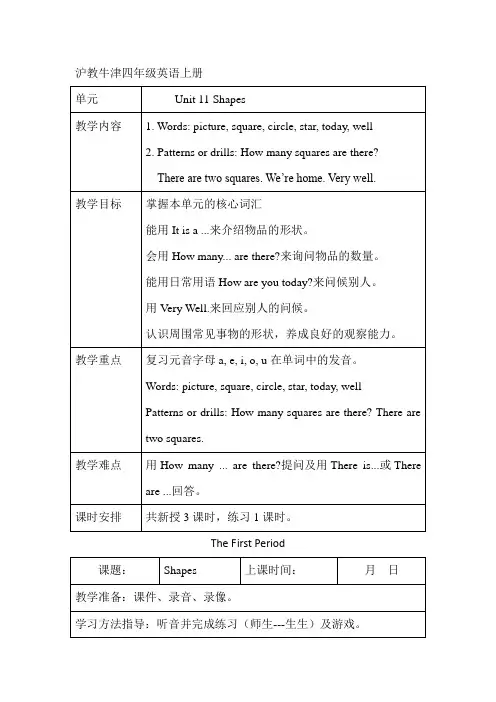
单元 Unit 11 Shapes
教学内容 1. Words: picture, square, circle, star, today, well
2. Patterns or drills: How many squares are there?
There are two squares. We’re home. Very well.
教学目标 掌握本单元的核心词汇
能用It is a ...来介绍物品的形状。
会用How many... are there?来询问物品的数量。
能用日常用语How are you today?来问候别人。
用Very Well.来回应别人的问候。
认识周围常见事物的形状,养成良好的观察能力。
教学重点 复习元音字母a, e, i, o, u在单词中的发音。
Words: picture, square, circle, star, today, well
Patterns or drills: How many squares are there? There are
two squares.
教学难点 用How many ... are there?提问及用There is...或There
are ...回答。
课时安排 共新授3课时,练习1课时。
The First Period
课题: Shapes 上课时间: 月 日
教学准备:课件、录音、录像。
学习方法指导:听音并完成练习(师生---生生)及游戏。 教 学 过 程
教学步骤 教学活动 环节设计意图及效果分析
Step 1 Greeting
Step 2 Revision
Step3 Pre-task
preparations
T: Good morning, boys and girls.
第1页/共9页 Unit 11 Shapes
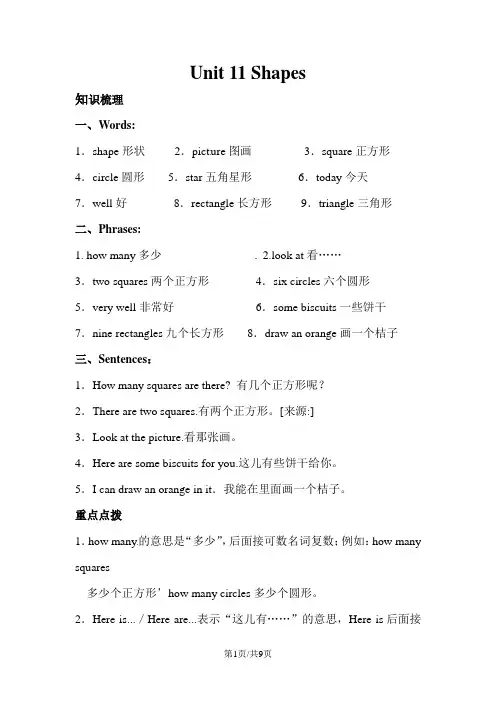
知识梳理
一、Words:
1.shape形状 2.picture图画 3.square正方形
4.circle圆形 5.star五角星形 6.today今天
7.well好 8.rectangle长方形 9.triangle三角形
二、Phrases:
1. how many多少 2.look at看……
3.two squares两个正方形 4.six circles六个圆形
5.very well非常好 6.some biscuits一些饼干
7.nine rectangles九个长方形 8.draw an orange画一个桔子
三、Sentences:
1.How many squares are there? 有几个正方形呢?
2.There are two squares.有两个正方形。[来源:]
3.Look at the picture.看那张画。
4.Here are some biscuits for you.这儿有些饼干给你。
5.I can draw an orange in it.我能在里面画一个桔子。
重点点拨
1.how many的意思是“多少”,后面接可数名词复数;例如:how many
squares
多少个正方形’how many circles多少个圆形。
2.Here is.../Here are...表示“这儿有……”的意思,Here is后面接第2页/共9页 单数名词或不可数名词,Here are后面接复数名词
例如:Here is a star.这儿有一个五角星
Here are some biscuits.这儿有一些饼干。
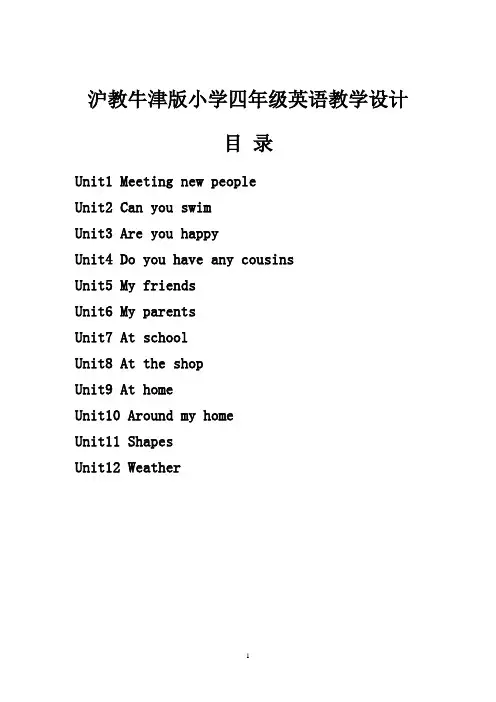
单词播音园
大声朗读下列短文,体会粗写的单词中字母a的发音/eɪ/或/æ/进行归类。
1
沪教牛津版小学四年级英语教学设计
目 录
Unit1 Meeting new people
Unit2 Can you swim
Unit3 Are you happy
Unit4 Do you have any cousins
Unit5 My friends
Unit6 My parents
Unit7 At school
Unit8 At the shop
Unit9 At home
Unit10 Around my home
Unit11 Shapes
Unit12 Weather
2 Meeting new people
课题 M1U1 Meeting new people
学情分析 学生已经接触了基本的问候打招呼句型,这节课只是复习巩固
教学目标与
考点分析 掌握本课有关数字的新单词,并会默写数字one-sixteen;学会如何用This is ...句型向别人介绍自己的新同学、自己的好朋友;会用can 的句型来介绍自己或别人能做什么事。
教学重点
难点 This is ...句型的运用;情态动词can 的用法
教学方法 情景教学法,讲练结合教学法
一、 教学过程
Warm-up(5 minus)
Free talk: 跟学生打招呼,问候,相互熟悉。
Teacher: Hello!I’m ...
S1: Hi!I’m ...
S2: Hello! I’m ... Who are you?
S3: I’m ...
复习数字one two three four five six seven eight nine ten 导入本课数字学
习。
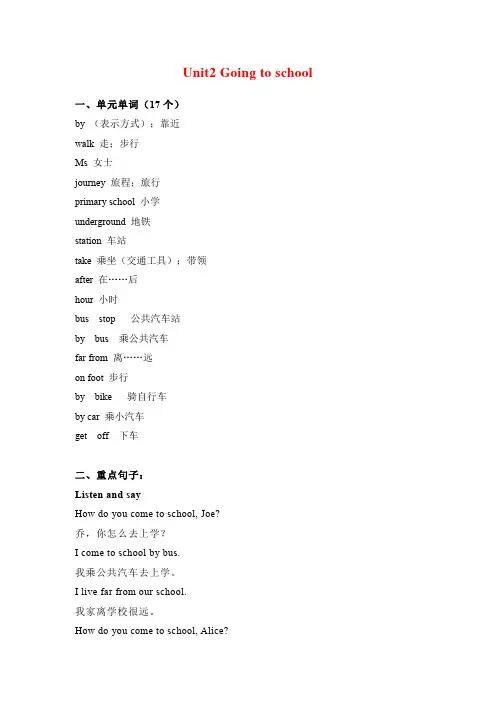
Unit2 Going to school
一、单元单词(17个)
by (表示方式);靠近
walk 走;步行
Ms 女士
journey 旅程;旅行
primary school 小学
underground 地铁
station 车站
take 乘坐(交通工具);带领
after 在……后
hour 小时
bus stop 公共汽车站
by bus 乘公共汽车
far from 离……远
on foot 步行
by bike 骑自行车
by car 乘小汽车
get off 下车
二、重点句子:
Listen and say
How do you come to school, Joe?
乔,你怎么去上学?
I come to school by bus.
我乘公共汽车去上学。
I live far from our school.
我家离学校很远。
How do you come to school, Alice? 你怎么去上学,爱丽丝?
I come to school on foot.
我步行上学。
I live near school.
我住在学校附近。
How do you come to school, Kitty?
你怎么去上学,凯蒂?
I come to school on foot, too.
我也步行上学。
Alice and I walk to school together.
爱丽丝和我一起走路上学。
What about you, Peter?
你呢,彼得?
How do you come to school?
你怎么去上学?
I come to school by bus.
我乘公共汽车来上学。
Look and read
Ms Guo’s journey to work
郭女士的上班旅程
Ms Guo is a teacher at Happy Primary School.