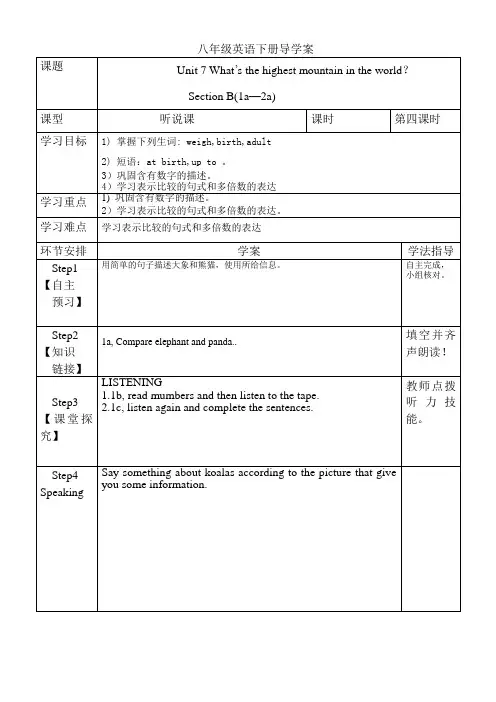
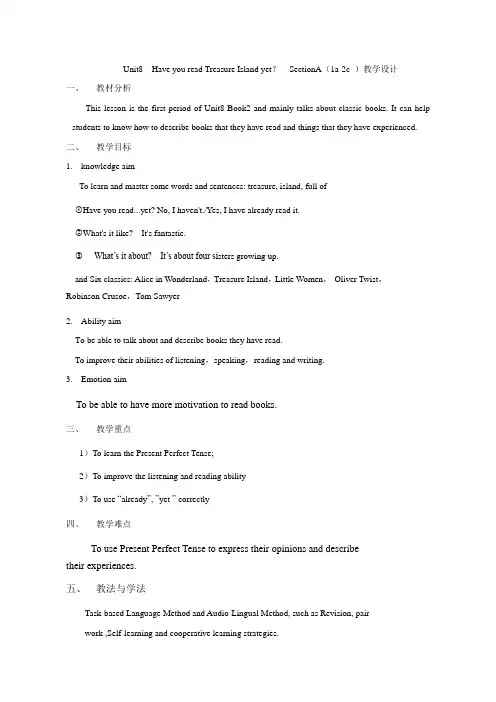
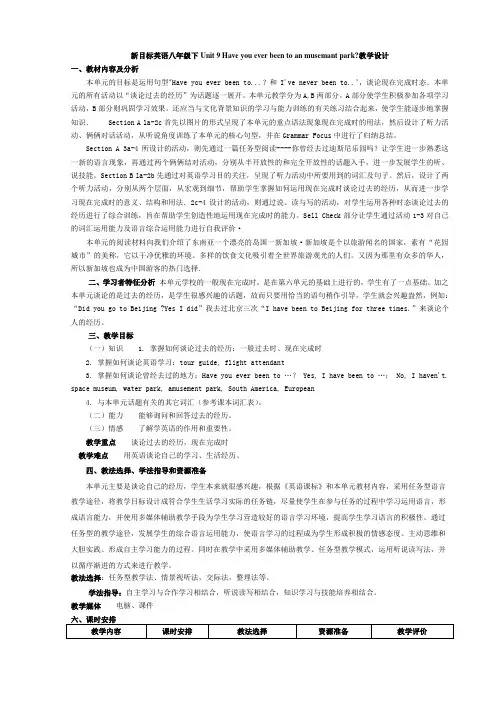
英语人教版八年级下册8下Unit7 Section A 1a-2d
- 格式:doc
- 大小:40.50 KB
- 文档页数:4
What's the highest mountain in the world?
Section A (1a-2d)
一、 指导思想与理论依据
义务教育阶段英语课程的总体目标是通过英语学习使学生形成初步的综合语言运用能力,促进心智发展,提高综合人文素养。《义务教育英语课程标准(2011年版)》强调英语课程有工具性和人文性双重性质。其中就人文性而言,英语课程承担着提高学生综合人文素养的任务,即学生通过英语课程能够开阔视野,丰富生活经历。课程基本理念也谈到丰富课程资源,拓展英语学习渠道。情感策略之中也强调指出激发培养学生学习英语的兴趣,使学生树立自信心,发展自主学习能力和培养学生合作精神。初中阅读教学就是要挖掘话题承载的情感因素,培养学生学习英语的兴趣和能力。这种积极的情感体验和活动就是学生学习的内驱力。
本教学设计依据“三维七段”教学理论,采用学习引导—>先学自研—>互动探究—>点拨讲解—>训练内化—>诊断反思—>辅导提升七步课堂教学环节以达成语言知识和技能的习得和情感态度的生成。通过人本性,开放性的任务设计,让学生学会学习。
二、 课标教材解读
1. 教学内容
本节课是一节听说,教学内容源于人民教育出版社义务教育课程标准教科书英语新目标Go for it 之中八年级下册第七单元What's the highest
mountain in the world? 的第一课时,围绕"世界地理知识"这一话题展开,学生通过谈论地理与自然,了解如何用含有大数字的度量结构表述这些地理信息,通过听力的输入,复习加深对形容词副词比较级和最高级的理解并能熟练运用。有关话题涵盖在课程标准要求的5级话题项目中的Geography and
Nature自然地理话题中。
2. 学生情况分析
1). Students are interested in the topic but it is a little bit difficult for them to use
large numbers and words used in the measurements masterly. 2). Students have learnt the comparatives and superlatives with adjectives and
adverbs.
3. 教材解析
本单元的教学目标是学习谈论地理和自然,让学生学会用最高级和比较急描述风景名胜和山川河流等。能正确使用复数词和度量单位进行问答。这个单元的主题是世界知识,通过对世界地理的调查展开讨论。
《课程标准》在本课时中的体现:我所设计的是本单元的第一课时听说课,在语言技能方面关于听的方面,能听懂有关熟悉话题的谈话,并能从中提取信息,能针对所听对话的内容记录简单信息。说的方面,能就简单的话题提供信息,表达简单的观点和意见,参与讨论;能和他人沟通信息,合作完成任务。在语言知识上,语音方面,模仿对话语调,注意某些单词和语句的读音。词汇方面,注意词汇的记忆技巧和用法。在情感态度上,培养学生探索世界地理知识,开阔学生的视野,培养学生国际视野。学习策略上,能在学习时集中注意力,培养学生联想学习和记忆词语的方法。文化意识上,关注中外地理知识,加深对中国地理和人文古迹的了解。
在教材方面,what's the highest mountain in the world? section A(1a-2d)这部分内容主要围绕地理知识展开,集中呈现了大数字的读法和表示度量的结构,并进一步拓展了比较级和最高级的使用。
1a-1c是本单元的导入部分。主题图的模式呈现Qomolangma, the Nile, the
Caspian Sea 和 the Sahara, 从而引出重点---“世界地理之最”的相关数据。 1a部分重点突出如何用含有大数字的度量结构表述这些地理信息。1b呈现描述四个地方的比较级和最高级结构,学生通过听后填空熟悉结构含义和用法。1c让学生结对操练。
2a-2d部分重点是听和说的教学。借助我国人口,历史,河流的话题内容,将学生带入我们自己的地理与人文语境中。听力活动按梯度设计,要求学生能够通过获取地理知识中的一些重要数据及相关的文化信息。2a部分让学生按听到句子内容给句子排序,2b部分要求学生听懂大数字的表达并对应地选出数字。2c是基于听力内容的语言输出,让学生尝试运用听到的比较级和最高级结构进行问答。活动2d为学生呈现了一个完整的关于明长城基本信息的对话范例,供学生参考。
三、 教学目标 Teaching Goals
1. 知识目标 Cognition goals
New words:
square, meter, deep. desert, population, Asia, tour, tourist, wall, ancient,
protect, wide
Useful expressions:
square kilometers, in size, feel free, as far as I know
2. 学习能力目标 Capacity goals
Learn to read large numbers.
Use comparatives and superlatives with adjectives and adverbs.
3. 情感目标 Affection goals
Know the nature, love our nature.
四、 教学设备 Teaching Aids:
Multi-media, blackboard
五、 Interaction Patterns:
individuals work, pair work and group work
六、 教学方法 Teaching methods:
1. 基本方法:“三维七段”教学法
2. listening, speaking, talking, and acting.
七、 教学重难点 The Key and Difficult Points
重点: 1). Learn to use large numbers to express the geological features.
2). Use comparatives and superlatives with adjectives and adverbs.
难点: Use comparatives and superlatives with adjectives and adverbs
masterly.
八、 教学过程与设计目的
Teaching Procedure Students’ activities aims
学习引导 Step1. Lead students to
Xing's Travel agency. Be interested in the
class. Make students be
interested in the
topic.
先学自研 1. Brainstorming
Give students 4
questions about the
geography and nature.
2. Learn some new Think about the
questions. Remind students of
their own knowledge
about nature. places of interests.
互动探究 1. Guide students to
match the geography
information.
Learn the
geography
information Reduce the
difficulties for
students to listen to
the passage.
点拨讲解 Introduce students how
to read large numbers
and measurements. Learn to read large
numbers. Reduce the
difficulties for
students to listen to
the passage.
训练内化 1. Guess the comparative
and superlative forms
before listening.
2. Listen to the tape.
3. Make sample
conversations.
4. Listen 2a,2b. Use comparative
and superlative
patterns to talk
about the four
pictures, and do the
listening. Talk before listening
is good for students
to do it better.
互动探究 1. Compare China and
the USA.
2. Make conversations.
Do pair work. Get more practice on
using the target
language.
诊断反思 1. Read another
conversation about the
Great Wall.
2. Role play the
conversation. Do group work. Base on the talking
and listening, guide
students to use the
language to talk
about our topic
easily.
辅导提升 Make a conversation
about Sichuan. Homework Revision.
九、板书设计 Blackboard Settings
Unit7 What's the highest mountain in the world?
desert Qomolangma 8,844.43 high the highest
population the Sahara 9,600,000 square kilometers in size
the biggest
tourist the Caspian Sea 1025 meters deep the deepest
the Nile 6671 kilometers long the longest