
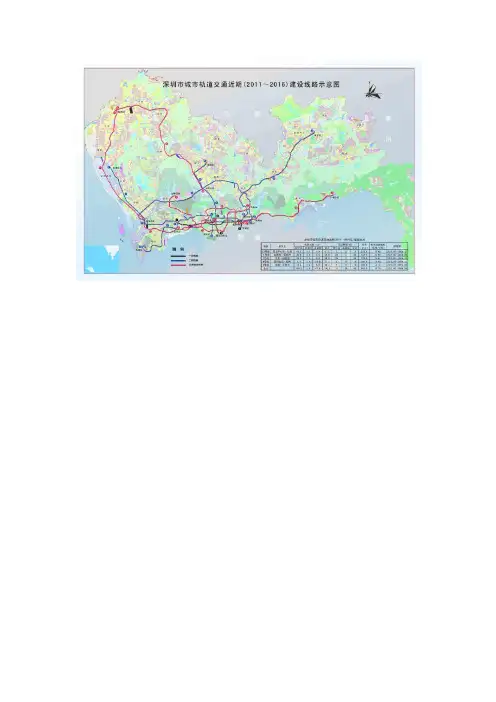
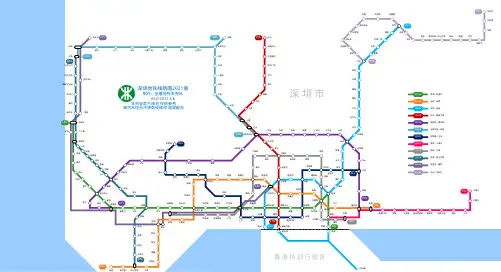
深圳地铁 2016年 总规划图
- 格式:docx
- 大小:389.75 KB
- 文档页数:1
2016年深圳市居民出行调查主要结论深圳市规划国土发展研究中心为更好掌握深圳市居民出行特征及变化趋势,深圳市规划和国土资源委员会于2016年11月15日至2017年1月15日组织开展了全市居民出行大调查。
本次调查包括6.8万户传统入户调查及微信等其他方式调查,总抽样率达到2%。
结合公交轨道刷卡数据、土地利用及历年居民出行调查等相关数据,形成本次调查报告。
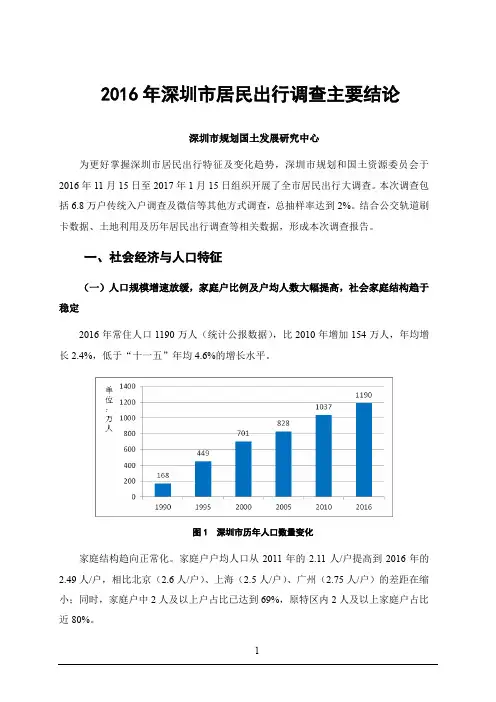
一、社会经济与人口特征(一)人口规模增速放缓,家庭户比例及户均人数大幅提高,社会家庭结构趋于稳定2016年常住人口1190万人(统计公报数据),比2010年增加154万人,年均增长2.4%,低于“十一五”年均4.6%的增长水平。
图1 深圳市历年人口数量变化家庭结构趋向正常化。
家庭户户均人口从2011年的2.11人/户提高到2016年的2.49人/户,相比北京(2.6人/户)、上海(2.5人/户)、广州(2.75人/户)的差距在缩小;同时,家庭户中2人及以上户占比已达到69%,原特区内2人及以上家庭户占比近80%。
社会年龄结构趋向成熟。
2016年全市人口平均年龄32岁,高于2010年的30岁,人口年龄分布曲线峰值往后平移,平均年龄逐步增长。
但相比北京上海,深圳的人口红利仍较为突出,18-50岁的劳动力人口占比72%,北京、上海分别为56%、47%。
图2 不同年龄段人数所占比例图图3 大城市人口年龄结构对比(二)产业升级优化就业结构,但以办公为代表的服务业仍主要增加在原特区内,居住人口增量主要分布在原特区外,职住分离加剧工业从业人口明显下降。
为应对城市发展面临的空间紧约束,深圳市实施了产业转型升级战略。
相比2010年,工业人口占比从47%下降至24%,产业转型效果明显。
常住人口增量主要分布在原特区外。
从2010年至2015年常住人口增加154万人,原特区内增加38.6万人,原特区外增加了62.1万人。
图4 人口增量空间分布情况职住空间分离进一步加剧。


城市轨道交通2016年统计和分析侯秀芳;左超;李楠【摘要】截至2016年末,中国大陆地区共30座城市开通城市轨道交通,运营线路4 152.8 km.2016年新增运营线路534.8 km,全年累计完成客运量160.9亿人次;48座城市完成年度投资3 847亿元,在建线路总长5 636.5 km.截至2016年末,58座城市的城市轨道交通建设规划获批,规划线路总长达7 305.3 km.城市轨道交通整体客运效果良好,服务水平稳步提升,经济性逐渐向好;网络化格局正在形成,线网规模化、制式多元化趋势明显;城市轨道交通行业持续保持快速增长、良性发展的态势.为促进行业内相互交流、借鉴和学习,并利于政府部门统筹布局和科学决策,基于《城市轨道交通效能评价及数据平台建设研究》的课题成果,通过对2016年统计数据进行分析、计算,首次发布发展指数、效率指数、服务指数3项效能指标,并对城市轨道交通行业发展提出4点思考和建议:提高运营管理水平,积极适应网络化发展,做好人才培养和储备,强化经营能力.%By the end of 2016,30 cities in Chinese mainland had operated urban rail transit lines,with the service length totaling 4,152.8 km,of which new lines have reached 534.8 km,and the annual passenger volume climbing to 16.09 billion.48 cities have made an annual investment of 384.7 billion yuan in lines under construction which amount to 5,636.5 km.By the end of 2016,58 cities have had their network plans of urban rail transit construction approved,and the total length of the planned lines adds up to 7,305.3 km.The service performance of the urban rail system is generally satisfying and steadily improving,and its economic efficiency is getting better.The network has been expanding,adopting systems of diversified standards.The urban rail transitindustry has achieved a rapid and sound growth.By referring to the research results of the program "Constructing the Data Platform for Evaluation of Urban Rail Transit Performance" and the annual statistical data of urban rail transit in 2016,three evaluating indicators are published for the first time:development index,efficiency index and service index,to promote information sharing in the industry and facilitate the government departments to coordinate the layout and make scientificdecisions.Suggestions are made on the development of urban rail transit industry in terms of four aspects:improving operation management level,gearing to the networked development of urban railsystems,strengthening personnel training and reserve,and enhancing operation capabilities.【期刊名称】《都市快轨交通》【年(卷),期】2017(030)003【总页数】7页(P1-7)【关键词】城市轨道交通;统计分析;运营;建设;规划;效能评价;思考;建议【作者】侯秀芳;左超;李楠【作者单位】中国城市轨道交通协会,北京100038;中国城市轨道交通协会,北京100038;中国城市轨道交通协会,北京100038【正文语种】中文【中图分类】U231.1截至2016年末,中国大陆地区(以下涉及全国数据均指中国大陆地区,不含港澳台)共30座城市开通城市轨道交通(以下简称“城轨交通”),运营线路总长度达4 152.8 km。