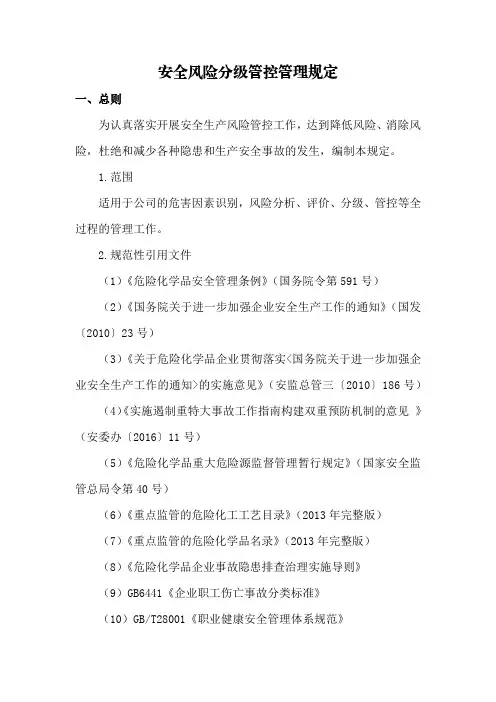
企业安全风险分级标准
- 格式:doc
- 大小:38.24 KB
- 文档页数:4
企业安全风险分级标准
Enterprise security risk classification standards are essential for
organizations to assess, manage, and mitigate potential threats
effectively. By categorizing risks based on their potential impact and
likelihood of occurrence, companies can prioritize resources and
develop targeted strategies to enhance their overall security posture.
These standards help establish a common framework for assessing
vulnerabilities, identifying threats, and implementing controls to
protect critical assets and sensitive information.
企业安全风险分级标准对于组织评估、管理和有效减轻潜在威胁至关重要。通过根据潜在影响和发生几率对风险进行分类,公司可以优先分配资源,并制定有针对性的策略,提升整体安全状况。这些标准有助于建立一个共同的框架,评估漏洞,识别威胁,并实施控制措施,以保护关键资产和敏感信息。
One of the key benefits of having a standardized risk classification
system is the ability to communicate security-related information
effectively within the organization. By using a common language and
set of criteria to classify risks, stakeholders across different
departments can better understand the severity and implications of potential threats. This facilitates collaboration and ensures that
decision-makers are equipped with the necessary information to
make informed choices about risk management strategies.
具有标准化风险分类系统的一个主要好处是能够在组织内部有效地传达与安全相关的信息。通过使用共同的语言和一套分类风险的标准,不同部门的利益相关方可以更好地理解潜在威胁的严重性和影响。这有助于促进协作,并确保决策者具备必要的信息来做出关于风险管理策略的知情选择。
The process of establishing a risk classification framework typically
involves identifying and assessing potential threats, vulnerabilities,
and impacts on the organization's assets and operations. This
requires a thorough analysis of the internal and external factors that
could pose risks to the business, as well as an understanding of the
regulatory requirements and industry best practices that need to be
followed. By conducting a comprehensive risk assessment,
companies can develop a clear understanding of the specific threats
they face and prioritize their efforts to address the most critical
issues.
建立风险分类框架的过程通常涉及识别和评估对组织资产和运营的潜在威胁、漏洞和影响。这需要对可能对业务构成风险的内部和外部因素进行深入分析,并了解需要遵循的法规要求和行业最佳实践。通过进行全面的风险评估,公司可以明确了解他们面临的具体威胁并优先考虑解决最关键的问题。
Moreover, having a well-defined risk classification system ensures
that companies can align their security measures with their business
objectives and strategic goals. By identifying high-risk areas and
prioritizing resources accordingly, organizations can focus on
implementing controls and safeguards that are tailored to their
specific needs and risk profile. This proactive approach not only
enhances the overall security of the enterprise but also contributes
to its long-term resilience and sustainability in the face of evolving
threats and challenges.
此外,拥有明确定义的风险分类系统确保公司可以将安全措施与业务目标和战略目标保持一致。通过确定高风险区域并相应地优先分配资源,组织可以专注于实施符合其特定需求和风险概况的控制和保障措施。这种积极的方法不仅提高了企业的整体安全性,还有助于在面对不断变化的威胁和挑战时增强其长期的韧性和可持续性。
In conclusion, enterprise security risk classification standards play a
crucial role in helping organizations identify, assess, and manage
potential threats in a systematic and effective manner. By
establishing a common language and framework for evaluating risks,
companies can better prioritize their resources, communicate
security-related information across different departments, and align
their security measures with their strategic goals. Ultimately, having a
well-defined risk classification system enables companies to
strengthen their security posture, enhance their resilience to evolving
threats, and ensure the long-term sustainability of their business
operations.
总之,企业安全风险分类标准在帮助组织系统性、有效地识别、评估和管理潜在威胁方面发挥着至关重要的作用。通过建立一个评估风险的共同语言和框架,公司可以更好地优先分配资源,跨不同部门传达安全相关信息,并使其安全措施与战略目标保持一致。最终,拥有明确定义的风险分类系统使公司能够加强其安全状况,增强其对不断变化威胁的韧性,并确保其业务运营的长期可持续性。