
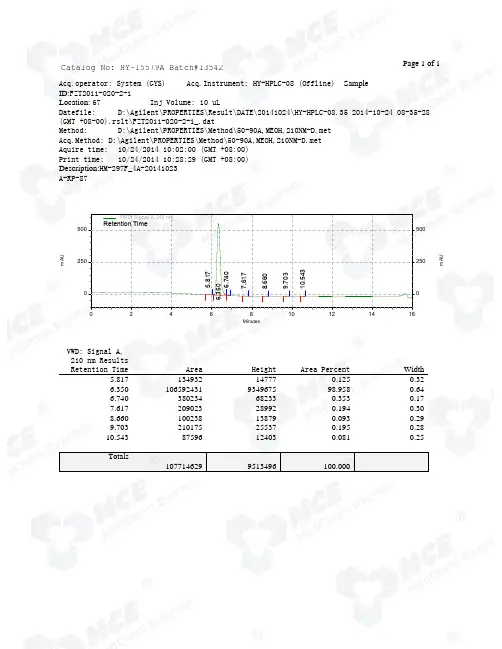
MMAF_Hydrochloride_RP-HPLC_13542_MedChemExpress
- 格式:pdf
- 大小:152.26 KB
- 文档页数:1
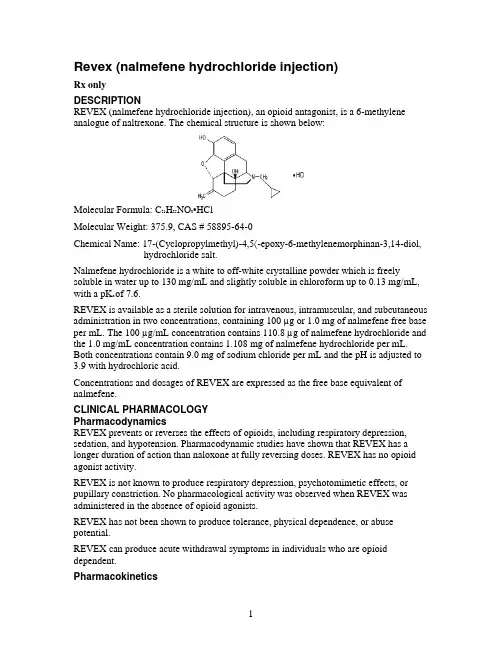
Revex (nalmefene hydrochloride injection)Rx onlyDESCRIPTIONREVEX (nalmefene hydrochloride injection), an opioid antagonist, is a 6-methylene analogue of naltrexone. The chemical structure is shown below:Molecular Formula: C21H25NO3•HClMolecular Weight: 375.9, CAS # 58895-64-0Chemical Name: 17-(Cyclopropylmethyl)-4,5〈-epoxy-6-methylenemorphinan-3,14-diol, hydrochloride salt.Nalmefene hydrochloride is a white to off-white crystalline powder which is freely soluble in water up to 130 mg/mL and slightly soluble in chloroform up to 0.13 mg/mL, with a pK a of 7.6.REVEX is available as a sterile solution for intravenous, intramuscular, and subcutaneous administration in two concentrations, containing 100 µg or 1.0 mg of nalmefene free base per mL. The 100 µg/mL concentration contains 110.8 µg of nalmefene hydrochloride and the 1.0 mg/mL concentration contains 1.108 mg of nalmefene hydrochloride per mL. Both concentrations contain 9.0 mg of sodium chloride per mL and the pH is adjusted to 3.9 with hydrochloric acid.Concentrations and dosages of REVEX are expressed as the free base equivalent of nalmefene.CLINICAL PHARMACOLOGYPharmacodynamicsREVEX prevents or reverses the effects of opioids, including respiratory depression, sedation, and hypotension. Pharmacodynamic studies have shown that REVEX has a longer duration of action than naloxone at fully reversing doses. REVEX has no opioid agonist activity.REVEX is not known to produce respiratory depression, psychotomimetic effects, or pupillary constriction. No pharmacological activity was observed when REVEX was administered in the absence of opioid agonists.REVEX has not been shown to produce tolerance, physical dependence, or abuse potential.REVEX can produce acute withdrawal symptoms in individuals who are opioid dependent.PharmacokineticsNalmefene exhibited dose proportional pharmacokinetics following intravenousadministration of 0.5 mg to 2.0 mg. Pharmacokinetic parameters for nalmefene after a 1mg intravenous administration in adult male volunteers are listed in Table 1.Table 1: Mean (CV%) Nalmefene Pharmacokinetic ParametersIn Adult Males Following a 1 mg Intravenous DoseParameter Young, N=18 Elderly, N=1162-80 Age 19-32Cp at 5 min. (ng/mL) 3.7 (29) 5.8 (38)Vdss (L/kg) 8.6 (19) 8.6 (29)Vc (L/kg) 3.9 (29) 2.8 (41)AUC0-inf (ng-hr/mL) 16.6 (27) 17.3 (14)Terminal T1/2 (hr) 10.8 (48) 9.4 (49)Clplasma (L/hr/kg) 0.8 (23) 0.8 (18)ABSORPTIONNalmefene was completely bioavailable following intramuscular or subcutaneousadministration in 12 male volunteers relative to intravenous nalmefene. The relativebioavailabilities of intramuscular and subcutaneous routes of administration were 101.5%± 8.1% (Mean ± SD) and 99.7% ± 6.9%, respectively. Nalmefene will be administeredprimarily as an intravenous bolus, however, nalmefene can be given intra-muscularly(IM) or subcutaneously (SC) if venous access cannot be established. While the time tomaximum plasma nalmefene concentration was 2.3 ± 1.1 hours following intramuscularand 1.5 ± 1.2 hours following subcutaneous administrations, therapeutic plasmaconcentrations are likely to be reached within 5-15 minutes after a 1 mg dose in anemergency. Because of the variability in the speed of absorption for IM & SC dosing, andthe inability to titrate to effect, great care should be taken if repeated doses must be givenby these routes.DISTRIBUTIONFollowing a 1 mg parenteral dose, nalmefene was rapidly distributed. In a study of brainreceptor occupancy, a 1 mg dose of nalmefene blocked over 80% of brain opioidreceptors within 5 minutes after administration. The apparent volumes of distributioncentrally (Vc) and at steady-state (Vdss) are 3.9 ± 1.1 L/kg and 8.6 ± 1.7 L/kg,respectively. Ultrafiltration studies of nalmefene have demonstrated that 45% (CV 4.1%)is bound to plasma proteins over a concentration range of 0.1 to 2 µg/mL. An in vitrodetermination of the distribution of nalmefene in human blood demonstrated thatnalmefene distributed 67% (CV 8.7%) into red blood cells and 39% (CV 6.4%) intoplasma. The whole blood to plasma ratio was 1.3 (CV 6.6%) over the nominalconcentration range in whole blood from 0.376 to 30 ng/mL.METABOLISMNalmefene is metabolized by the liver, primarily by glucuronide conjugation, andexcreted in the urine. Nalmefene is also metabolized to trace amounts of an N-dealkylated metabolite. Nalmefene glucuronide is inactive and the N-dealkylatedmetabolite has minimal pharmacological activity. Less than 5% of nalmefene is excretedin the urine unchanged. Seventeen percent (17%) of the nalmefene dose is excreted in thefeces. The plasma concentration-time profile in some subjects suggests that nalmefene undergoes enterohepatic recycling..ELIMINATIONAfter intravenous administration of 1 mg REVEX to normal males (ages 19-32), plasma concentrations declined biexponentially with a redistribution and a terminal elimination half-life of 41 ± 34 minutes and 10.8 ± 5.2 hours, respectively. The systemic clearance of nalmefene is 0.8 ± 0.2 L/hr/kg and the renal clearance is 0.08 ± 0.04 L/hr/kg.Special PopulationsELDERLYDose proportionality was observed in nalmefene AUC0-inf following 0.5 to 2 mg intravenous administration to elderly male subjects. Following a 1 mg intravenous nalmefene dose, there were no significant differences between young (19-32 years) and elderly (62-80 years) adult male subjects with respect to plasma clearance, steady-state volume of distribution, or half-life. There was an apparent age-related decrease in the central volume of distribution (young: 3.9 ± 1.1 L/kg, elderly: 2.8 ± 1.1 L/kg) that resulted in a greater initial nalmefene concentration in the elderly group. While initial nalmefene plasma concentrations were transiently higher in the elderly, it would not be anticipated that this population would require dosing adjustment. No clinical adverse events were noted in the elderly following the 1 mg intravenous nalmefene dose. PATIENTS WITH HEPATIC IMPAIRMENTSubjects with hepatic disease, when compared to matched normal controls, had a 28.3% decrease in plasma clearance of nalmefene (0.56 ± 0.21 L/hr/kg versus 0.78 ± 0.24L/hr/kg, respectively). Elimination halflife increased from 10.2 ± 2.2 hours to 11.9 ± 2.0 hours in the hepatically impaired. No dosage adjustment is recommended since nalmefene will be administered as an acute course of therapy.PATIENTS WITH RENAL IMPAIRMENTThere was a statistically significant 27% decrease in plasma clearance of nalmefene in the end-stage renal disease (ESRD) population during interdialysis (0.57 ± 0.20 L/hr/kg) and a 25% decreased plasma clearance in the ESRD population during intradialysis (0.59 ± 0.18 L/hr/kg) compared to normals (0.79 ± 0.24 L/hr/kg). The elimination half-life was prolonged in ESRD patients from 10.2 ± 2.2 hours in normals to 26.1 ± 9.9 hours. (See DOSAGE AND ADMINISTRATION.)GENDER DIFFERENCESThere has not been sufficient pharmacokinetic study to make a definitive statement as to whether the pharmacokinetics of nalmefene differs between the genders.CLINICAL TRIALSREVEX has been administered to reverse the effects of opioids after general anesthesia and in the treatment of overdose. It has also been used to reverse the systemic effects of intrathecal opioids.Reversal of Postoperative Opioid DepressionREVEX (nalmefene hydrochloride injection) (N=326) was studied in 5 controlled trials in patients who had received morphine or fentanyl intraoperatively. The primary efficacy criterion was the reversal of respiratory depression. A positive reversal was defined asboth an increase in respiratory rate by 5 breaths per minute and a minimum respiratory rate of 12 breaths per minute. Five minutes after administration, initial single REVEX doses of 0.1, 0.25, 0.5, or 1.0 µg/kg had effectively reversed respiratory depression in a dose-dependent manner. Twenty minutes after initial administration, respiratory depression had been effectively reversed in most patients receiving cumulative doses within the recommended range (0.1 to 1.0 µg/kg). Total doses of REVEX above 1.0µg/kg did not increase the therapeutic response. The postoperative administration of REVEX at the recommended doses did not prevent the analgesic response to subsequently administered opioids.Reversal of the Effect of Intrathecally Administered OpioidsIntravenous REVEX at doses of 0.5 and 1.0 µg/kg was administered to 47 patients given intrathecal morphine. One to 2 doses of 0.5 and 1.0 µg/kg REVEX reversed respiratory depression in most patients. The administration of REVEX at the recommended doses did not prevent the analgesic response to subsequently administered opioids. Management of Known or Suspected Opioid OverdoseREVEX (N=284) at doses of 0.5 mg to 2.0 mg was studied in 4 trials of patients who were presumed to have taken an opioid overdose. REVEX doses of 0.5 mg to 1.0 mg effectively reversed respiratory depression within 2 to 5 minutes in most patients subsequently confirmed to have opioid overdose. A total dose greater than 1.5 mg did not increase the therapeutic response.INDICATIONS AND USAGEREVEX is indicated for the complete or partial reversal of opioid drug effects, including respiratory depression, induced by either natural or synthetic opioids.REVEX is indicated in the management of known or suspected opioid overdose. CONTRAINDICATIONSREVEX is contraindicated in patients with a known hypersensitivity to the product. WARNINGSUse of REVEX in EmergenciesREVEX, like all drugs in this class, is not the primary treatment for ventilatory failure. In most emergency settings, treatment with REVEX should follow, not precede, the establishment of a patent airway, ventilatory assistance, administration of oxygen, and establishment of circulatory access.Risk of Recurrent Respiratory DepressionAccidental overdose with long acting opioids [such as methadone and levo-alpha-acetylmethadol (LAAM)] may result in prolonged respiratory depression. Respiratory depression in both the postoperative and overdose setting may be complex and involve the effects of anesthetic agents, neuromuscular blockers, and other drugs. While REVEX has a longer duration of action than naloxone in fully reversing doses, the physician should be aware that a recurrence of respiratory depression is possible, even after an apparently adequate initial response to REVEX treatment.Patients treated with REVEX should be observed until, in the opinion of the physician, there is no reasonable risk of recurrent respiratory depression. PRECAUTIONSGeneralCARDIOVASCULAR RISKS WITH NARCOTIC ANTAGONISTSPulmonary edema, cardiovascular instability, hypotension, hypertension, ventricular tachycardia, and ventricular fibrillation have been reported in connection with opioid reversal in both postoperative and emergency department settings. In many cases, these effects appear to be the result of abrupt reversal of opioid effects.Although REVEX has been used safely in patients with pre-existing cardiac disease, all drugs of this class should be used with caution in patients at high cardiovascular risk or who have received potentially cardiotoxic drugs. (See DOSAGE AND ADMINISTRATION.)RISK OF PRECIPITATED WITHDRAWALREVEX, like other opioid antagonists, is known to produce acute withdrawal symptoms and, therefore, should be used with extreme caution in patients with known physical dependence on opioids or following surgery involving high doses of opioids. Imprudent use or excessive doses of opioid antagonists in the postoperative setting has been associated with hypertension, tachycardia, and excessive mortality in patients at high risk for cardiovascular complications. (See PRECAUTIONS.)INCOMPLETE REVERSAL OF BUPRENORPHINEPreclinical studies have shown that nalmefene at doses up to 10 mg/kg (437 times the maximum recommended human dose) produced incomplete reversal of buprenorphine-induced analgesia in animal models. This appears to be a consequence of a high affinity and slow displacement of buprenorphine from the opioid receptors. Hence, REVEX may not completely reverse buprenorphine-induced respiratory depression.Drug InteractionsREVEX has been administered after benzodiazepines, inhalational anesthetics, muscle relaxants, and muscle relaxant antagonists administered in conjunction with general anesthesia. It also has been administered in outpatient settings, both in trials in conscious sedation and in the emergency management of overdose following a wide variety of agents. No deleterious interactions have been observed.Preclinical studies have shown that both flumazenil and nalmefene can induce seizures in animals. The coadministration of both flumazenil and nalmefene produced fewer seizures than expected in a study in rodents, based on the expected effects of each drug alone. Based on these data, an adverse interaction from the coadministration of the two drugs is not expected, but physicians should remain aware of the potential risk of seizures from agents in these classes.Carcinogenesis, Mutagenesis, Impairment of FertilityNalmefene did not have mutagenic activity in the Ames test with five bacterial strains or the mouse lymphoma assay. Clastogenic activity was not observed in the mouse micronucleus test or in the cytogenic bone marrow assay in rats. However, nalmefene did exhibit a weak but significant clastogenic activity in the human lymphocyte metaphase assay in the absence but not in the presence of exogenous metabolic activation. Oral administration of nalmefene up to 1200 mg/m2/day did not affect fertility, reproductive performance, and offspring survival in rats.Use in PregnancyPREGNANCY CATEGORY BReproduction studies have been performed in rats (up to 1200 mg/m2/day) and rabbits (up to 2400 mg/m2/day) by oral administration of nalmefene and in rabbits by intravenous administration up to 96 mg/m2/day (114 times the human dose). There was no evidence of impaired fertility or harm to the fetus. There are, however, no adequate and well-controlled studies in pregnant women. Because animal reproduction studies are not always predictive of human response, this drug should be used during pregnancy only if clearly needed.Nursing MothersNalmefene and its metabolites were secreted into rat milk, reaching concentrations approximately three times those in plasma at one hour and decreasing to about half the corresponding plasma concentrations by 24 hours following bolus administration. As no clinical information is available, caution should be exercised when REVEX is administered to a nursing woman.Use in Pediatric PatientsSafety and effectiveness of REVEX in pediatric patients have not been established.Use in NeonatesThe safety and effectiveness of REVEX in neonates have not been established in clinical studies. In a preclinical study, nalmefene was administered by subcutaneous injection to rat pups at doses up to 205 mg/m2/day throughout maternal lactation without producing adverse effects. A preclinical study evaluating the irritancy of the dosage form following arterial and venous administration in animals showed no vascular irritancy.REVEX (nalmefene hydrochloride injection) should only be used in the resuscitation of the newborn when, in the opinion of the treating physician, the expected benefits outweigh the risks.Geriatric UseClinical studies of Revex did not include sufficient number of subjects aged 65 and over to determine whether they respond differently from younger subjects. Other reported clinical experience has not identified differences in responses between the elderly and younger patients. In general, dose selection for an elderly patient should be cautious, usually starting at the low end of the dosing range, reflecting the greater frequency of decreased hepatic, renal, or cardiac function, and of concomitant disease or other drug therapy.ADVERSE REACTIONSAdverse event information was obtained following administration of REVEX to 152 normal volunteers and in controlled clinical trials to 1127 patients for the treatment of opioid overdose or for postoperative opioid reversal.Nalmefene was well tolerated and showed no serious toxicity during experimental administration to healthy individuals, even when given at 15 times the highest recommended dose. In a small number of subjects, at doses exceeding the recommendedREVEX dose, nalmefene produced symptoms suggestive of reversal of endogenousopioids, such as have been reported for other narcotic antagonist drugs. These symptoms(nausea, chills, myalgia, dysphoria, abdominal cramps, and joint pain) were usuallytransient and occurred at very low frequency.Such symptoms of precipitated opioid withdrawal at the recommended clinical doseswere seen in both postoperative and overdose patients who were later found to have hadhistories of covert opioid use. Symptoms of precipitated withdrawal were similar to thoseseen with other opioid antagonists, were transient following the lower doses used in thepostoperative setting, and more prolonged following the administration of the largerdoses used in the treatment of overdose.Tachycardia and nausea following the use of nalmefene in the postoperative setting werereported at the same frequencies as for naloxone at equivalent doses. The risk of boththese adverse events was low at doses giving partial opioid reversal and increased withincreases in dose. Thus, total doses larger than 1.0 µg/kg in the postoperative setting and1.5 mg/70 kg in the treatment of overdose are not recommended.Relative Frequencies of Common Adverse ReactionsWith an Incidence Greater than 1%(all patients, all clinical settings)Adverse EventNalmefene Naloxone PlaceboN=1127N=369N=776% Nausea 18%18%Vomiting 9% 7% 4%- Tachycardia 5%8%- Hypertension 5%7%Postoperative pain 4% 4% N/A- Fever 3%4%Dizziness 3% 4% 1%Headache 1% 1% 4%Chills 1%-1%- Hypotension 1%1%- Vasodilatation 1%1%Incidence less than 1%CARDIOVASCULAR: Bradycardia, arrhythmiaDIGESTIVE: Diarrhea, dry mouthNERVOUS SYSTEM: Somnolence, depression, agitation, nervousness, tremor,confusion, withdrawal syndrome, myoclonusRESPIRATORY: PharyngitisSKIN: PruritusUROGENITAL: Urinary retentionThe incidence of adverse events was highest in patients who received more than therecommended dose of REVEX.Laboratory findings: Transient increases in CPK were reported as adverse events in 0.5%of the postoperative patients studied. These increases were believed to be related tosurgery and not believed to be related to the administration of REVEX. Increases in AST were reported as adverse events in 0.3% of the patients receiving either nalmefene or naloxone. The clinical significance of this finding is unknown. No cases of hepatitis or hepatic injury due to either nalmefene or naloxone were observed in the clinical trials. DRUG ABUSE AND DEPENDENCEREVEX is an opioid antagonist with no agonist activity. It has no demonstrated abuse potential, is not addictive, and is not a controlled substance.OVERDOSAGEIntravenous doses of up to 24 mg of nalmefene, administered to healthy volunteers in the absence of opioid agonists, produced no serious adverse reactions, severe signs or symptoms, or clinically significant laboratory abnormalities. As with all opioid antagonists, use in patients physically dependent on opioids can result in precipitated withdrawal reactions that may result in symptoms that require medical attention. Treatment of such cases should be symptomatic and supportive. Administration of large amounts of opioids to patients receiving opioid antagonists in an attempt to overcome a full blockade has resulted in adverse respiratory and circulatory reactions.DOSAGE AND ADMINISTRATIONImportant Information - Dosage FormsREVEX is supplied in two concentrations that can be identified by their color coded container labels: a concentration suitable for postoperative use (100 µg/mL) in a blue labeled ampul containing ONE (1) mL and a concentration suitable for the management of overdose (1 mg/mL, 10 times as concentrated, 20 times as much drug) in a green labeled ampul containing TWO (2) mL. Proper steps should be taken to prevent use of the incorrect concentration.General PrinciplesREVEX should be titrated to reverse the undesired effects of opioids. Once adequate reversal has been established, additional administration is not required and may actually be harmful due to unwanted reversal of analgesia or precipitated withdrawal.Duration of ActionThe duration of action of REVEX is as long as most opioid analgesics. The apparent duration of action of REVEX will vary, however, depending on the half-life and plasma concentration of the narcotic being reversed, the presence or absence of other drugs affecting the brain or muscles of respiration, and the dose of REVEX administered. Partially reversing doses of REVEX (1 µg/kg) lose their effect as the drug is redistributed through the body, and the effects of these low doses may not last more than 30-60 minutes in the presence of persistent opioid effects. Fully reversing doses (1 mg/70 kg) have been shown to last many hours in both experimental and clinical studies, but may complicate the management of patients who are in pain, at high cardiovascular risk, or who are physically dependent on opioids.The recommended doses represent a compromise between a desirable controlled reversal and the need for prompt response and adequate duration of action. Using higher dosages or shorter intervals between incremental doses is likely to increase the incidence and severity of symptoms related to acute withdrawal such as nausea, vomiting, elevated blood pressure, and anxiety.Patients Tolerant to or Physically Dependent on OpioidsREVEX may cause acute withdrawal symptoms in individuals who have some degree of tolerance to and dependence on opioids. These patients should be closely observed for symptoms of withdrawal following administration of the initial and subsequent injections of REVEX. Subsequent doses should be administered with intervals of at least 2-5 minutes between doses to allow the full effect of each incremental dose of REVEX to be reached.Recommended Doses for Reversal of Postoperative Opioid Depression Use 100 µg/mL dosage strength (blue label) and see Table 2 for initial doses.The goal of treatment with REVEX in the postoperative setting is to achieve reversal of excessive opioid effects without inducing a complete reversal and acute pain. This is best accomplished with an initial dose of 0.25 µg/kg followed by 0.25 µg/kg incremental doses at 2-5 minute intervals, stopping as soon as the desired degree of opioid reversal is obtained. A cumulative total dose above 1.0 µg/kg does not provide additional therapeutic effect.Table 2: Reversal of Postoperative Opioid DepressionmL of REVEXBody Weight100 µg/mL Solution50 kg 0.12560 kg 0.15070 kg 0.17580 kg 0.20090 kg 0.225100 kg 0.250In cases where the patient is known to be at increased cardiovascular risk, it may be desirable to dilute REVEX 1:1 with saline or sterile water and use smaller initial and incremental doses of 0.1 µg/kg.Management of Known or Suspected Opioid OverdoseUse 1.0 mg/mL dosage strength (green label).The recommended initial dose of REVEX for non-opioid dependent patients is 0.5 mg/70 kg. If needed, this may be followed by a second dose of 1.0 mg/70 kg, 2-5 minutes later. If a total dose of 1.5 mg /70 kg has been administered without clinical response, additional REVEX (nalmefene hydrochloride injection) is unlikely to have an effect. Patients should not be given more REVEX than is required to restore the respiratory rate to normal, thus minimizing the likelihood of cardiovascular stress and precipitated withdrawal syndrome.If there is a reasonable suspicion of opioid dependency, a challenge dose of REVEX 0.1 mg/70 kg should be administered initially. If there is no evidence of withdrawal in 2 minutes, the recommended dosing should be followed.REVEX had no effect in cases where opioids were not responsible for sedation and hypoventilation. Therefore, patients should only be treated with REVEX when thelikelihood of an opioid overdose is high, based on a history of opioid overdose or the clinical presentation of respiratory depression with concurrent pupillary constriction. Repeated DosingREVEX is the longest acting of the currently available parenteral opioid antagonists. If recurrence of respiratory depression does occur, the dose should again be titrated to clinical effect using incremental doses to avoid over-reversal.Hepatic and Renal DiseaseHepatic disease and renal failure substantially reduce the clearance of nalmefene (see Pharmacokinetics). For single episodes of opioid antagonism, adjustment of REVEX dosage is not required. However, in patients with renal failure, the incremental doses should be delivered slowly (over 60 seconds) to minimize the hypertension and dizziness reported following the abrupt administration of nalmefene to such patients.Loss of Intravenous AccessShould intravenous access be lost or not readily obtainable, a pharmacokinetic study has shown that a single dose of REVEX should be effective within 5-15 minutes after intramuscular or subcutaneous doses of 1.0 mg. (See Pharmacokinetics.)SAFETY AND HANDLINGREVEX is distributed in sealed ampuls which represent no known risk to health care workers. As with all parenterals, care should be taken to prevent the generation and inhalation of aerosols during preparation and use. Dermal absorption of spilled REVEX should be prevented by prompt removal of contaminated clothing and rinsing the skin thoroughly with cool water.Parenteral drug products should be inspected visually for particulate matter and discoloration prior to administration, whenever solution and container permit.HOW SUPPLIEDREVEX (nalmefene hydrochloride injection) is available in the following presentations: An ampul containing 1 mL of 100 µg/mL nalmefene base (Blue Label) Box of 10 (NDC 10019-315-21)An ampul containing 2 mL of 1 mg/mL nalmefene base (Green Label) Box of 10 (NDC 10019-311-22)Store at controlled room temperature.REVEX is a registered trademark of Ivax Laboratories, Inc.Baxter is a trademark of Baxter International, Inc.Manufactured forBaxter Healthcare CorporationDeerfield, IL 60015 USAby: Taylor PharmaceuticalsDecatur, IL 62525For Product Inquiry 1 800 ANA DRUG (1-800-262-3784)U.S. Patent No. 4,535,157MLT-01167/1.011。

超氧阴离子自由基检测试剂盒(磺胺比色法)简介:超氧阴离子自由基作为生物体代谢过程中产生的一种自由基,可攻击生物大分子,如脂质、蛋白质、核酸和聚不饱和脂肪酸等,使其交链或者断裂,引起细胞结构和功能的破坏,与机体衰老和病变有很密切的关系,清除超氧阴离子自由基的研究已经得到了广泛的关注。
Leagene 超氧阴离子自由基检测试剂盒(磺胺比色法)又称超氧阴离子清除能力检测试剂盒,其检测原理是利用羟胺氧化的方法可以检测生物体系中超氧阴离子自由基(O 2-),即超氧阴离子自由基(O 2-)与羟胺反应生成NO 2-,在一定范围内颜色深浅与超氧阴离子自由基(O 2-)成正比,根据NO 2-反应的标准曲线将A 530换算成NO 2-浓度,再依据上述关系式即可计算出O 2-浓度。
该试剂盒主要用于测定植物组织中的超氧阴离子自由基含量或超氧阴离子清除能力。
该试剂盒仅用于科研领域,不宜用于临床诊断或其他用途。
组成:自备材料:1、 蒸馏水2、 实验材料:植物组织(大豆、绿豆、玉米等叶片)、血液、组织样本等3、 研钵或匀浆器4、 离心管或试管5、 低温离心机6、 恒温箱或水浴锅7、 比色杯8、 分光光度计操作步骤(仅供参考):编号 名称TO1123 50T Storage试剂(A): NO 2-标准(1mM) 1ml RT 试剂(B): O 2- Lysis buffer 125ml RT 试剂(C): 羟胺溶液30ml RT 试剂(D): 氨基苯磺酸显色液 30ml 4℃ 避光 试剂(E): 萘胺显色液 30ml4℃ 避光 使用说明书1份1、准备样品:①植物样品:取正常或逆境下的新鲜植物组织,清洗干净,擦干,切碎,迅速称取预冷的O2-Lysis buffer后冰浴条件下匀浆或研磨,4℃离心,上清液即为超氧阴离子自由基提取液,4℃保存备用。
②血浆、血清和尿液样品:血浆、血清按照常规方法制备后可以直接用于本试剂盒的测定,4℃保存,用于超氧阴离子自由基的检测。

高效液相色谱法测定注射用盐酸瑞芬太尼有关物质杨争;戎晓娟;曹俊涵;马玉洁;李诗草;杨红【摘要】建立高效液相色谱法测定注射用盐酸瑞芬太尼的有关物质,色谱柱采用Kromasil氰基柱,流动相为0.03 mol/L磷酸二氢钾缓冲液(pH 3.0)-甲醇-乙腈(80∶16∶4),检测波长225 nm.盐酸瑞芬太尼在0.504 6~1 009.2 μg/mL范围内与杂质峰面积显示有良好的线性关系(r=0.999 9),最低检出限为0.001 μg.该法简便、准确,专属性强,可用于注射用盐酸瑞分太尼有关物质测定.【期刊名称】《中国测试》【年(卷),期】2014(040)004【总页数】4页(P56-59)【关键词】盐酸瑞芬太尼;高效液相色谱;测定【作者】杨争;戎晓娟;曹俊涵;马玉洁;李诗草;杨红【作者单位】中国医药集团总公司四川抗菌素工业研究所,四川成都610052;中国医药集团总公司四川抗菌素工业研究所,四川成都610052;成都市食品药品检测中心,四川成都610045;中国医药集团总公司四川抗菌素工业研究所,四川成都610052;中国医药集团总公司四川抗菌素工业研究所,四川成都610052;中国医药集团总公司四川抗菌素工业研究所,四川成都610052【正文语种】中文【中图分类】R971+.2;TQ460.7+2;O657.7+2;TQ463+.3盐酸瑞芬太尼(remifentanil hydrochloride)是一种由酯酶代谢的强效阿片受体激动剂,其作用起效迅速且极快消失,给药剂量小,半衰期短,已逐渐成为镇痛性麻醉药市场上销售份额最大的品种。
目前,盐酸瑞芬太尼及注射用盐酸瑞芬太尼尚未被国内外药典收载,国内国家药品标准有收载[1],但有关物质的分析方法文献未见报道。
国外文献报道大多是有关药代动力学方面研究测定生物样品中盐酸瑞芬太尼的HPLC方法[2-5],由于原国家药品标准中注射用盐酸瑞芬太尼有关物质检查方法主峰保留较小,各峰之间分离度差,本文经研究改进建立的HPLC法测定注射用盐酸瑞芬太尼的有关物质,分离度高,准确性好,能很好地用于控制本品质量。
Inhibitors, Agonists, Screening LibrariesSafety Data Sheet Revision Date:Jul.-07-2017Print Date:Jul.-07-20171. PRODUCT AND COMPANY IDENTIFICATION1.1 Product identifierProduct name :Cariprazine (hydrochloride)Catalog No. :HY-14763ACAS No. :1083076-69-01.2 Relevant identified uses of the substance or mixture and uses advised againstIdentified uses :Laboratory chemicals, manufacture of substances.1.3 Details of the supplier of the safety data sheetCompany:MedChemExpress USATel:609-228-6898Fax:609-228-5909E-mail:sales@1.4 Emergency telephone numberEmergency Phone #:609-228-68982. HAZARDS IDENTIFICATION2.1 Classification of the substance or mixtureNot a hazardous substance or mixture.2.2 GHS Label elements, including precautionary statementsNot a hazardous substance or mixture.2.3 Other hazardsNone.3. COMPOSITION/INFORMATION ON INGREDIENTS3.1 SubstancesSynonyms:RGH–188 hydrochloride; RGH 188 hydrochloride; RGH188 hydrochlorideFormula:C21H33Cl3N4OMolecular Weight:463.87CAS No. :1083076-69-04. FIRST AID MEASURES4.1 Description of first aid measuresEye contactRemove any contact lenses, locate eye-wash station, and flush eyes immediately with large amounts of water. Separate eyelids with fingers to ensure adequate flushing. Promptly call a physician.Skin contactRinse skin thoroughly with large amounts of water. Remove contaminated clothing and shoes and call a physician.InhalationImmediately relocate self or casualty to fresh air. If breathing is difficult, give cardiopulmonary resuscitation (CPR). Avoid mouth-to-mouth resuscitation.IngestionWash out mouth with water; Do NOT induce vomiting; call a physician.4.2 Most important symptoms and effects, both acute and delayedThe most important known symptoms and effects are described in the labelling (see section 2.2).4.3 Indication of any immediate medical attention and special treatment neededTreat symptomatically.5. FIRE FIGHTING MEASURES5.1 Extinguishing mediaSuitable extinguishing mediaUse water spray, dry chemical, foam, and carbon dioxide fire extinguisher.5.2 Special hazards arising from the substance or mixtureDuring combustion, may emit irritant fumes.5.3 Advice for firefightersWear self-contained breathing apparatus and protective clothing.6. ACCIDENTAL RELEASE MEASURES6.1 Personal precautions, protective equipment and emergency proceduresUse full personal protective equipment. Avoid breathing vapors, mist, dust or gas. Ensure adequate ventilation. Evacuate personnel to safe areas.Refer to protective measures listed in sections 8.6.2 Environmental precautionsTry to prevent further leakage or spillage. Keep the product away from drains or water courses.6.3 Methods and materials for containment and cleaning upAbsorb solutions with finely-powdered liquid-binding material (diatomite, universal binders); Decontaminate surfaces and equipment by scrubbing with alcohol; Dispose of contaminated material according to Section 13.7. HANDLING AND STORAGE7.1 Precautions for safe handlingAvoid inhalation, contact with eyes and skin. Avoid dust and aerosol formation. Use only in areas with appropriate exhaust ventilation.7.2 Conditions for safe storage, including any incompatibilitiesKeep container tightly sealed in cool, well-ventilated area. Keep away from direct sunlight and sources of ignition.Recommended storage temperature:Powder-20°C 3 years4°C 2 yearsIn solvent-80°C 6 months-20°C 1 monthShipping at room temperature if less than 2 weeks.7.3 Specific end use(s)No data available.8. EXPOSURE CONTROLS/PERSONAL PROTECTION8.1 Control parametersComponents with workplace control parametersThis product contains no substances with occupational exposure limit values.8.2 Exposure controlsEngineering controlsEnsure adequate ventilation. Provide accessible safety shower and eye wash station.Personal protective equipmentEye protection Safety goggles with side-shields.Hand protection Protective gloves.Skin and body protection Impervious clothing.Respiratory protection Suitable respirator.Environmental exposure controls Keep the product away from drains, water courses or the soil. Cleanspillages in a safe way as soon as possible.9. PHYSICAL AND CHEMICAL PROPERTIES9.1 Information on basic physical and chemical propertiesAppearance White to off-white (Solid)Odor No data availableOdor threshold No data availablepH No data availableMelting/freezing point No data availableBoiling point/range No data availableFlash point No data availableEvaporation rate No data availableFlammability (solid, gas)No data availableUpper/lower flammability or explosive limits No data availableVapor pressure No data availableVapor density No data availableRelative density No data availableWater Solubility No data availablePartition coefficient No data availableAuto-ignition temperature No data availableDecomposition temperature No data availableViscosity No data availableExplosive properties No data availableOxidizing properties No data available9.2 Other safety informationNo data available.10. STABILITY AND REACTIVITY10.1 ReactivityNo data available.10.2 Chemical stabilityStable under recommended storage conditions.10.3 Possibility of hazardous reactionsNo data available.10.4 Conditions to avoidNo data available.10.5 Incompatible materialsStrong acids/alkalis, strong oxidising/reducing agents.10.6 Hazardous decomposition productsUnder fire conditions, may decompose and emit toxic fumes.Other decomposition products - no data available.11.TOXICOLOGICAL INFORMATION11.1 Information on toxicological effectsAcute toxicityClassified based on available data. For more details, see section 2Skin corrosion/irritationClassified based on available data. For more details, see section 2Serious eye damage/irritationClassified based on available data. For more details, see section 2Respiratory or skin sensitizationClassified based on available data. For more details, see section 2Germ cell mutagenicityClassified based on available data. For more details, see section 2CarcinogenicityIARC: No component of this product present at a level equal to or greater than 0.1% is identified as probable, possible or confirmed human carcinogen by IARC.ACGIH: No component of this product present at a level equal to or greater than 0.1% is identified as a potential or confirmed carcinogen by ACGIH.NTP: No component of this product present at a level equal to or greater than 0.1% is identified as a anticipated or confirmed carcinogen by NTP.OSHA: No component of this product present at a level equal to or greater than 0.1% is identified as a potential or confirmed carcinogen by OSHA.Reproductive toxicityClassified based on available data. For more details, see section 2Specific target organ toxicity - single exposureClassified based on available data. For more details, see section 2Specific target organ toxicity - repeated exposureClassified based on available data. For more details, see section 2Aspiration hazardClassified based on available data. For more details, see section 212. ECOLOGICAL INFORMATION12.1 ToxicityNo data available.12.2 Persistence and degradabilityNo data available.12.3 Bioaccumlative potentialNo data available.12.4 Mobility in soilNo data available.12.5 Results of PBT and vPvB assessmentPBT/vPvB assessment unavailable as chemical safety assessment not required or not conducted.12.6 Other adverse effectsNo data available.13. DISPOSAL CONSIDERATIONS13.1 Waste treatment methodsProductDispose substance in accordance with prevailing country, federal, state and local regulations.Contaminated packagingConduct recycling or disposal in accordance with prevailing country, federal, state and local regulations.14. TRANSPORT INFORMATIONDOT (US)This substance is considered to be non-hazardous for transport.IMDGThis substance is considered to be non-hazardous for transport.IATAThis substance is considered to be non-hazardous for transport.15. REGULATORY INFORMATIONSARA 302 Components:No chemicals in this material are subject to the reporting requirements of SARA Title III, Section 302.SARA 313 Components:This material does not contain any chemical components with known CAS numbers that exceed the threshold (De Minimis) reporting levels established by SARA Title III, Section 313.SARA 311/312 Hazards:No SARA Hazards.Massachusetts Right To Know Components:No components are subject to the Massachusetts Right to Know Act.Pennsylvania Right To Know Components:No components are subject to the Pennsylvania Right to Know Act.New Jersey Right To Know Components:No components are subject to the New Jersey Right to Know Act.California Prop. 65 Components:This product does not contain any chemicals known to State of California to cause cancer, birth defects, or anyother reproductive harm.16. OTHER INFORMATIONCopyright 2017 MedChemExpress. The above information is correct to the best of our present knowledge but does not purport to be all inclusive and should be used only as a guide. The product is for research use only and for experienced personnel. It must only be handled by suitably qualified experienced scientists in appropriately equipped and authorized facilities. The burden of safe use of this material rests entirely with the user. MedChemExpress disclaims all liability for any damage resulting from handling or from contact with this product.Caution: Product has not been fully validated for medical applications. For research use only.Tel: 609-228-6898 Fax: 609-228-5909 E-mail: tech@Address: 1 Deer Park Dr, Suite Q, Monmouth Junction, NJ 08852, USA。