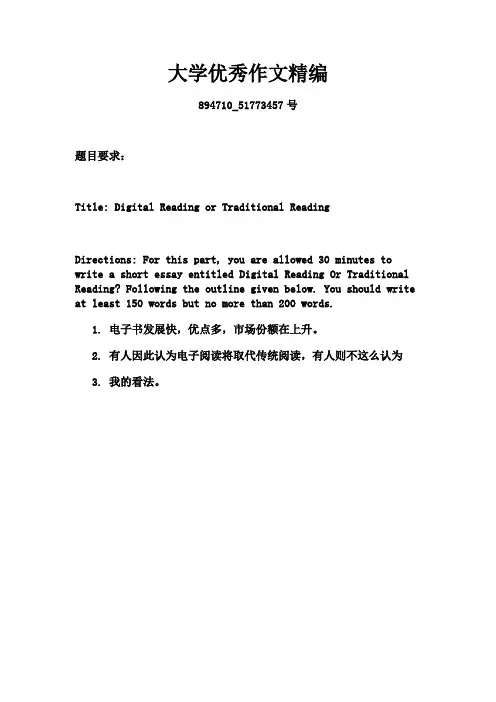
电子阅读和传统阅读的利弊的英语作文高中全文共5篇示例,供读者参考篇1The Digital Age vs. Antiquity: E-Reading and Print ReadingAs technology continues its relentless march forward, one of the greatest casualties has been the traditional printed book.E-readers like Kindles and tablets have made reading more convenient and portable than ever before. However, this technological disruption has sparked a heated debate: do the benefits of e-reading outweigh those of traditional print reading?Those in favor of e-reading point to numerous advantages. Firstly, the accessibility and convenience are unparalleled. With a single slim device, one can access a vast library of books anywhere at any time. No longer must travelers lug around heavy tomes on vacations. E-readers are also a boon for those with visual impairments, as font sizes can be easily adjusted.Another selling point is that e-books are often significantly cheaper than print editions. Major publishers have been forced to price e-books competitively due to the rise of self-publishingplatforms like Amazon's Kindle Direct Publishing. Readers can get popular titles for a fraction of the hardcover price. This increased affordability promotes more frequent reading.From an environmental perspective, e-reading leaves a smaller footprint than the production of physical books. Acres of forests are spared from being cleared, and there are no greenhouse gas emissions from trucking and shipping physical books worldwide. Forward-thinking nations have embracede-reading as a way to achieve sustainability goals.However, those who cherish the traditional reading experience remain ardently opposed to e-books. A compelling argument is that reading a physical book is a richer, more immersive experience that engages more of the human senses. The texture of the paper pages, the cracking of a new book's binding, the faint smell of the ink and adhesive – these are all pleasures lost in the sterile digital world. Reading from a tablet or e-reader fails to provide the same satisfaction.Opponents also fear that as e-reading becomes the norm, society may lose certain romantic experiences, like browsing eclectic used bookstores or inheriting well-worn tomes from previous generations. There is a unique charm to seeing shelves lined with beloved books accumulating over a lifetime. Thissentimentality is absent with e-reading devices designed to be constantly upgraded and discarded.From an academic perspective, some argue students comprehend and retain more information through reading physical books compared to digital versions. When people read on screens, they have a tendency to skim and become easily distracted by the computer's many other functions. This risks reducing reading to a more passive and shallow exercise. With printed books, readers must focus more intently on the material.Lastly, there are concerns about deeper implications of the shift to e-reading on culture, literacy, and even neurological development. Will the innate value of books diminish if they become further commoditized by tech giants like Amazon? How might childhood reading be impacted if physical books become antiquated relics? These are weighty questions without clear answers.Realistically, e-reading and traditional print reading willco-exist for the foreseeable future, each with its own ardent advocates. As consumers, we must carefully weigh the advantages of each medium based on our own values and reading goals. For some, the unparalleled convenience ofe-reading will reign supreme. For others, the tangible andromantic aspects of the printed book will remain eternally appealing. Perhaps the wisest path is to embrace both forms and allow them to enrich our lives in different ways. One thing is certain – the written word itself will survive long into the future, regardless of the medium in which it manifests.篇2The Digital Age vs. Turning Pages: Pros and Cons ofE-Reading and Traditional BooksIn today's rapidly evolving digital landscape, the way we consume literature has undergone a seismic shift. E-readers and tablets have emerged as formidable challengers to the traditional printed book, sparking a heated debate over the merits and drawbacks of each medium. As an avid reader and a student, I have experienced both worlds and can attest to the multifaceted nature of this discourse.The Allure of Convenience: E-ReadersOne of the most compelling advantages of electronic reading devices is their sheer convenience. With a single, lightweight device, readers can carry an entire library's worth of books, eliminating the need for cumbersome physical volumes. This portability factor is a godsend for avid travelers, commuters,and those with limited living spaces. Additionally, e-readers often offer built-in dictionaries, note-taking capabilities, and adjustable font sizes, catering to diverse reading preferences and accessibility needs.Cost-Effectiveness and Environmental ImpactAnother significant benefit of e-books lies in theircost-effectiveness. Digital editions are generally more affordable than their physical counterparts, making literature more accessible to readers on a budget. Furthermore, the production and distribution of e-books leave a smaller environmental footprint compared to the resource-intensive process of printing and transporting physical books.The Sensory Experience of Traditional BooksHowever, for many bibliophiles, the physical act of holding a book and turning its pages is an integral part of the reading experience. The tactile sensation of a book's weight, the crisp sound of turning pages, and the distinctive aroma of printed paper collectively create a sensory journey that electronic devices struggle to replicate. This tangible connection forges a deeper emotional bond between reader and text, elevating the act of reading to a cherished ritual.Cognitive Retention and FocusAdditionally, numerous studies have suggested that reading from physical books may aid cognitive retention and focus. The spatial cues provided by the physical pages and the ability to easily flip back and forth can enhance comprehension and memory. In contrast, the seamless scrolling of digital texts may hinder the brain's ability to map and recall information effectively.Eye Strain and Digital FatigueWhile e-readers offer adjustable font sizes and brightness settings, prolonged exposure to digital screens can strain the eyes and contribute to digital fatigue. The blue light emitted by electronic devices has been linked to disruptions in circadian rhythms and sleep patterns, potentially impacting overallwell-being and productivity.The Evolving Landscape of Publishing and LibrariesMoreover, the rise of e-books has had profound implications for the publishing industry and libraries. While digital platforms have democratized the publishing process, enabling more voices and perspectives to reach readers, they have also posed challenges to traditional business models. Libraries, oncebastions of physical book collections, have had to adapt by offering e-book lending services and navigating complex licensing agreements with publishers.In the end, the choice between electronic reading and traditional books is a highly personal one, influenced by individual preferences, reading habits, and circumstances. For some, the convenience and cost-effectiveness of e-readers outweigh the sensory pleasures of physical books. For others, the tactile and nostalgic allure of printed volumes remains unmatched.As a student and an ardent reader, I find myself straddling both worlds, appreciating the advantages of each medium while acknowledging their inherent trade-offs. Perhaps the true beauty lies in embracing the diversity of reading experiences, allowing each format to coexist and cater to the varied needs and preferences of readers worldwide.Regardless of the medium, the act of reading itself remains a transformative and enriching pursuit, opening doors to new worlds, perspectives, and depths of understanding. As technology continues to evolve, the ways in which we engage with literature will undoubtedly adapt, but the fundamentalpower of the written word will endure, transcending the boundaries of physical and digital realms.篇3The Digital Age vs. Turning Pages: Weighing the Pros and ConsIn our rapidly evolving digital world, the way we consume literature and information has been fundamentally transformed. E-readers, tablets, and smartphones have made it possible to access a vast library of books, articles, and other reading materials with just a few taps or clicks. This convenience has undoubtedly revolutionized the reading experience, but it has also sparked a heated debate: Is digital reading truly superior to the traditional print medium, or are we losing something invaluable in the process?As an avid reader and a student of literature, I have grappled with this question extensively. On one hand, the advantages of digital reading are hard to ignore. The portability and accessibility of e-readers and digital libraries are unparalleled. With a single device, I can carry an entire library's worth of books wherever I go, never having to worry about the weight or bulk of physical volumes. This convenience is particularly appealing forstudents and frequent travelers, who often find themselves juggling multiple texts simultaneously.Moreover, digital reading offers unique features that enhance the reading experience in ways that traditional print cannot. Built-in dictionaries, note-taking capabilities, and adjustable font sizes and styles cater to individual preferences and learning styles. For those with visual impairments or dyslexia, the ability to customize the text presentation can be agame-changer, making reading more accessible and enjoyable.Additionally, digital formats have the potential to be more environmentally friendly than their print counterparts. By reducing the demand for paper and eliminating the need for physical shipping and distribution, e-books and digital publications can significantly reduce their carbon footprint and contribute to a more sustainable future.However, as compelling as these advantages may seem, I cannot help but feel a twinge of nostalgia and appreciation for the tangible experience of holding a physical book in my hands. There is something deeply satisfying about turning the crisp pages of a well-loved novel, feeling the weight of the book, and admiring the intricate cover art. These sensory experiences arean integral part of the reading journey, and they risk being lost in the digital realm.Furthermore, the tactile nature of print books can enhance focus and retention. Studies have suggested that the physicality of holding a book and the act of turning pages may contribute to better comprehension and recall compared to reading on a screen. The constant temptation of digital distractions, such as notifications and hyperlinks, can disrupt the immersive reading experience that physical books provide.Beyond the personal preferences and cognitive implications, there are also concerns about the long-term preservation of digital content. While physical books can endure for centuries with proper care, the longevity of digital formats is uncertain. Technological obsolescence, data corruption, and compatibility issues pose significant challenges for the preservation of digital literature, potentially robbing future generations of access to our cultural heritage.As I weigh these arguments, I find myself torn between the undeniable convenience of digital reading and the intrinsic value of traditional print. Perhaps the solution lies not in choosing one medium over the other but in embracing a harmonious coexistence of both formats. Digital reading can serve as apractical tool for accessing information quickly and efficiently, while print books can continue to be cherished for their sensory and nostalgic appeal, particularly when it comes to leisure reading and literary appreciation.Ultimately, the decision between digital and print reading is a deeply personal one, shaped by individual preferences, circumstances, and the specific reading context. As readers, we must remain open-minded and adaptable, embracing the best of both worlds while preserving the timeless joy and enrichment that reading, in any form, can bring to our lives.篇4The Digital Age vs. The Printed PageAs technology continues its relentless march forward, the way we consume information and literature has shifted dramatically. E-readers and digital books have surged in popularity, offering unparalleled convenience and accessibility. However, this digital revolution has sparked a heated debate surrounding the merits and drawbacks of electronic reading compared to the traditional printed page. Both formats possess unique advantages and disadvantages that warrant careful consideration.The Case for E-ReadingProponents of e-reading tout the unmatched portability of digital devices. The ability to carry an entire library's worth of books in a sleek, lightweight device is a modern marvel. Gone are the days of lugging around cumbersome tomes or sacrificing precious suitcase space for vacation reading material. With a single e-reader, readers can access a vast collection of titles at their fingertips, making it easier than ever to indulge in their literary passions on-the-go.Moreover, e-books are often more affordable than their physical counterparts, appealing to budget-conscious bibliophiles. Digital copies typically cost less due to reduced production and distribution expenses. This cost-effectiveness can be particularly attractive for voracious readers or students required to purchase multiple texts.Another advantage of e-reading lies in its eco-friendly nature. By eliminating the need for paper, ink, and transportation associated with printed books, digital formats significantly reduce their environmental impact. As concerns over sustainability and conservation grow, many readers feel compelled to embrace this greener alternative.The Allure of Traditional BooksDespite the conveniences of digital reading, countless individuals remain steadfastly devoted to the tangible experience of holding a physical book. There is an undeniable charm and nostalgia associated with turning crisp pages and admiring the artistry of a well-designed cover. For many, this tactile connection is an irreplaceable part of the reading experience, evoking a sense of timelessness and heritage.Advocates of traditional reading also argue that the lack of digital distractions inherent in printed books allows for deeper immersion and focus. E-readers, with their virtual bells and whistles, can prove tempting diversions, hampering the ability to fully absorb the written word. The simple act of holding a book, free from notifications and pop-ups, can be a rare respite in our increasingly digitized world.Furthermore, there are concerns regarding the potential health implications of prolonged screen exposure. Prolongede-reading has been linked to eye strain, headaches, and disrupted sleep patterns due to the blue light emitted by digital devices. In contrast, reading from a physical book places less strain on the eyes and allows for a more natural, ergonomic reading posture.The Great Debate ContinuesAs with many aspects of modern life, the choice betweene-reading and traditional reading is a highly personal one, shaped by individual preferences, habits, and circumstances. Some readers may embrace a hybrid approach, alternating between digital and printed formats based on convenience or the nature of the material.Ultimately, the true value of reading lies not in the medium but in the act itself – the opportunity to explore new worlds, gain knowledge, and spark the imagination. Whether turning a page or tapping a screen, the written word retains its power to transport, enlighten, and inspire.As technology continues to evolve, the debate surrounding e-reading and traditional reading is likely to persist. However, one thing remains certain: the enduring human desire for storytelling and the exchange of ideas will transcend any particular format, ensuring that the love of literature remains etched into the fabric of our society, regardless of the medium through which it is experienced.篇5The Digital Age vs. The Printed PageIn today's rapidly evolving digital landscape, the way we consume information has undergone a seismic shift. The introduction of electronic reading devices and online platforms has challenged the age-old tradition of holding a printed book in our hands. As we navigate this technological revolution, it becomes crucial to examine the merits and drawbacks of both electronic and traditional reading methods.The Allure of Electronic ReadingConvenience reigns supreme in the realm of electronic reading. With a single device, readers can carry an entire library's worth of books, eliminating the need for physical storage space. The portability factor alone is a compelling argument for many, especially frequent travelers or those with limited living spaces. Additionally, the ability to adjust font sizes, brightness levels, and even text-to-speech options caters to individual preferences and accessibility needs.Furthermore, electronic reading platforms offer instantaneous access to a vast array of literary works, research materials, and scholarly articles. The click of a button grants readers immediate gratification, bypassing the need to physically visit bookstores or libraries. This convenience extends to the ability to highlight, annotate, and search for specific passages orkeywords within digital texts, streamlining the research and note-taking processes.Advocates of electronic reading also point to its eco-friendly nature. By reducing the demand for paper production, digital formats contribute to the preservation of natural resources and the minimization of environmental impact. Moreover, the ability to update and distribute digital content seamlessly eliminates the need for reprinting and transportation, further reducing carbon footprints.The Timeless Charm of Traditional ReadingDespite the undeniable advantages of electronic reading, many ardent readers remain steadfastly loyal to the traditional printed book. The tactile experience of holding a physical book, turning its pages, and savoring the scent of printed paper is an irreplaceable sensory delight for bibliophiles. This tangible connection fosters a deeper emotional bond between the reader and the literary work, enhancing the overall reading experience.Moreover, the absence of distractions inherent in digital devices allows for a more immersive and focused reading session. The temptation to multitask or navigate away from the text is minimized, enabling readers to fully engage with the narrative or subject matter at hand. This level of concentration can beparticularly beneficial for retaining information and fostering critical thinking skills.Traditional books also offer a unique sense of ownership and collectibility. The ability to display cherished titles on bookshelves or pass them down as heirlooms holds sentimental value for many readers. Furthermore, the physicality of printed books ensures their longevity, protecting them from the potential obsolescence or compatibility issues that may arise with ever-evolving digital formats.Striking a BalanceUltimately, the debate between electronic and traditional reading methods is not an either-or proposition. Both formats possess distinct advantages and cater to different reading preferences and situations. The optimal approach may be to embrace a harmonious coexistence, recognizing the strengths of each medium and allowing readers to choose the format that best suits their needs and circumstances.For instance, digital platforms may excel in providing instant access to reference materials, research papers, or quick informational reads, while printed books may offer a more immersive and contemplative experience for leisurely reading or literary appreciation. Striking this balance allows readers to reapthe benefits of both worlds, ensuring a diverse and enriching reading journey.As we navigate the ever-evolving landscape of information consumption, it is essential to remain open-minded and adaptable. Embracing the conveniences of electronic reading while cherishing the enduring allure of traditional printed books will ensure that the timeless joy and wisdom imparted by the written word remain accessible to all, regardless of the medium.。