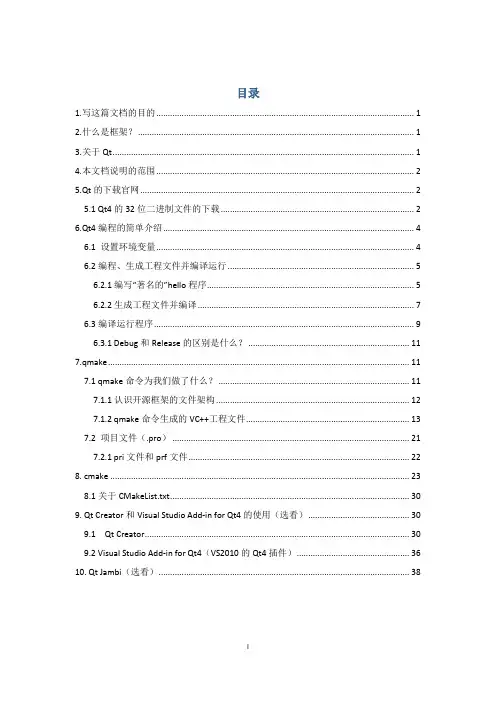
基于 Qt 的软件架构设计与应用
- 格式:pdf
- 大小:47.51 KB
- 文档页数:16
中国石油大学硕士研究生学位论文
(申请工学硕士学位)
基于Qt的软件架构设计与应用
学科专业: 计算机软件与理论
培养方向: 软件工程
硕士生: 李卓
指导教师: 陈明(教授)
入学日期:2005年9月 论文完成日期:2008年4月
学校代码:11414
学 号:S050070954 基于Qt的软件架构设计与应用
摘要
Qt是一个完整的应用程序开发框架,它包括一个类库和一些跨平台、
国际化的工具。目前,Qt已被广泛的应用于软件开发。如何利用这样一个
优秀的框架,将成熟的软件架构方法应用于具体的软件开发过程,并针对
具体情况加以改进和不断创新是本文的研究目的。本文首先介绍了Qt的特
点和当今流行的软件架构方法和软件复用方法。之后,介绍了联机帮助系
统的解决方案,该系统采用基于组件的开发方法,以动态链接库的方式提
供,实现了系统的接口和实现相分离。本文对方案中用到的软件架构技术
和软件复用技术进行了重点的介绍,并对如何应用软件架构技术与软件复
用技术进行了探索。通过联机帮助系统的使用情况来看,这些技术的应用
不但提高了软件的开发效率,而且使系统具了良好的可复用性及易维护性。
关键词:Qt,软件架构,软件复用,软件组件,设计模式
Qt-based Software Architecture Design and Application
Abstract
Qt is a complete application development framework, which includes a class
library and tools for cross-platform development and internationalization. Qt is
used to software development popularly in current time. How to apply the
maturely methodology of software architecture to the concrete development
process, improve it and innovate continually is the purpose of this paper. Firstly,
this paper introduces the characteristics of the Qt platform and the well-known
methodologies of software architecture and software reuse. Secondly, this paper
introduces the solution of Online Help System. Online Help System uses
component-based software development method, which is implemented in
dynamic link library. This method makes interface apart from implement. Thirdly,
this paper expands the technologies of software architecture and software reuse
used in the development process and how to use these well-known technologies.
Through the performance of Online help System, I have found that these
technologies improve the efficiency of software development, and make the
software reusable and easy to maintenance.
Keywords: Qt, Software Architecture, Software Reuse, Software Component,
Design Pattern
目 录
摘要
ABSTRACT
第1章 前言........................................................................................................1
1.1 研究目的和意义.................................................................................1
1.2 论文结构.............................................................................................2
第2章 QT关键技术的介绍..............................................................................3
2.1 QT的特点[1][3]....................................................................................3
2.2 QT的类库...........................................................................................5
2.3 QT对象间通讯机制...........................................................................6
第3章 软件架构技术........................................................................................9
3.1 软件架构的概念.................................................................................9
3.2 软件架构的位置................................................................................11
3.3 软件架构方法....................................................................................11
3.4 统一建模语言的使用.......................................................................14
第4章 软件复用技术......................................................................................19
4.1 软件复用的介绍...............................................................................19
4.1.1 软件复用概念............................................................................19
4.1.2 复用级别....................................................................................19
4.1.3 复用过程....................................................................................21
4.1.4 面向对象与复用的关系............................................................23
4.2 组件技术...........................................................................................25
4.2.1 组件技术的简介........................................................................25
4.2.2 基于组件的软件开发模型........................................................27
4.3 设计模式[18][19]..................................................................................29
4.3.1 设计模式概述............................................................................29
4.3.2 各种设计模式............................................................................31
4.4 标准模板库.......................................................................................33