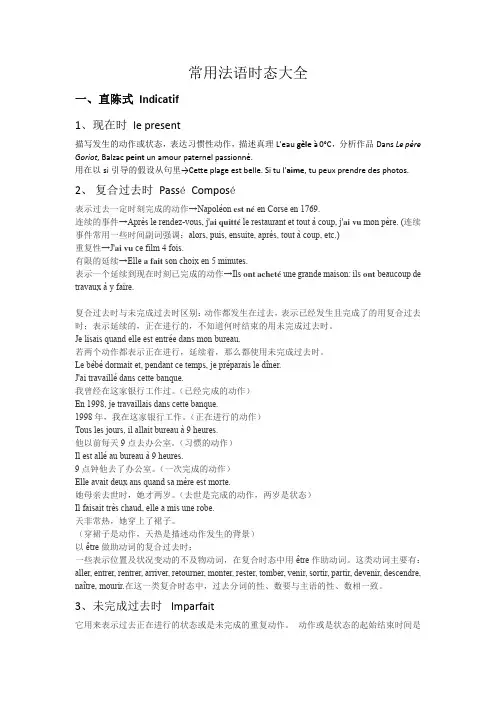
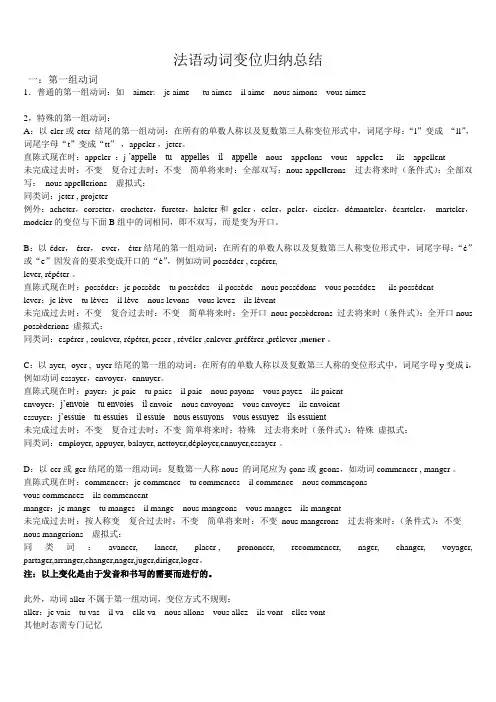
复合过去时vs.未完成过去时
- 格式:doc
- 大小:36.00 KB
- 文档页数:3
复合过去时中的代词动词
A pronominal verb is a verb which has a reflexive pronoun, that is, a pronoun referring back
to its subject. These verbs are easily recognized by the pronoun se before the infinitive: se lever, se
laver, se promener, etc.
1. formation(形式)
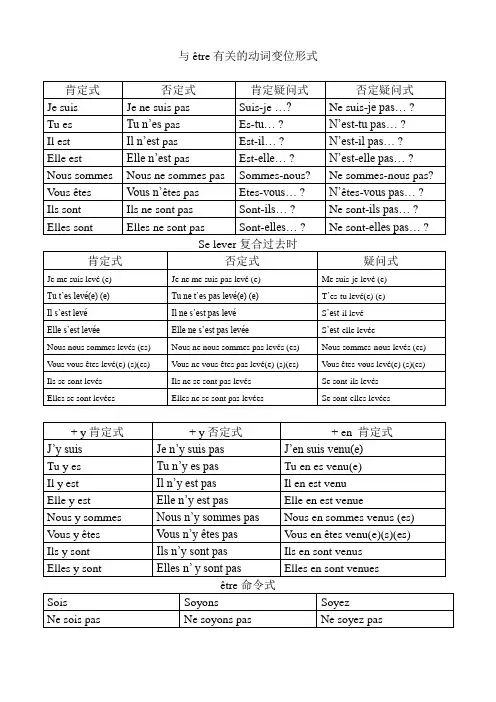
In the passé composé, pronominal verbs are conjugated with être as their auxiliary. Past
participles of pronominal verbs are formed like non-pronominal past participles. Note that the
reflexive pronoun (me, te, se, nous, vous, se) precedes the auxiliary.
s'amuser 'to have fun'
je me suis amusé(e), nous nous sommes amusé(e)s,
I had fun we had fun
tu t'es amusé(e), vous vous êtes amusé(e)(s), you had fun you had fun
il / on s'est amusé, ils se sont amusés, he / one had fun they had fun
elle s'est amusée, elles se sont amusées, she had fun they had fun
2. past participle agreement(过去分词一致性)
It is important to note that, in most cases, the past participle of
pronominal verbs agrees in gender and number with the gender and number
of the reflexive pronoun, that is, an e is added to the past participle
to agree with a feminine subject and an s is added for a plural subject.
Tammy: Je me suis réveillée très t?t ce matin.
Tammy: I got up really early this morning.
Tex: Moi, je me suis réveillé très tard!
Tex: I got up really late!
3. past participle agreement: exceptions(例外)
The past participle does not agree if there is a direct object following
the verb which is a part of the body: (直接宾语的情况)
Tammy: Je me suis lavée.
Tammy: I washed.
Et ensuite je me suis lavé les cheveux.
And then, I washed my hair.
In the second example, the direct object les cheveux is placed after the
verb, so there is no agreement.
Furthermore, in cases where the reflexive pronoun is an indirect object
rather than a direct object, as in the verb se parler (parler à), there
is no agreement.
Tammy: Puis, Bette et moi, nous nous sommes parlé.
Tammy: Then, Bette and I talked to each other.
4. negation(否定)
In the negative, the ne precedes the reflexive pronoun and the pas
follows the auxiliary: (在反身代词前加ne,助动词后加pas)
je ne me suis pas amusé(e) nous ne nous sommes pas amusé(e)(s)
tu ne t'es pas amusé(e) vous ne vous êtes pas amusé(e)(s)
il / on ne s'est pas amusé ils ne se sont pas amusés
elle ne s'est pas amusée elles ne se sont pas amusées
对话
Listen to the dialogue:
Tammy: Bonjour Tex! Oh là là! Tu ne t'es pas rasé ce matin?
Tammy: Hi Tex! Oh dear! You did not shave this morning?
Tex: Oh ?a va hein! Mon réveil n'a pas sonné! Je me suis réveillé trop
tard. Et toi, tu t'es rasée?
Tex: Oh that's enough, OK! My alarm clock did not go off! I woke up too
late. Did you shave?
Tammy: Monsieur Tex s'est levé du pied gauche aujourd'hui!
Tammy: Mister Tex got up on the wrong side of the bed today!
练习
Give the passé composé of the verb indicated in parentheses.
1. Tex: Joe-Bob, est-ce que tu ______ en cours aujourd'hui? (s'ennuyer)
2. Fiona: Tex et Tammy, est-ce que vous ______ ? (se marier)
3. Bette ______ à c?té de Tex. (s'asseoir)
4. Corey ______ très vite ce matin. (s'habiller)
5. Tammy ______ contre Tex à la fête. (se facher)
6. Tammy: Hier soir, Tex et moi, nous ______ près de la rivière.(se promener)
7. Tammy: Qu'est-ce qui ______ à l'arrêt d'autobus? (se passer)
8. Edouard et Tex ______ après la course. (se reposer)