
青少版新概念英语1B全单元课件_unit28(共14页).ppt
- 格式:ppt
- 大小:818.00 KB
- 文档页数:14

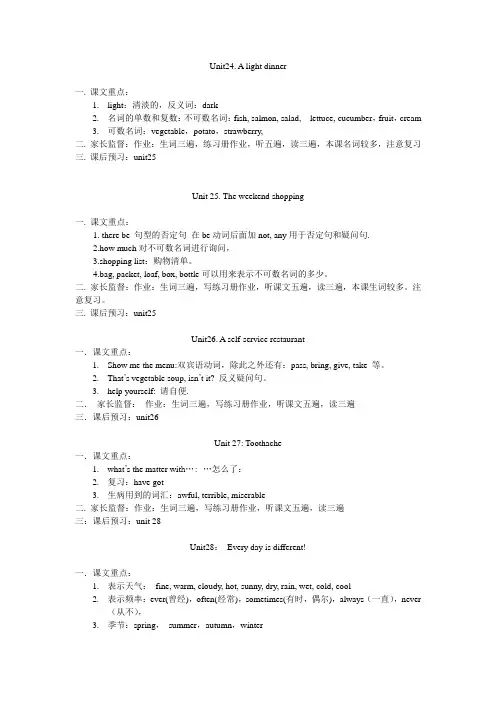
Unit24. A light dinner
一. 课文重点:
1. light:清淡的,反义词:dark
2. 名词的单数和复数:不可数名词:fish, salmon, salad, lettuce, cucumber,fruit,cream
3. 可数名词:vegetable,potato,strawberry,
二. 家长监督:作业:生词三遍,练习册作业,听五遍,读三遍,本课名词较多,注意复习
三. 课后预习:unit25
Unit 25. The weekend shopping
一. 课文重点:
1. there be 句型的否定句 在be动词后面加not, any用于否定句和疑问句.
2.how much对不可数名词进行询问,
3.shopping list:购物清单。
4.bag, packet, loaf, box, bottle可以用来表示不可数名词的多少。
二. 家长监督:作业:生词三遍,写练习册作业,听课文五遍,读三遍,本课生词较多。注意复习。
三. 课后预习:unit25
Unit26. A self-service restaurant
一.课文重点:
1. Show me the menu:双宾语动词,除此之外还有:pass, bring, give, take 等。
2. That’s vegetable soup, isn’t it? 反义疑问句。
3. help yourself: 请自便.
二. 家长监督: 作业:生词三遍,写练习册作业,听课文五遍,读三遍
三.课后预习:unit26
Unit 27: Toothache
一.课文重点:
1. what’s the matter with…: …怎么了:
2. 复习:have got
3. 生病用到的词汇:awful, terrible, miserable
二. 家长监督:作业:生词三遍,写练习册作业,听课文五遍,读三遍
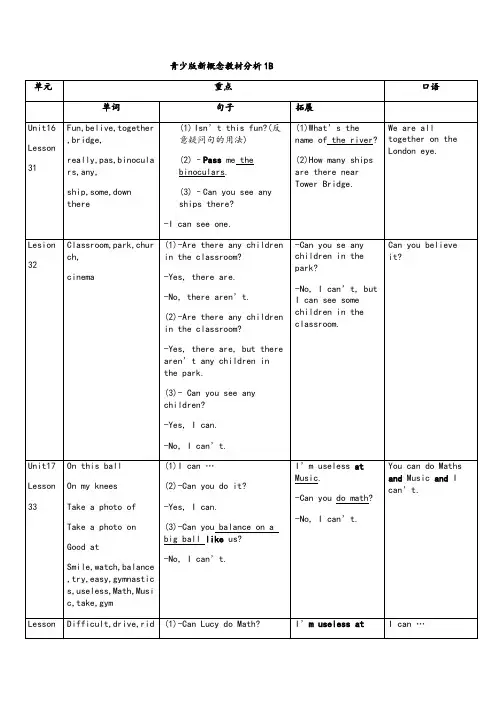
青少版新概念教材分析1B
单元 重点 口语
单词 句子 拓展
Unit16
Lesson
31 Fun,belive,together,bridge,
really,pas,binoculars,any,
ship,some,down
there (1) Isn’t this fun?(反意疑问句的用法)
(2) –Pass me the
binoculars.
(3) –Can you see any
ships there?
-I can see one. (1)What’s the
name of the river?
(2)How many ships
are there near
Tower Bridge. We are all
together on the
London eye.
Lesion
32 Classroom,park,church,
cinema (1)-Are there any children
in the classroom?
-Yes, there are.
-No, there aren’t.
(2)-Are there any children
in the classroom?
-Yes, there are, but there
aren’t any children in
the park.
(3)- Can you see any
children?
-Yes, I can.
-No, I can’t. -Can you se any
children in the
park?
-No, I can’t, but
I can see some
children in the
classroom. Can you believe
it?
Unit17
Lesson
33 On this ball
On my knees
Take a photo of
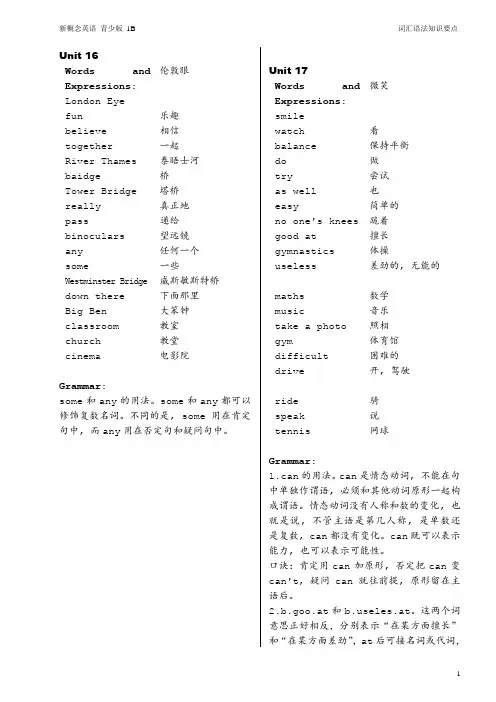
1 Unit 16
Words and
Expressions:
London Eye 伦敦眼
fun 乐趣
believe 相信
together 一起
River Thames 泰晤士河
baidge 桥
Tower Bridge 塔桥
really 真正地
pass 递给
binoculars 望远镜
any 任何一个
some 一些
Westminster Bridge 威斯敏斯特桥
down there 下面那里
Big Ben 大笨钟
classroom 教室
church 教堂
cinema 电影院
Grammar:
some和any的用法。some和any都可以修饰复数名词。不同的是, some用在肯定句中, 而any用在否定句和疑问句中。
Unit 17
Words and
Expressions:
smile 微笑
watch 看
balance 保持平衡
do 做
try 尝试
as well 也
easy 简单的
no one's knees 跪着
good at 擅长
gymnastics 体操
useless 差劲的, 无能的
maths 数学
music 音乐
take a photo 照相
gym 体育馆
difficult 困难的
drive 开, 驾驶
ride 骑
speak 说
tennis 网球
Grammar:
1.can的用法。can是情态动词, 不能在句中单独作谓语, 必须和其他动词原形一起构成谓语。情态动词没有人称和数的变化, 也就是说, 不管主语是第几人称, 是单数还是复数, can都没有变化。can既可以表示能力, 也可以表示可能性。
口诀:肯定用can加原形, 否定把can变can't, 疑问can就往前提, 原形留在主语后。
2.b.goo.at和eles.at。这两个词意思正好相反,分别表示“在某方面擅长”和“在某方面差劲”,at后可接名词或代词,

新概念英语青少版入门级b课件
New Concept English Teenagers’ Edition Beginner Level B
Courseware
Unit 1
Greetings and Introductions
In Unit 1, students will learn basic greetings and
introductions in English. The lesson will focus on expressions
such as “Hello”, “Good morning”, “How are you?”, and
“Nice to meet you”. The activities in this unit aim to help
students practice using these greetings in everyday
conversations.
Unit 2
Family and Home
In Unit 2, students will learn vocabulary related to family
members and describe their own families. The lesson will also
cover common words used in the home, such as bedroom, living
room, kitchen, and bathroom. Students will have the opportunity
to practice using this vocabulary in conversations and written
exercises.
Unit 3 School Life