
英语动词时态语态PPT课件
- 格式:ppt
- 大小:1.38 MB
- 文档页数:57

- 1 - Grammar
一、动词时态及语态
语法学习表
时态 意义 标志词语 构成公式 被动语态
一般现在时 经常性、习惯性的动作,存在的状态,或客观真理 often, always, usually,
sometimes, once a
week, every day 主语+V原形(主语是第三人称单数时,V加s或es) 主语+is /am/are+V过分
现在进行时 现在正在发生的动作 now,Look!, Listen!,
at this moment 主语+am/is/are+V-ing 主语+am/is/are+being+V过分
现在完成时 过去的动作对现在有影响或过去的动作一直持续到现在 already , yet ,since, so
far 主语 +have/has +V过分 主语+have/has
+been+V过分
一般过去时 过去发生的动作 yesterday ,last
week, …ago, in 1998,
just now 主语+V过去式 主语+was/were +V过分
过去进行时 过去时间内正发生的动作或存在的状态 at this time yesterday,
just then, at 6:00 last
Sunday, when+一般过去时 主语+was/were+V-ing 主语+was/were+being+V过分
过去完成时 过去已完成的动作 by the end of +过去的时间,by the time +一般过去时 主语+had+V过分 主语+had+been+V过分
一般将来时 将要发生的动作或将来的状态 tomorrow, next week,
in the future, in two
days, in 2100 主语+am/is/are going
to +V原形,或主语+will+V原形 主语+will be+V过分
过去将来时 过去时间内将要发生的动作或存在的状态 常用于主句是一般过去时的宾语从句 主语+was/were+going
完整版高考英语动词时态和语态讲解
1 / 51 时态语态
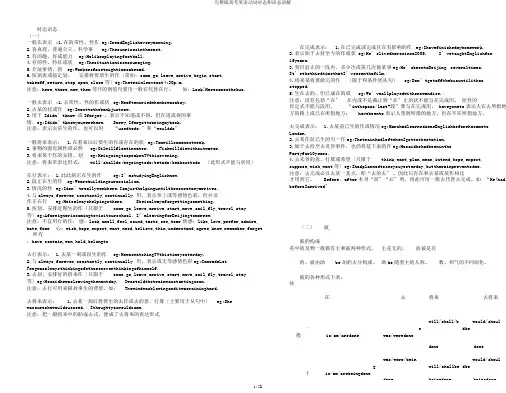
〔一〕
一般在表示 :1.在的常性、性作 eg:IreadEnglisheverymorning.
2.客真理、普遍公立、科学事 eg:Thesunrisesintheeast.
3.有的趣、好或能力 eg:Helikesplayingfootball.
4.存的性、特征或状 eg:Thesituationisencouraging.
5.介故事情、新 eg:Workersfacetoughtimesabroad.
6.按刻表或按定划、 安排将要放生的作〔常如:come,go,leave,arrive,begin,start,
takeoff,return,stop,open,close等〕eg:Thetrainleavesat4:30p.m.
注意:here,there,now,then等开的倒装句要用一般在代替在行。 如:Look!Herecomesthebus.
一般去表示 :1.去常性、性的作或状 eg:Heoftencriedwhenhewasaboy.
2.去某的状或作 eg:Iwenttothebankjustnow.
3.用于 Ididn’tknow⋯或Iforgot⋯,表示不知道或不得,但在道或得的事
情。eg:Ididn’tknowyouwerehere. Sorry,Iforgottobringmybook.
注意:表示去常生的作,也可以用 “usedtodo⋯〞和“woulddo〞
一般将来表示: 1.在看来以后要生的作或存在的状 eg:Tomwillcomenextweek.
2.事物的固有属性或必然 eg:Oilwillfloatinwater. Fishwilldiewithoutwater.
3.将来某个作的安排、划 eg:HeisgoingtospeakonTVthisevening.
注意:将来常表达形式: will/shalldo;begoingtodo;betodo;beabouttodo 〔此形式不能与状用〕

1 英语词性和时态
单词词性:名词、动词、形容词、副词、助动词、连接词、冠词、代词、介词、感叹词
短语词性:不定式短语、动名词短语、介词短语、名词短语、动词短语、形容词短语、副词短语
句型:主语+不及物动词 主语+系动词+表语 主语+及物动词+宾语 主语+双间动词+间接宾语 主语+使役动词+宾语+宾语补足语
语法:动词不能连用 两个动词用to/-ing 第三人称加s 否定句不可直接加s 助动词 问句要用助动词
动词的时态和语态
一般现在时 一般过去时 一般将来时 过去将来时 现在进行时
主动 do/does did will/shall do would/should do am/is/are doing
被动 am/is/are
done was/were
done will/shall be done would/should be
done am/is/are being
done
过去进行时 将来进行时 现在完成时 现在完成进行时 过去完成时
主动 was/were
doing will/shall
be doing have/has done have/has been doing had done
被动 was/were
being done ---------- have/has been done ---------- had been done
一般现在时:
1、表示经常发生的习惯性的、现在反复出现的动作或状态,常用的时间状语有:always,usually,seldom, sometimes, every 2 day, now and then, once a week等。
2、表示眼下或目前等现在时间所发生的动作或存在的状态,这种状态带有一定的持续性。
3、表示客观事实或普遍真理。
4、书报的标题,故事的叙述,小说、戏剧、电影等情节介绍,图片的说明等。
英语中的动词时态
英语中的动词时态
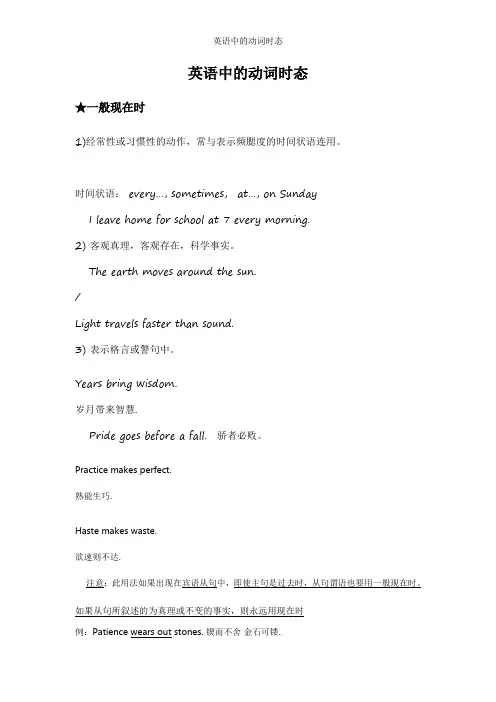
★一般现在时
1)经常性或习惯性的动作,常与表示频腮度的时间状语连用。
时间状语: every…, sometimes, at…, on Sunday
I leave home for school at 7 every morning.
2) 客观真理,客观存在,科学事实。
The earth moves around the sun.
/
Light travels faster than sound.
3) 表示格言或警句中。
Years bring wisdom.
岁月带来智慧.
Pride goes before a fall. 骄者必败。
Practice makes perfect.
熟能生巧.
Haste makes waste.
欲速则不达.
注意:此用法如果出现在宾语从句中,即使主句是过去时,从句谓语也要用一般现在时。
如果从句所叙述的为真理或不变的事实,则永远用现在时
例:Patience wears out stones. 锲而不舍 金石可镂. 英语中的动词时态
My grandpa said that patience wears stones.
对比: The donkey is hungry.
→Peter said that the donkey was hungry.
★一般过去时
The greatest artist was once a beginner. 最伟大的艺术家也曾是个初学者.
1) 在确定的过去时间里所发生的动作或存在的状态。
时间状语有:yesterday, last week, an hour ago, the other day, in 1982等。
疑问句:Where did you go last night?
Did you have a good sleep?
2)表示在过去一段时间内,经常性或习惯性的动作。