人教版七年级下册英语Unit 3 --4知识点语法归纳总结
- 格式:docx
- 大小:48.82 KB
- 文档页数:13
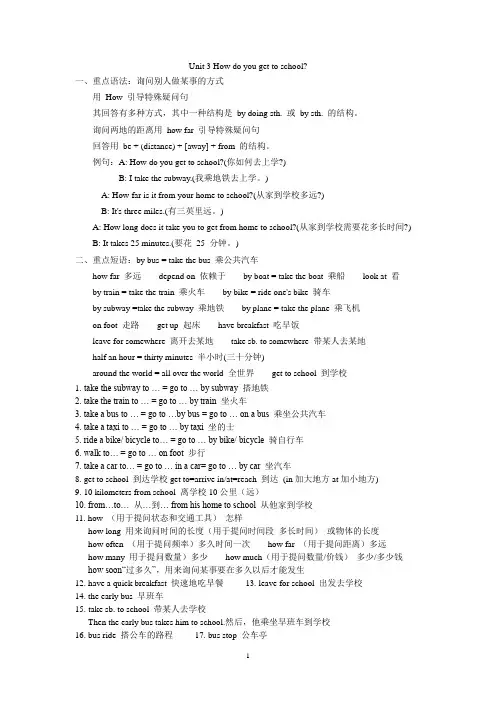
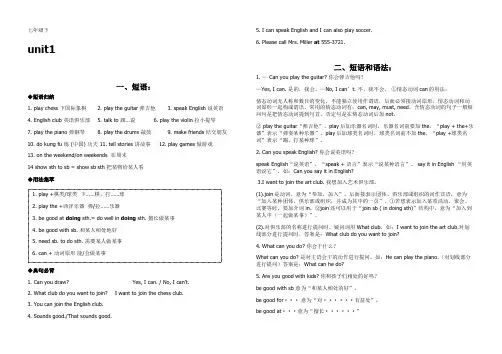
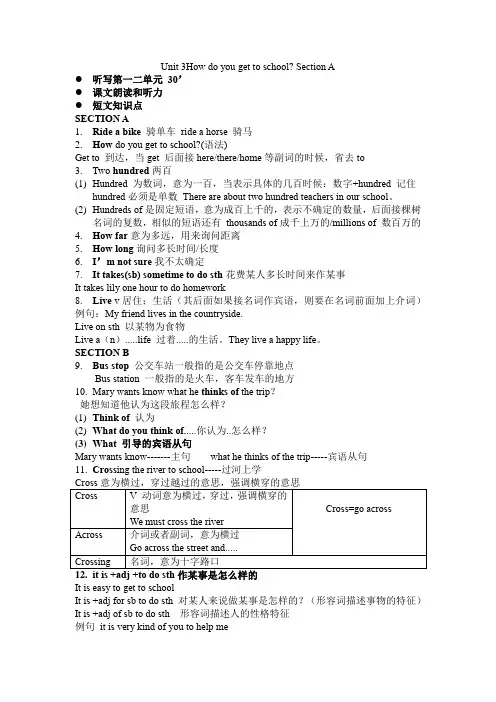
1 Unit 3 How do you get to school?
1. 短语归纳
① get to school=arrive at school 到达学校
② take the subway 乘地铁
③ ride a bike 骑自行车
④ how far 多远
⑤ from home to school 从家到学校
⑥ every day 每天 everyday日常的
⑦ take the bus 乘公共汽车
⑧ leave Beijing for Shanghai离开北京到上海
⑨ bus stop 公共汽车站
⑩ think of 认为
11 between … and … 在…和…之间
12 one 11-year-old boy 一个11岁的男孩
13 play with … 和…玩
14 come true 实现
15 have to 不得不(客观事实)
16 must 强调主观必须
2. 典句必背
① How do you get to school?
I ride my bike to school.
② How far is it from your home to school?
③ How long does it take you to get to school?
④ For many students, it is easy to get to school.
【many】只加可数名词复数
⑤ be afraid of sth,害怕某事,某物;
⑥ be afraid to do sth.害怕做某事
⑦ There is no bridge. [no]=not a(an)=not any
⑧ “3 hundred” 3百不加s,
hundreds of 数以百计的加s
⑨ stop doing sth.停止正在做的事情
stop to do sth.停下来去做另一件事情。
3. 用法集萃
(1) 怎样表达出行方式:How do you get to school?
❖ 描述出行方式时,通常会有如下几种形式
借助介词by(不加a/the) by bike/bus/car/train/taxi/subway... 2 用take,drive, ride构成的动词短语 take a/the bus/train/plane
drive a/the one’s car
ride a/the one’s bike/bicycle
借助介词on或in(加a/the) on a/the bike/bus/train; on foot; in a/the car
注意:当交通工具的名词(如:bike, bus, train, car等)和by搭配时,它们前面不必加冠词;
但当它们和on或in搭配时,它们之间要加冠词。
(2) 基数词的表达法:基数词,表示数目或者数量的多少
① one 到twelve,拼写和读音没有什么相似之处,无规律可言,应逐一进行记忆。
② thirteen到nineteen,表示“十几”,在个位数后加后缀-teen,读作/ti:n/。
注意thirteen, fifteen和eighteen的拼写。
③ twenty到ninety,表示“几十”,以-ty结尾,但需注意下面几个词的拼写:twenty, thirty, forty, fifty, eighty。
④ 21~29直到91~99,表示“几十几”,用整十位加个位数表示,中间用连字符“-”把十位数与个位数
连接起来。例: 21→twenty-one; 35→thirty-five
⑤
one hundred意为“一百”,表示一百还可以用 a hundred。 要表示200~900,用“具体数字+hundred”。
⑥ 例:200 →two hundred;900→ nine hundred
注意:
❖ hundred前面若有具体的数词,则要用hundred的单数形式,而且其后不能跟of,此时表达确切的数字概念。例:There are two hundred people in the square. 广场上有两百人
❖ hundreds of表示“数以百计的”,此时表达模糊的数字概念。
如:There are hundreds of people in the square. 广场上有好几百人
(3) How far is it from your home to school?
❖ from ... to ... 意为“从...到...”,表示“由一点到另一点”,可用于时间、地点、数目等。
如:We have classes from Monday to Friday. 我们从星期一到星期五上课
Count from one to ten. 从一数到十
(4) How long does it take you to get to school?
① take的用法 3 ❖ It takes sb. some time to do sth. “某人花多长时间做某事”
❖ take表示“花费(时间)” 如:It takes me twenty minutes to walk to the zoo. 我要花20分钟走到动物园
❖ 辨析:spend, take, cost, pay
spend spend的主语是人,常用于以下结构:
spend money on (doing) sth. 在.....上花钱
spend time on sth./ ( in) doing sth. 花费时间在某事上/做某事 I spend two hours on this problem.
这个问题花了我两个小时
take take的常见用法:
It takes sb.+时间+to do sth.做某事花了某人多少时间 It takes him the whole afternoon to repair the car.
他花了一下午的时间修这辆车。
cost cost的主语是物,表示“价钱为”,常见用法:sth. costs A new computer costs a lot of money.
买一台新电脑要花一大笔钱
pay pay的基本用法是:
pay money for sth. 付钱.... He pays $200 a month for this apartment.
这套公寓他每月要付200美元
牛刀小试
—We usually _______ some time walking in the park after dinner.
—Oh, it is healthy.
A. spend
B. cost C. take D.pay
② get to 到达
❖ 辨析:get, arrive, reach(三者都有“到达”之意,但用法上有所区别)
get 不及物动词,其后若跟地点名词,要用get to How does he get to school?
他是怎样到校的?
arrive 不及物动词,后面接地点名词时需加介词in或at,
大地点用arrive in,小地点用arrive at。
如果不接地点。则直接用arrive
Lisa will arrive in Beijing next week.
莉萨将会于下周到达北京
How did he arrive at the airport?
他是怎样到机场的?
reach reach是及物动词,后面可直接跟宾语,般不接地点副词 Please reach the TV station on time. 4 请按时到电视台
注意:当get, arrive后跟地点副词(如here, there, home等)的时候,其后不必加任何介词
例:We will get/ arrive there at nine. 我们会在九点到达那里
(5) For many students, it is easy to get to school. 对许多学生来说,到学校上学是很简单的
❖ It is+adj.+(for sb.) to do sth. 固定句式,意为“(对某人来说)做某事怎么样”
这是一个动词不定式作主语的句型,但常用it作形式主语。不定式前的for sb.有时也可省略。
如: It’s very important for us to study English well. 对我们来说,学好英语很重要
It is difficult to finish the work today. 今天完成这项工作太困难了。
❖ 辨析It’s adj. +for sb.+to do sth. 和 It’s+adj.+of sb.+to do sth.的区别
It’s+adj. +for sb.+to do sth. 该句式常用于表示事物的特征、特点。
形容词常为表示客观情况的形容词,如:
easy, hard, difficult, interesting, impossible等 It’s
very
hard for him to learn two
languages.
对他来说学两种语言是很难的。
It's+adj. +of sb.+to do sth. 该句式常用于表示人物的性格、品德。
形容词常为表示主观感情或态度的形容词,如:
good, kind, nice, clever, foolish等 It’s very nice of you to help me.
你来帮助我,你真是太好了。
巧辨for与of 用介词后面的代词或名词作主语,用介词前面的形容词作表语,造个句子。
如果符合逻辑则用of,不符合逻辑则用for。 It’s very kind
of you to help me with my
English.
你帮助我学英语,你真是太好了。
You are kind to help me with my English.
(符合逻辑)
(6) There is a very big river between their school and the village. 在他们学校和村庄之间有一条大河
❖ between, among
between 表示“在两者之间”,可以和and搭配。
between...and...意为“在....和.....之间” He is sitting between his father and Mike.
他正坐在他爸爸和迈克之间。
among 表示“在三者或三者以上的人或物之间”,
还可以表示在不确定数量的人或物之间, His house is among the trees.
他的房子在树丛中